
Allocating Expenses Across Owners in Mixed Portfolios
A practical, data-backed guide to controlling costs and automating expense workflows.
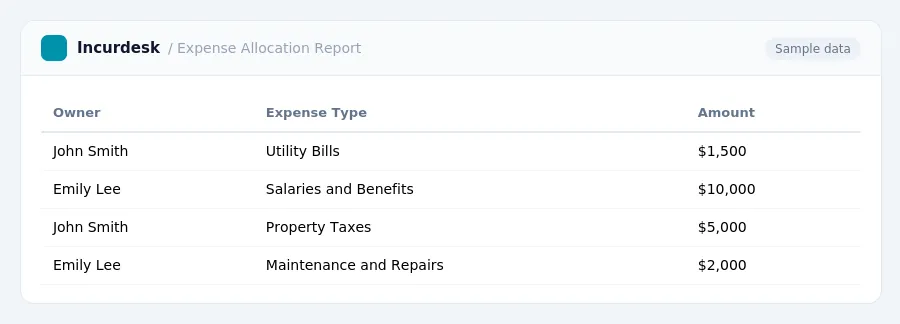
For example, utility bills can be allocated based on square footage or number of units, while salaries and benefits can be allocated based on the percentage of ownership. Effective expense management for property management involves accurately tracking and reporting expenses to ensure fair billing and tax compliance. For a complete overview, see our expense management guide.
Distinguishing Between Repairs and Improvements in Mixed Portfolios
When managing mixed portfolios, it's crucial to accurately distinguish between repairs and improvements to ensure correct expense allocation and tax compliance.
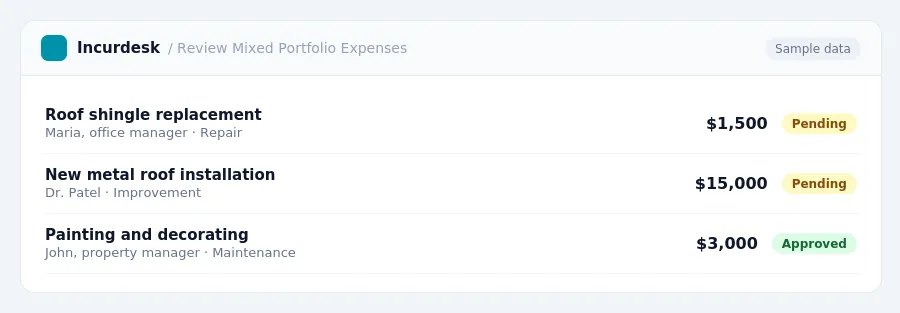
For example, replacing a worn roof shingle section is usually a repair, while installing an entirely new metal roof is likely an improvement. To ensure accuracy, consider the following:
- Does the expense replace or restore a worn-out component, or does it enhance the property's value?
- Is the expense intended to maintain the property's existing condition or adapt it to a new use?
As a result, it's essential to consult the tax code and consult with a tax professional to ensure compliance with the Passive Activity Loss (PAL) Rules.
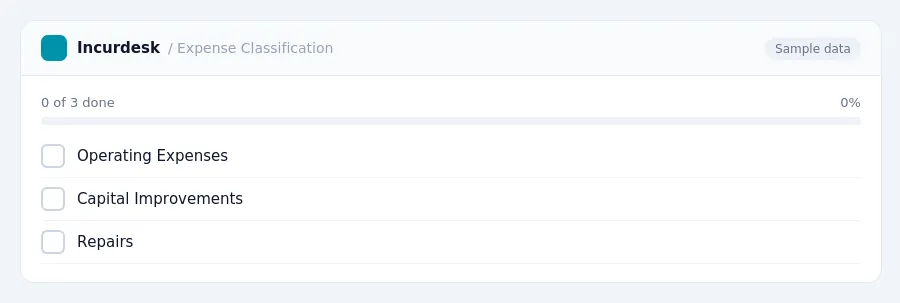
Start by classifying expenses into one of the following categories: operating expenses, capital improvements, or repairs.
- Operating expenses: These include ongoing costs like property taxes, insurance, and utilities.
- Capital improvements: These are expenses that increase the property's value, such as installing new roofing or HVAC systems. These costs are depreciated over time.
- Repairs: These are expenses that maintain the property's current condition, such as fixing leaky faucets or patching holes in walls.
To qualify, the home office must be used for business purposes only and meet specific requirements.
Managing Travel Expenses and Property Taxes in Rental Properties
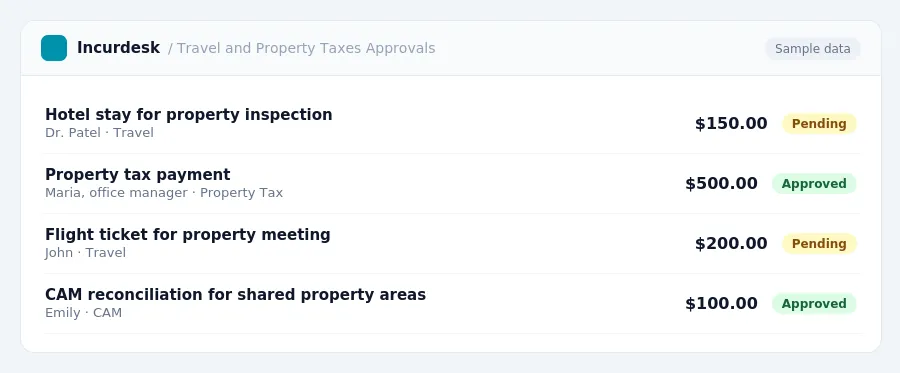
When managing rental properties, it's essential to understand how to handle travel expenses and property taxes to ensure accurate expense allocation and tax compliance. Here are some key considerations:
Travel Expenses:
Property Taxes:
Real Estate Professional Status:
- To qualify in 2026, an individual must perform more than half of their personal services in real property trades or businesses and perform over 750 hours in those activities.
CAM Reconciliation:
- Verify and adjust tenant billings for actual operating expenses for shared property areas.
- Exclude ineligible expenses, such as excessive administrative overhead or costs for vacant units.
Depreciation:
- Residential rental property depreciates over 27.5 years using the Modified Accelerated Cost Recovery System (MACRS) in 2026.
- Land is not depreciable.
Commingling Funds and CAM Reconciliation Best Practices
When managing a mixed portfolio, it's essential to keep owner funds separate and accurately track expenses. Commingling funds refers to the practice of mixing owner funds, which can lead to confusion and errors in expense allocation and reporting.
To avoid commingling funds, consider the following best practices:
- Set up separate bank accounts for each owner and property.
- Use unique account numbers for each owner and property.
- Clearly label each account with the owner's name and property address.
- Use a centralized system to track and reconcile expenses, such as a spreadsheet or accounting software.
When reconciling CAM (Common Area Maintenance) charges, make sure to:
- Review the CAM statement carefully to ensure accuracy.
- Compare the CAM charges to the actual expenses incurred.
- Reconcile any discrepancies with the property manager or CAM provider.
Regularly review and reconcile your accounts to ensure accuracy and prevent commingling funds. This will help you maintain fair billing, tax compliance, and profitability in your mixed portfolio.
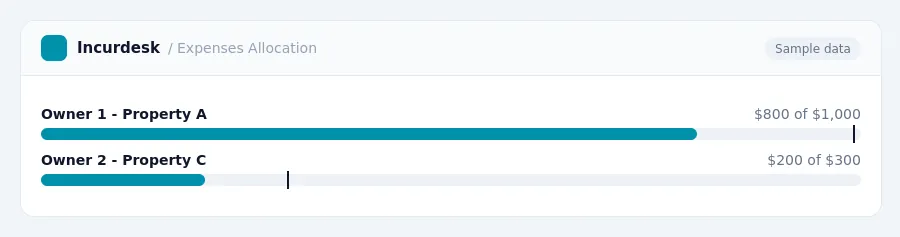
Avoiding Common Pitfalls in Expense Allocation and Reporting for 2026
When allocating expenses across owners in mixed portfolios, it's essential to avoid common pitfalls that can lead to inaccurate billing, tax compliance issues, and decreased profitability. Here are some practical tips to help you steer clear of these mistakes:
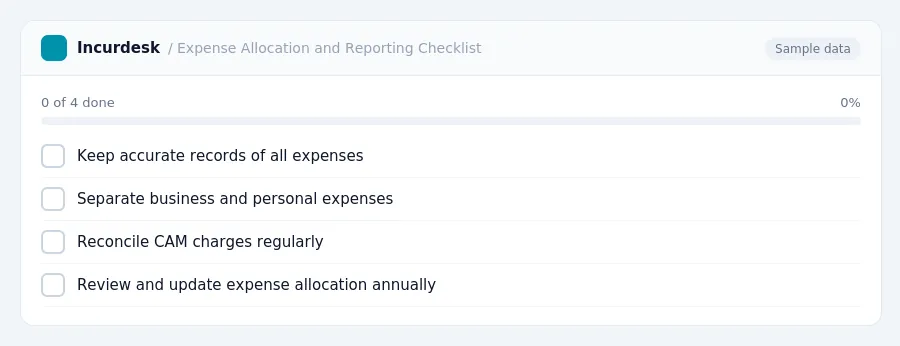
- Keep accurate records**: Maintain detailed records of all expenses, including receipts, invoices, and bank statements. This will help you track expenses accurately and ensure compliance with tax regulations.
- Separate business and personal expenses**: Clearly distinguish between business and personal expenses to avoid commingling funds and ensure accurate expense allocation.
- Reconcile CAM charges regularly**: Regularly reconcile Common Area Maintenance (CAM) charges to ensure accurate expense allocation and prevent disputes with owners.
- Review and update expense allocation annually**: Review and update your expense allocation method annually to ensure it remains accurate and compliant with tax regulations.
By following these tips, you can avoid common pitfalls in expense allocation and reporting, ensuring accurate billing, tax compliance, and increased profitability for your small property management business.
Keeping this simple: Incurdesk turns submitted expenses into clean expense reports. It is built for small property management teams. Try it free.
Stop losing 4+ hours a week
30-day free trial · No credit card · Setup in 15 minutes