
Approval Limits for Orthodontic Supply Orders
A practical, data-backed guide to controlling costs and automating expense workflows.
Small orthodontic practices need to be aware of the financial and regulatory limits that govern their supply orders to ensure compliance and efficient financial management. Understanding these limits is crucial for making informed decisions about purchasing power and operational budgets. Utilizing orthodontic practices expense management software can help streamline these processes and keep track of expenditures. For a complete overview, see our expense management guide.
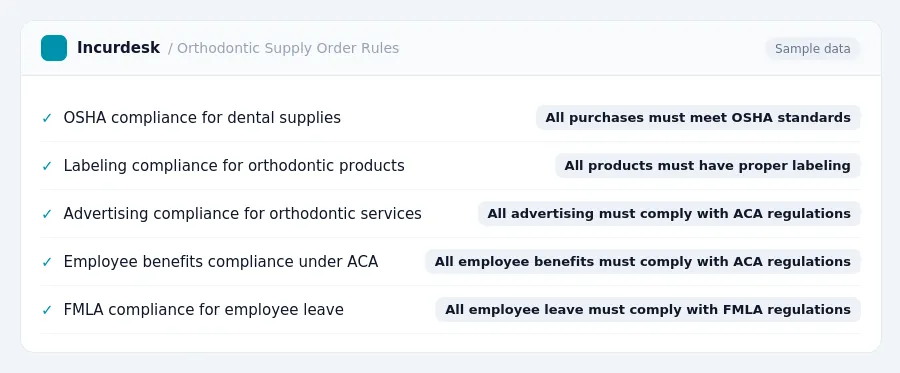
Maintain OSHA records and submit reports
- Maintain OSHA records and submit reports as required by law. You must keep OSHA records (Forms 300, 300A, and 301) for five years following the year to which they relate. This includes the OSHA Form 300A, which is a summary of work-related injuries and illnesses. Make sure to post this form from February 1 to April 30, 2026, in a visible location where employees can see it.
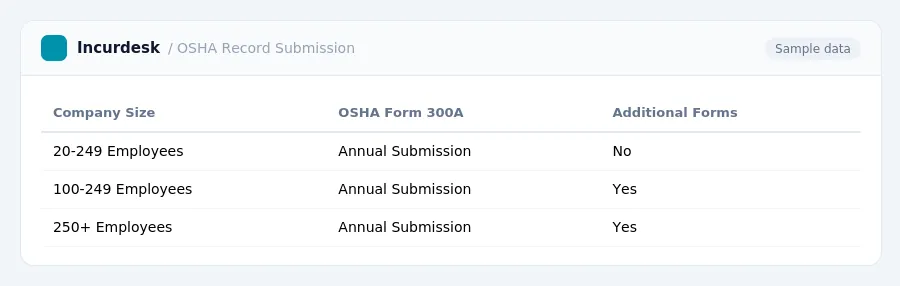
- Determine which OSHA records you need to submit. Companies with 20-249 employees in high-hazard industries must submit Form 300A annually. Companies with 100+ employees in high-hazard industries must submit Forms 300, 301, and 300A. Employers with 250+ employees in industries not labeled as high-hazard must submit Form 300A annually.
- Ensure you have the necessary records and submit them on time. Review your records carefully to make sure they are accurate and complete. If you need to submit records, send them to OSHA by the deadline specified in the regulations.
- Keep accurate records to avoid penalties. Failing to maintain accurate OSHA records can result in penalties and fines. Make sure to keep your records up to date and accurate to avoid any issues.
Understand ACA implications for employee benefits
-
This includes knowing the affordability threshold for employee health insurance, which is 9.96% of household income for self-only coverage for plan years beginning in 2026. This affects the employee's required contribution for coverage.
The ACA Employer Shared Responsibility payment amounts for 2026 are $3,340 under Code § 4980H(a) per full-time employee and $5,010 under Code § 4980H(b) per full-time employee. These amounts may vary, and you can check the Affordable Care Act (ACA) Employer Mandate for the most up-to-date information.
Many industries may shift from receipts-based to employee-based thresholds, but the specifics of this change vary by industry. You can check the Small Business Administration (SBA) Size Standards for more information on the implications of this change for your business.

Comply with FMLA and ACA regulations
As a small orthodontic practice, it's essential to understand the Family and Medical Leave Act (FMLA) and the Affordable Care Act (ACA) regulations that apply to your business. The FMLA applies to private employers with 50 or more employees, so if your practice meets this threshold, you must comply with the law.
- Notify employees of their FMLA rights and responsibilities in your practice's employee handbook or through a separate policy document.
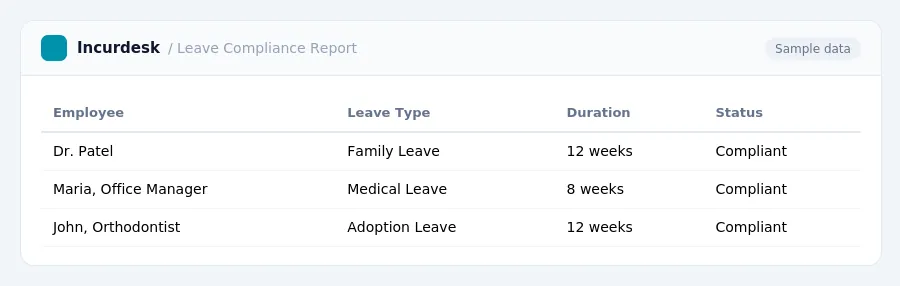
- Provide eligible employees with up to 12 weeks of unpaid leave for certain family and medical reasons, such as childbirth, adoption, or serious health conditions.
- Keep accurate records of employee leave, including dates of leave, reason for leave, and any medical certifications provided.
Under the ACA, employers with 50 or more full-time equivalent employees must offer affordable health coverage to their employees and their dependents. For plan years beginning in 2026, coverage is considered affordable if the employee's required contribution for self-only coverage does not exceed 9.96% of household income.
Be sure to review and update your practice's policies and procedures to ensure compliance with these regulations. Consult with a qualified attorney or benefits expert if you have any questions or concerns.
Verify labeling and advertising compliance
The FDA regulates labeling for all medical devices and advertising for restricted devices. The FTC regulates advertising for most other devices, including most 510(k)-cleared products.
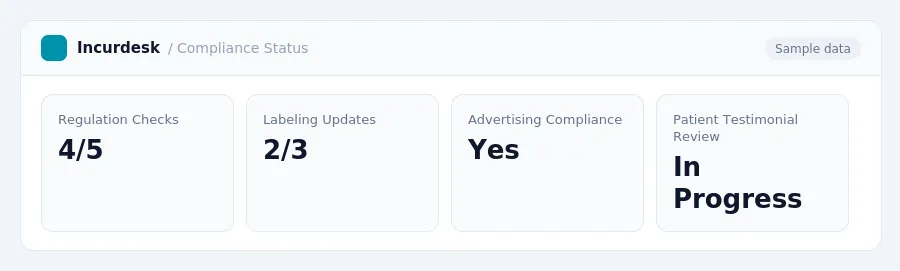
Patient testimonials are considered promotional labeling and must be truthful, not misleading, and consistent with the cleared or approved intended use.
To ensure compliance, check the FDA website for labeling regulations and the FTC website for advertising guidelines.
Verify that all labeling and advertising materials, including patient testimonials, meet these regulations.
Check the expiration dates of any labeling and advertising materials, and update them as necessary.
Review and update your labeling and advertising materials regularly to ensure compliance with changing regulations.
Keeping this simple: Incurdesk routes each expense to the right person for approval and keeps a record of who approved what. It is built for small orthodontic practice teams. Try it free.
Stop losing 4+ hours a week
30-day free trial · No credit card · Setup in 15 minutes