Award Entry Fees and Submission Cost Tracking
A practical, data-backed guide to controlling costs and automating expense workflows.
Small PR agency businesses need to understand how to track and categorize award entry fees for tax purposes, including deductibility as business expenses. To maximize tax savings and remain compliant with IRS and state regulations, it's essential to accurately record and manage award entry fees. For instance, if a PR agency wins a major award, they should document all related expenses, such as travel, accommodations, and food, and ensure the costs are properly categorized and recorded. To do this, they can use a public relations agencies expense management software to track and categorize their expenses, which can help them claim these deductions on their tax returns.
Tag every entry to a filing cabinet
Tracking Award Entry Fees is Crucial for Complying with IRS and State Regulations
For small PR agency businesses, accurately tracking award entry fees is essential for managing tax obligations and ensuring compliance with laws and regulations.
- Entry fees can range from a few hundred dollars to over $900 per entry, depending on the program and submission timing.
- The median entry fee across 89 award programs in October 2023 is $352.
The key to tracking award entry fees is to categorize each entry and maintain a clear audit trail.
Here are some steps to follow:
- Tag every entry to a filing cabinet or designated storage area.
- Use a consistent system for labeling and categorizing entries.
- Keep a record of each entry, including the award program, entry fee, and submission deadline.
- Include any supporting documentation, such as invoices or receipts, with each entry.
- Verify that each entry meets the IRS's deductible threshold (50% of the actual cost for 2024, provided it is properly documented).
It is essential to note that entertainment expenses, such as costs tied to business meetings, are generally non-deductible.
Business meals, on the other hand, may be deductible if they are 50% or more deductible. For example, if a business meal is 50% deductible, the cost of the meal is only 50% of the actual cost, provided it is properly documented.
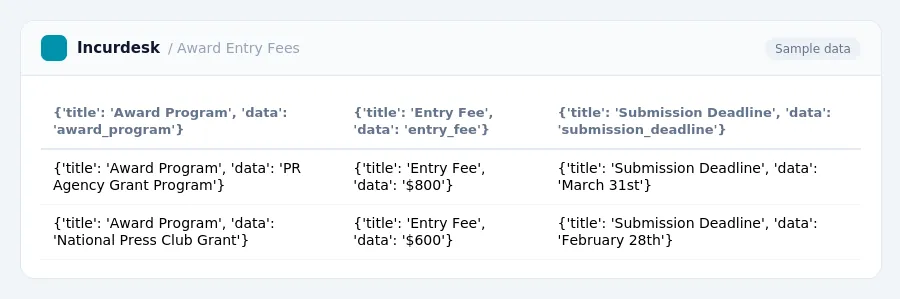
Track and categorize award entry fees
Here is the section titled "Track and categorize award entry fees":
1. Identify the awards that are eligible for tax deduction. This includes awards from reputable organizations like the USPTO Trademarks for Humanity Awards, which focuses on environmental impact, and award programs that align with your business's industry or theme. 2. Gather documentation for each award entry fee. This includes receipts, invoices, and any other records that prove the expense was for business purposes. Keep all receipts and invoices in a secure and easily accessible location, such as a filing cabinet. 3. Categorize each award entry fee into one of the following categories: * Business-related expenses * Travel expenses * Entertainment expenses * Miscellaneous expenses 4. Ensure that each award entry fee is properly documented and categorized. This includes verifying that the expense meets the IRS's requirements for deductibility as a business expense. 5. Keep a record of your award entry fees for at least three years in case of an audit. This will help you to easily track and verify your expenses. 6. Consider using a separate spreadsheet or database to track your award entry fees. This can help you to easily categorize and summarize your expenses, and to make it easier to identify trends or patterns. 7. Review and update your award entry fee tracking regularly. This includes reviewing your records in 2024, and updating your spreadsheet or database as needed.
Document each entry to ensure compliance
Many award programs offer genuinely free entry categories, such as certain startup or non-executive individual categories in the American Business Awards. However, even if some award programs offer free entry categories, it's essential to track and document each entry to ensure compliance with tax regulations.
To track and document each entry, follow these steps:
- Keep a record of each award entry, including the name of the award, the year of entry, and the date of entry.
- Note the amount of entry fee paid, and whether it was a one-time payment or part of a series of payments.
- If the entry fee was part of a series of payments, note the total amount paid and the number of payments made.
- Keep a record of any documentation provided with the entry, such as receipts, invoices, or certificates of payment.
- If the entry was for a free entry category, note this in your records.
- If the entry was for a paid entry category, note the amount of the entry fee paid and the date of payment.
- Keep a record of any correspondence with the award program regarding the entry, including dates and times of communication.
For 2024, most business meals are only 50% deductible, provided they are properly documented.
Maintain a record of deductions and expenses
The IRS allows business owners to deduct certain expenses related to award entry fees. However, there are limitations and requirements to follow.
However, if the meal was for entertainment purposes, such as a company holiday party or meeting, it is generally not deductible.
To ensure compliance with the IRS, it's essential to keep a record of each award entry fee, including the date, amount, and purpose of the expense. This will help you to:
- Track your deductions accurately
- Keep your records up-to-date
- Avoid any potential issues with the IRS
Make sure to include all relevant information, such as:
- The name of the award and the organization that sponsored it
- The date and purpose of the expense
- The amount of the expense
- A description of the expense (optional)
If you're unsure about any aspect of award entry fees or deductibility, consult with a tax professional or accountant for guidance.
Conduct annual review and update entry tracking
As a small PR agency business, it's essential to regularly review and update your entry tracking to ensure compliance with IRS and state regulations. Here are the steps to follow:
1. Identify the entry types: Determine which types of entry fees you need to track, such as award entry fees, travel expenses, and business meals. Make a list of the specific entries you need to record. 2. Categorize entries: Organize your entries into categories, such as: * Award entry fees * Travel expenses * Business meals * Entertainment expenses * Miscellaneous expenses 3. Document each entry: Keep a record of each entry, including: * Date of entry * Type of entry (e.g. award entry fee, travel expense) * Description of the entry * Receipts or invoices for the entry 4. Ensure compliance: Verify that your records meet the IRS and state regulations, including: * Filing fees and taxes * Business expense deductions * Compliance with award entry fees and state franchise tax 5. Update your records: Review and update your records annually, or as needed, to ensure you remain compliant and take advantage of available tax incentives.
For 2024 and 2025, the Texas Comptroller recommends filing a business expense account for eligible businesses with 50 or fewer employees. Sole proprietors operating as Schedule C filers are generally exempt from the state franchise tax. For more information, please refer to the Texas Comptroller's website.
Keeping this simple: Incurdesk collects every receipt and expense report in one place, so spending is easy to review. It is built for small pr agency teams. Try it free.
AI expense management for finance teams and whoever keeps the books. It checks every expense against your rules, approves the routine ones and chases missing receipts for you.
Try it free for 30 days →Stop losing 4+ hours a week
30-day free trial · No credit card · Setup in 15 minutes