
Billing Reimbursable Expenses to Clients with Markup
A practical, data-backed guide to controlling costs and automating expense workflows.
To ensure profitability, firms can add a markup to these costs, commonly ranging from 5% to 25% or more. Effective architecture expense management for under $10/user (2026) can help streamline the process and reduce disputes.
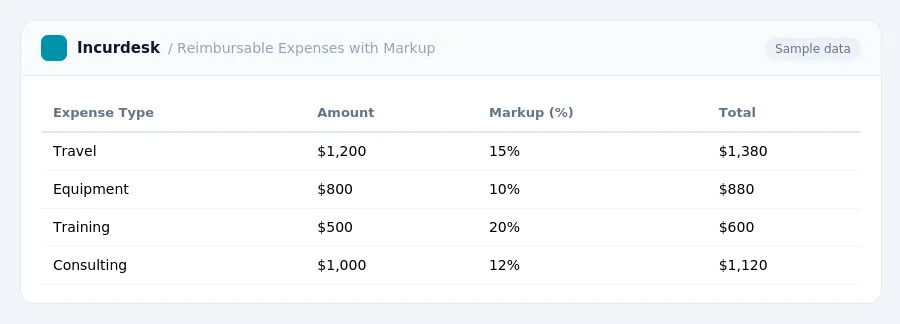
According to Contractual Clarity on Reimbursables (2026), it is essential to detail reimbursable expenses and any associated markups in client contracts. To achieve this, architects should:
- Specify the type of expenses that are eligible for reimbursement, such as travel costs, materials, and services.
- Include a provision for markups, which can range from 5% to 25% or more, as is common in the industry.
- Consider using a "Reimbursable Multiple Fee Charge" (RMFC), which is typically around 1.25 times the direct cost.
Architects should keep detailed records of expenses, including receipts and invoices, to support reimbursement claims.
It is essential to review and update client contracts regularly to ensure that they accurately reflect the terms of the agreement, including reimbursable expenses and markups.
Architects should also be aware of the deadline for submitting reimbursement claims, which can vary depending on the client contract and project requirements.
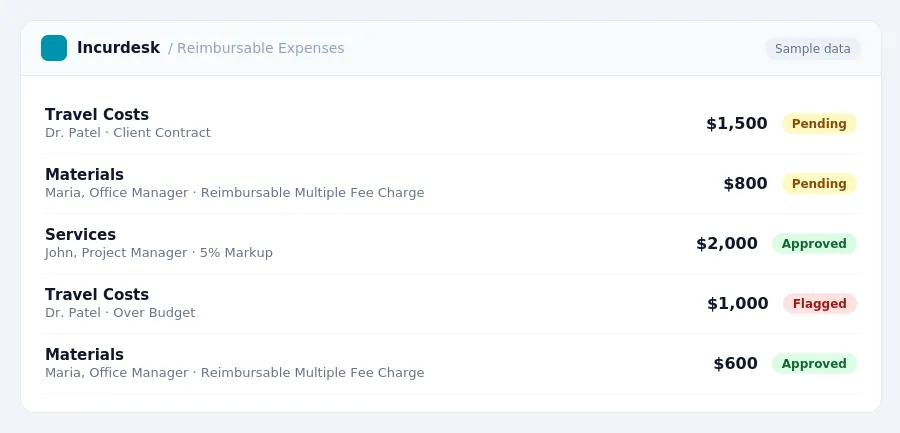
To establish an accountable plan, follow these steps:
- Require expenses to have a business connection.
- Ensure employees provide timely documentation (receipts) within a reasonable period. The safe harbor for substantiation is 60 days.
Receipts are generally required for reimbursements. While there's a "$75 rule" that may excuse a receipt for a specific expense, a record of the expense's business purpose is still necessary.
For contractors, the accountable plan rules do not apply. Instead, the key is whether the contractor adequately accounts for the expense. If they do, the reimbursement is not reported on an information return. If not, it's considered part of their payment for services.
Billing for Business-Related Expenses: Common Examples for Architects
Common reimbursable expenses for architects include:
- Travel expenses: flights, hotels, rental cars
- Meals during business trips
- Mileage
- Office supplies
- Professional development: courses, events
- Remote work necessities: internet, phone
- Printing
- Drawing sets
- Delivery charges
- Permit fees
- Models
It's common for architects to add a markup to reimbursable expenses, often ranging from 5% to 25% or more. This markup covers administrative costs, record-keeping, and billing efforts associated with managing these expenses. Some firms may use a "Reimbursable Multiple Fee Charge" (RMFC), commonly around 1.25 times the direct cost.
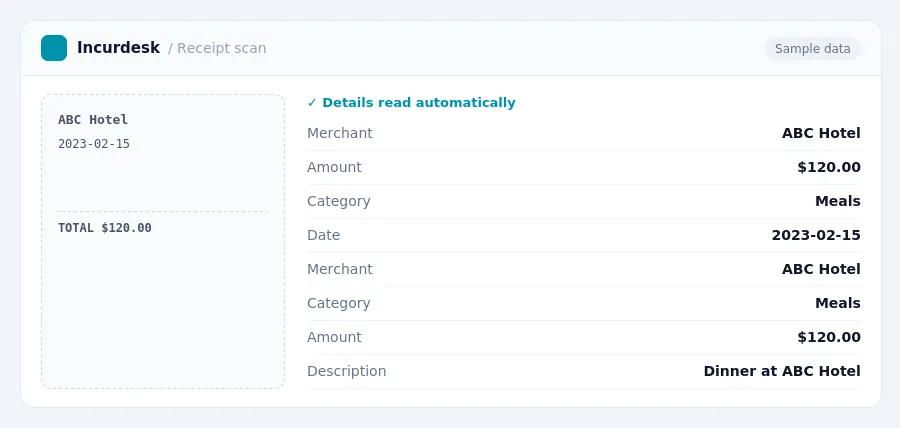
To accurately bill clients, you'll need to track and document each reimbursable expense. This can be done using a spreadsheet or accounting software, and should include the following information:
Adding a Markup to Reimbursable Expenses: Strategies and Best Practices
When deciding whether to add a markup to reimbursable expenses, consider the time and resources required to manage these costs. It's essential to strike a balance between recovering your firm's expenses and maintaining a competitive pricing strategy.
Start by determining your firm's overhead costs, including administrative time, record-keeping, and billing efforts. You can then use this information to set a markup that covers these expenses.
To apply a markup, you can use the following steps:
- Calculate the total reimbursable expense.
- Determine the desired markup percentage or RMFC.
- Apply the markup to the total expense to calculate the final billable amount.
Be sure to clearly document your markup and billing process to ensure transparency with clients and to avoid disputes.
Documenting and Tracking Reimbursable Expenses: A Consistent Billing and Accounting Process
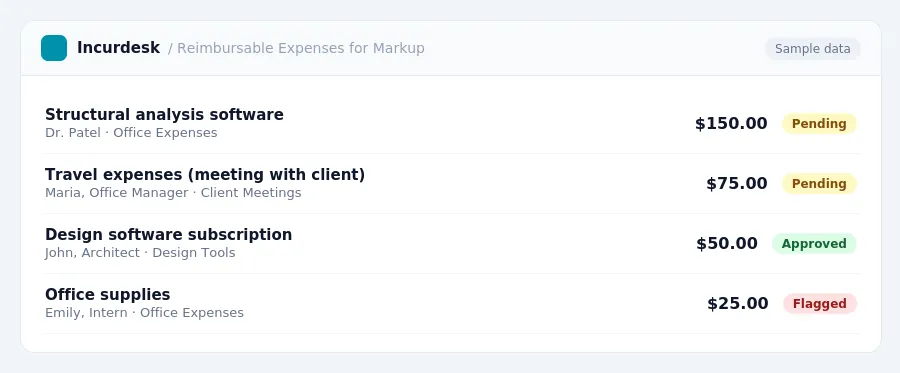
Documenting and tracking reimbursable expenses is crucial for maintaining accurate records and ensuring timely payments from clients. To establish a consistent billing and accounting process, consider the following steps:
1. Designate a central location for storing receipts, invoices, and other supporting documentation. This could be a shared digital folder or a physical filing cabinet.
2. Implement a standardized naming convention for expense files, including the project name, date, and type of expense.
3. Set up a system for categorizing and coding expenses, such as using a spreadsheet or accounting software.
4. Regularly review and update expense records to ensure accuracy and completeness.
5. Consider implementing a "three-way match" process, where the expense is matched with the receipt, the invoice, and the payment to ensure that all transactions are properly recorded.
6. Maintain clear and detailed records of all reimbursable expenses, including the date, amount, and purpose of each expense.
7. Ensure that all employees understand the importance of accurate record-keeping and are trained on the firm's expense documentation procedures.
8.
Tax rules, limits and rates change. Confirm current figures with the IRS or your accountant before you file.
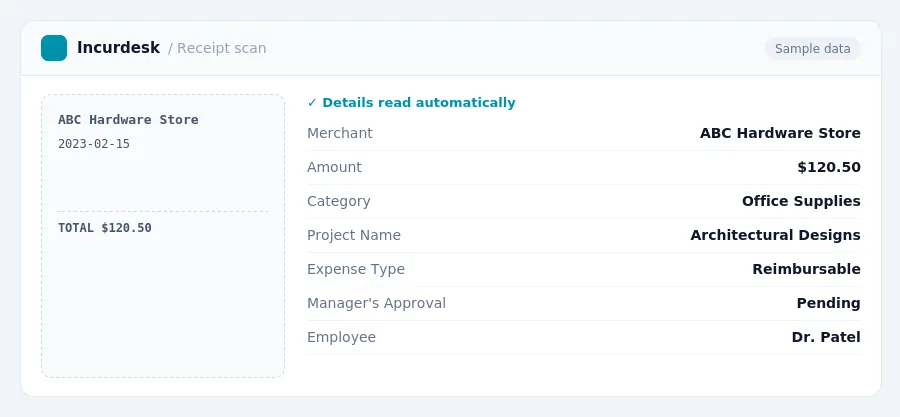
Keeping this simple: Incurdesk turns submitted expenses into clean expense reports. It is built for small architecture teams. Try it free.
Stop losing 4+ hours a week
30-day free trial · No credit card · Setup in 15 minutes