
Brokerage Corporate Cards: Who Should Get One
A practical, data-backed guide to controlling costs and automating expense workflows.
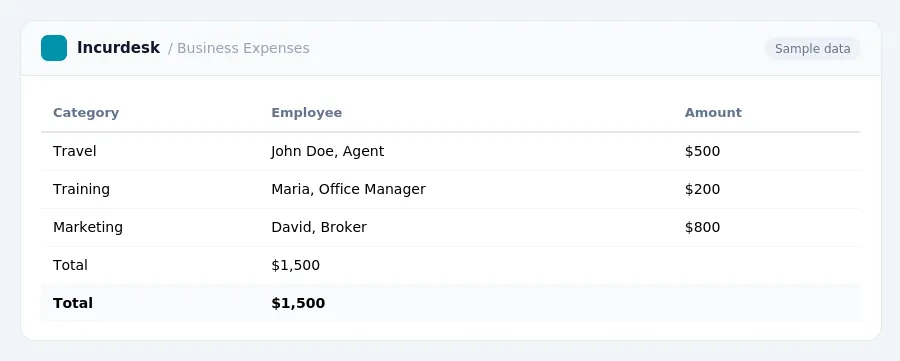
Any business that regularly incurs expenses on behalf of employees should consider getting a corporate card. These expenses can include travel, training, marketing, and other business-related costs. For the bigger picture, see our guide to real estate expense management for under $10/user (2026).
Common Pitfalls and Considerations
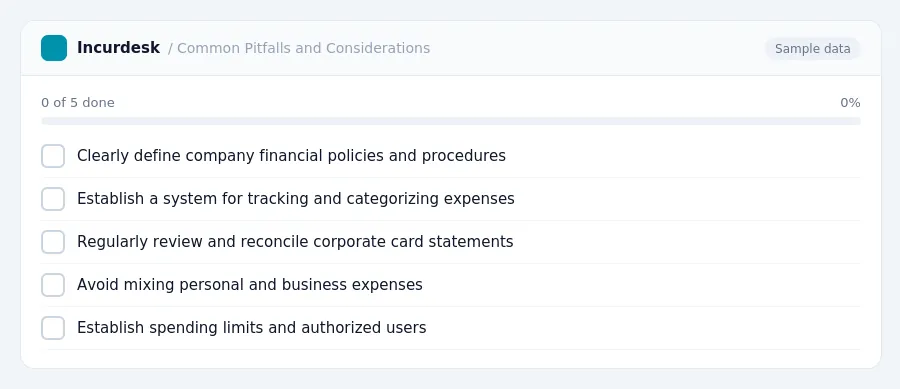
When considering a corporate card for your small real estate business, be aware of common pitfalls to avoid. Here are some key considerations:
- Ensure you clearly define the company's financial policies and procedures for corporate card usage, including who is authorized to use the card, what expenses are eligible for reimbursement, and any spending limits.
- Regularly review and reconcile corporate card statements to prevent unauthorized charges and ensure accurate expense tracking.
- Establish a system for tracking and categorizing corporate card expenses, such as using a spreadsheet or accounting software, to simplify tax preparation and expense reporting.
- Avoid mixing personal and business expenses on a single card, as this can lead to confusion and potential tax implications.
- Be cautious when using corporate cards for employee expenses, such as travel or entertainment, and ensure that these expenses align with company policies and tax regulations.
Keeping this simple: Incurdesk turns submitted expenses into clean expense reports. It is built for small real estate teams. Try it free.
Choosing the Right Corporate Card for Your Business
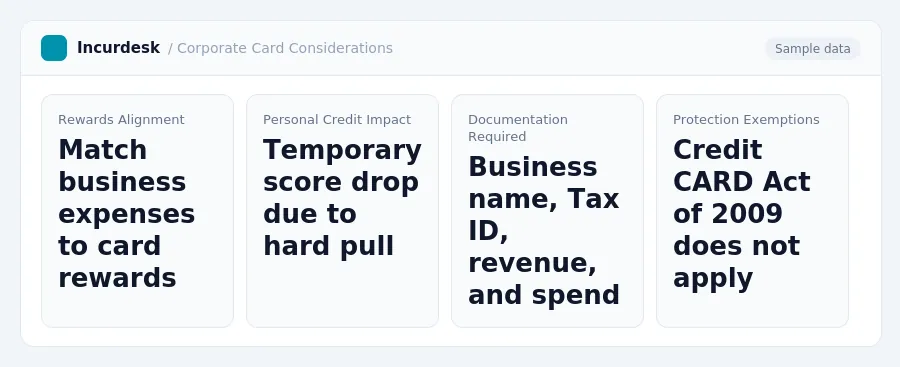
First, think about the type of rewards that will be most beneficial for your business. If you're looking for cash back or points, choose a card that offers these rewards on categories that align with your business expenses, such as travel or office supplies.
For 2026, this reporting threshold is set to rise to $2,000.
Also, consider the impact on your personal credit. Most business credit card issuers perform a "hard pull" on your personal credit during the application process, which may temporarily lower your score by a few points.
When applying for a corporate card, be prepared to provide required documentation, including the legal business name, Tax ID Number, annual business revenue, estimated monthly spend, and the number of employees.
Finally, be aware that most protections under the Credit CARD Act of 2009 do not apply to business credit cards, as the act excludes business-purpose credit.
By considering these factors, you can choose a corporate card that meets the needs of your small real estate business and helps you manage your expenses effectively.
Who Should Get a Brokerage Corporate Card?
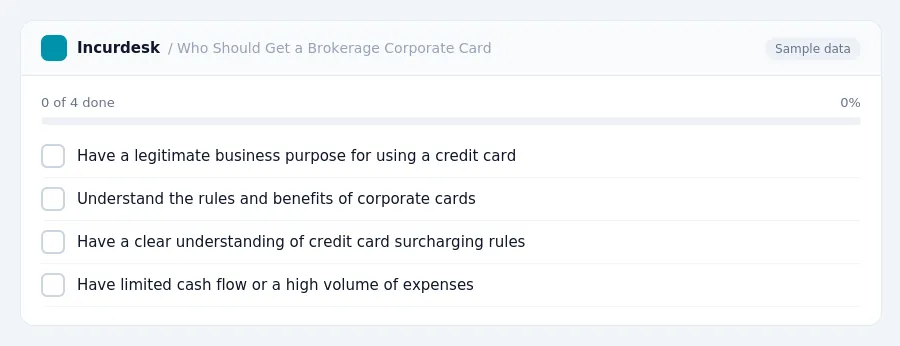
Small real estate businesses with 5-50 staff may benefit from a brokerage corporate card. These cards are designed to simplify business expenses, improve financial management, and increase tax efficiency. However, not all businesses qualify for corporate cards. Typically, businesses with a legitimate business purpose for using a credit card and a clear understanding of the rules and benefits are good candidates.
- Businesses should have a clear business purpose for using a credit card, such as paying for travel, office supplies, or marketing expenses.
- Businesses should have a legitimate need for a credit card, such as limited cash flow or a high volume of expenses.
- Businesses should be aware of the rules regarding credit card surcharging, which vary by state. Currently, Connecticut, Massachusetts, and Maine prohibit surcharging entirely, while others cap the amount or have specific disclosure requirements.
- Businesses should consider their financial situation and whether a credit card will help them manage expenses and improve cash flow.
Benefits and Rules of Corporate Cards
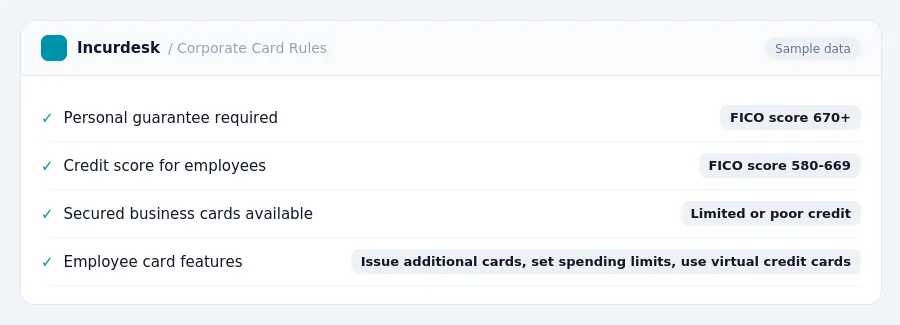
- Most small business credit cards require a personal guarantee, meaning the owner is liable if the business fails to pay.
- Issuers review personal FICO scores for these cards, with a score of 670 or higher generally recommended, and 740+ being ideal for higher limits and lower APRs.
When it comes to credit scores, a good to excellent personal credit score (FICO 670+) is needed for most business credit cards.
- Some cards may be accessible with fair credit (580-669).
- Secured business cards are an option for those with limited or poor credit.
Many business credit cards offer features that can benefit your business, including:
- The ability to issue additional cards to employees at no extra cost.
- The option to set spending limits on these employee cards.
For online purchases or employee expenses, virtual credit cards can be used, offering enhanced security as they can be turned on and off and have randomly generated numbers.
Stop losing 4+ hours a week
30-day free trial · No credit card · Setup in 15 minutes