
Brokerage Expense Policy Template
A practical, data-backed guide to controlling costs and automating expense workflows.
A real estate brokerage needs a clear, written expense policy to guide employees on reimbursable business expenses, limits, and documentation requirements. This policy ensures IRS compliance, prevents overspending, and promotes consistent reimbursement. For the bigger picture, see our guide to real estate expense management for under $10/user (2026).
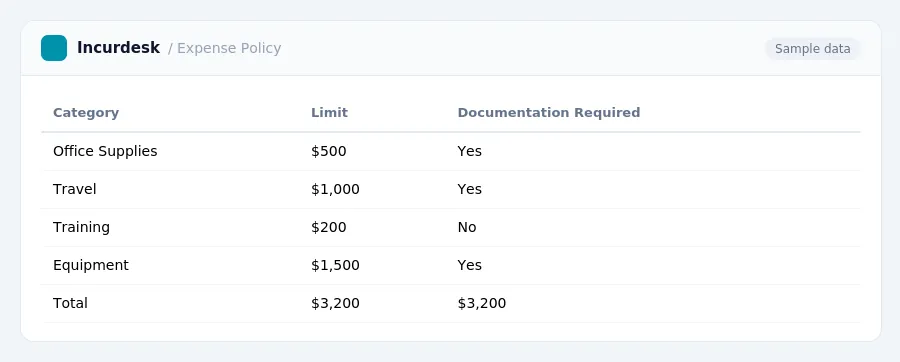
Expense Policy Overview and Purpose
A clear, written expense policy is essential for real estate brokerages to ensure compliance with IRS regulations, prevent overspending, and promote consistent reimbursement. This policy outlines the types of expenses that are reimbursable, the limits for each expense category, and the documentation requirements for submission and approval.
The policy covers various business expenses, including advertising, office supplies, contract labor, insurance, rent, repairs, postage, travel with a business purpose, utilities, and employee wages and benefits. It is crucial to maintain accurate records of these expenses, as the IRS requires documentation to include the amount, date, location, and business purpose of each expense.
When it comes to real estate commissions, it is essential to note that those paid by the seller of business property are capitalized, not currently deductible as an operating expense. These commissions are added to the property's basis for gain/loss calculation.
By establishing a comprehensive expense policy, your brokerage can ensure that all employees understand what expenses are eligible for reimbursement and what documentation is required. This helps to prevent misunderstandings and ensures that your business stays compliant with IRS regulations.
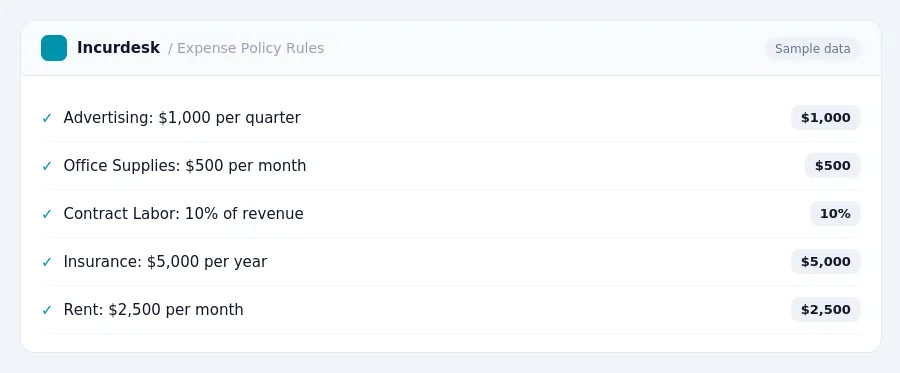
Reimbursable Business Expenses and Limits
Reimbursable business expenses are ordinary and necessary expenses for the operation of [Company Name]. These expenses may include:
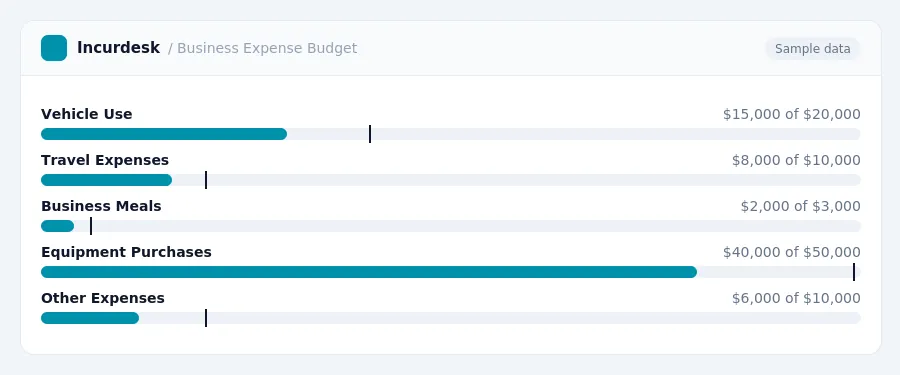
- Business use of your personal vehicle: [Company Name] will reimburse you at a rate of 72.5 cents per mile for business use of your vehicle from January 1 to June 30, 2026, and 76 cents per mile from July 1 to December 31, 2026.
- Travel expenses, including transportation, lodging, and meals.
- Business meals: [Company Name] will reimburse you for 50% of the cost of business meals, unless they are meals for employees.
- Equipment purchases: [Company Name] will reimburse you for the cost of equipment purchases, but the Section 179 expensing limit may apply. This limit is $4,090,000 per year.
- Other business-related expenses, such as office supplies, postage, and professional fees.
When incurring business expenses, please keep in mind the following limits:
- You may not use company funds to purchase personal items or pay for personal expenses.
- You may not use company funds to pay for expenses that are not ordinary and necessary for the operation of [Company Name].
Expense Documentation and Record-Keeping Requirements
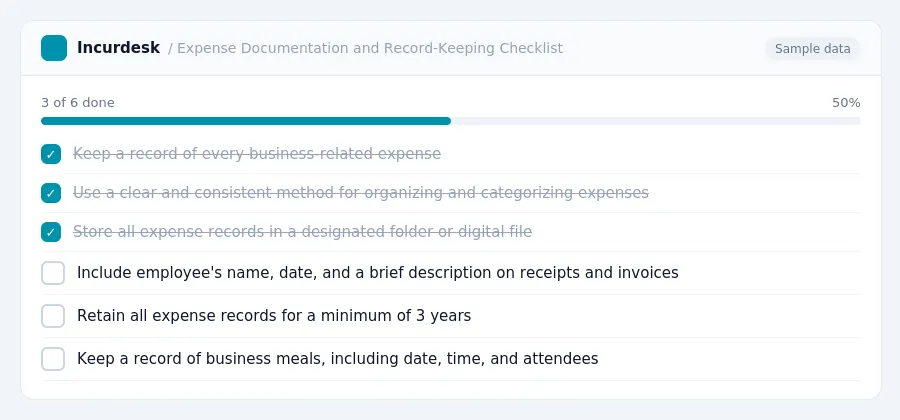
Expense documentation and record-keeping requirements are crucial for maintaining accurate and transparent financial records. To ensure compliance with IRS regulations, [Company Name] requires that all employees maintain detailed and organized records of their business expenses. Here are the specific requirements:
- Keep a record of every business-related expense, including receipts, invoices, and bank statements.
- Use a clear and consistent method for organizing and categorizing expenses, such as by date, type, or project.
- Store all expense records in a designated folder or digital file, easily accessible by the accounting department.
- Include the employee's name, date, and a brief description of the expense on all receipts and invoices.
- Retain all expense records for a minimum of 3 years, in case of an audit or review.
For business meals, employees should keep a record of the date, time, location, and number of people attending, as well as a detailed receipt or invoice. Meals are generally 50% deductible, unless they are meals for employees.
Expense Reimbursement Process and Timelines
To ensure timely and accurate reimbursement, follow these steps:
- Submit your reimbursement request within 60 days of incurring the expense.
- Provide all required documentation, including receipts and explanations for each expense.
- Complete the reimbursement request form and submit it to your supervisor or designated person.
Upon receiving your reimbursement request, your supervisor will review and approve or deny the request. If approved, the reimbursement will be processed within [timeframe, e.g., 7-10 business days].
Reimbursements will be paid in a timely manner, but no later than [60 days from the date of the expense].
Keep receipts and records of business meals to support your reimbursement request.
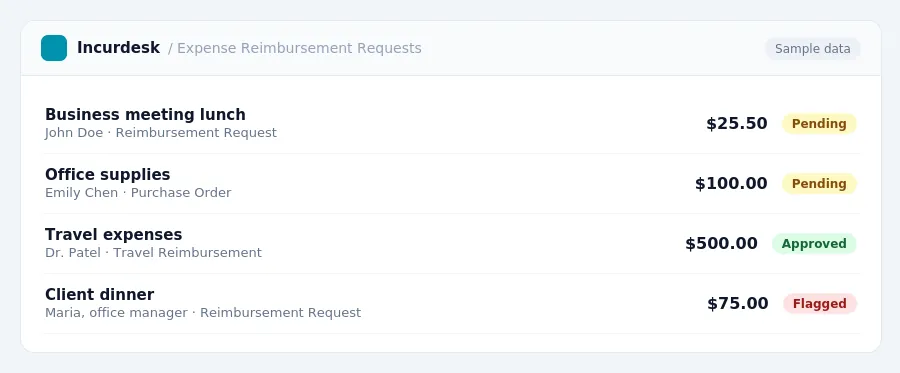
Expense Policy Template
Below is a template for your brokerage's expense policy. Fill in the blanks with your company's specific details and policies.
Expense Policy Template:
- Expense Policy Overview and Purpose:
[Company Name]'s expense policy is designed to ensure compliance with IRS regulations and to provide guidelines for employees on reimbursable business expenses. - Reimbursable Business Expenses and Limits:
Expense Type Limit Additional Requirements Business Meals Varies (check IRS guidelines) Must be 50% deductible, unless meals for employees Travel Varies (check company travel policy) Must be pre-approved and have receipts Office Supplies $[dollar limit] Must have receipts and be reasonable for business use - Expense Documentation and Record-Keeping Requirements:
All expense receipts must be attached to the expense report and kept on file for [time period] months. - Expense Reimbursement Process and Timelines:
- Submit expense report to supervisor within [time period] days of expense.
- Supervisor reviews and approves expense report within [time period] days.
- Employee receives reimbursement within [time period] days of approval.
Tax rules, limits and rates change. Confirm current figures with the IRS or your accountant before you file.
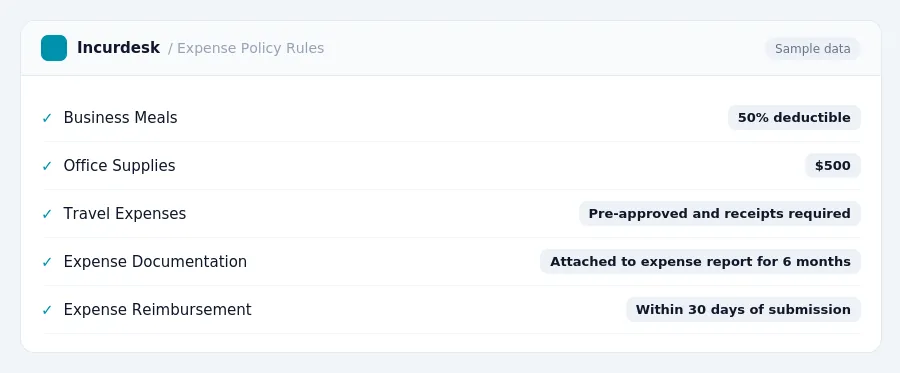
Keeping this simple: Incurdesk keeps receipts and approvals in one place, which makes a written policy easier to follow. It is built for small real estate teams. Try it free.
Stop losing 4+ hours a week
30-day free trial · No credit card · Setup in 15 minutes