Budget vs Actual Reporting for Client Campaigns
A practical, data-backed guide to controlling costs and automating expense workflows.
For small marketing agencies, expense management is crucial to ensure profitable campaigns and client satisfaction. Tracking campaign budgets against actual spending is a vital financial reporting practice that helps identify areas for cost savings and optimize client relationships. By following best practices, agencies can effectively manage client finances and maintain a healthy profit margin. For the bigger picture, see our guide to expense management for marketing agencies.
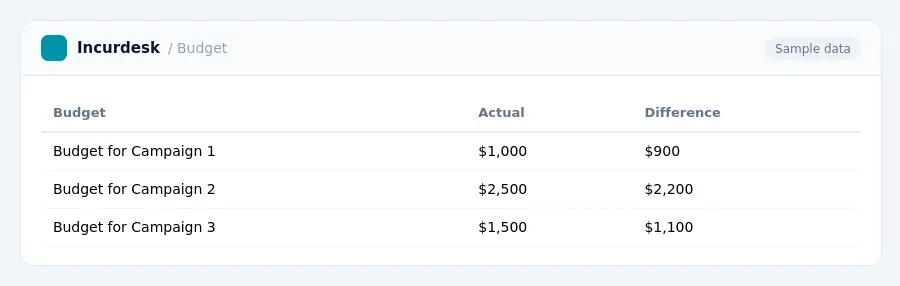
Budget vs Actual Reporting for Client Campaigns
The CMO Survey reports an average marketing budget of 9.0% of revenue in January 2026. A budget vs. actual report compares planned financial figures with actual results, highlighting variances. To calculate the variance, subtract the budgeted amount from the actual result.
A favorable variance improves the result, while an unfavorable variance worsens it. For example, if revenue is above budget, a favorable variance is positive, while a negative variance is unfavorable. The CMO Survey reports that a favorable variance can lead to cost savings and improved profitability.
To achieve a favorable variance, marketing agencies should regularly review their client campaigns and compare the actual results with the planned budget. This involves tracking expenses, monitoring spending, and analyzing data to identify areas where costs can be optimized.
By implementing this process, marketing agencies can ensure that their client campaigns are delivering value and achieving their intended results. This, in turn, can lead to increased client satisfaction and loyalty, as well as improved financial performance.
Financial Reporting Practices
To ensure accurate comparisons between budget and actual spending, it is essential to use the same reporting period, entity, currency basis, and account structure for both. This means that the same date, fiscal year, currency, and accounting method should be applied to the budget and actuals.
For example, if a client's marketing budget is set for January 1, 2023, and the actuals are reported for the same period, the financial reports should be based on the same date and fiscal year. Similarly, the currency basis and accounting method used for the budget and actuals should be the same.
Using different reporting periods, entities, currencies, or account structures can lead to inaccurate comparisons. For instance, if a client's budget is based on a 2022 financial year, but the actuals are reported for a 2023 financial year, the comparison will not be accurate.
This benchmark can be used as a reference point to ensure that the financial reports are accurately comparing the client's spending against a common standard.
Common Pitfalls
When tracking campaign budgets against actual spending, small marketing agencies often encounter common pitfalls that can lead to financial inaccuracies and client dissatisfaction. One of the most significant issues is the failure to properly categorize expenses, making it difficult to accurately calculate the campaign's overall profitability.
Another common pitfall is the tendency to underestimate expenses, particularly for services that are not directly tied to the campaign's main objective. This can result in an inaccurate picture of the campaign's financial performance and may lead to unrealistic client expectations.
Additionally, agencies that fail to regularly review and reconcile their expenses may miss significant discrepancies between actual and reported spending. This can be particularly problematic if the client is relying on the agency to deliver specific results, such as increased website traffic or sales.
It's essential for agencies to maintain accurate and transparent records, and to regularly review and reconcile their expenses to ensure that they are accurately reflecting the campaign's financial performance. This includes properly categorizing expenses, tracking irregular or variable expenses, and regularly reconciling bank statements and invoices to ensure that they are in line with the agency's actual spending.
Practical Advice
Budget vs Actual Reporting for Client Campaigns
As a small marketing agency, accurately tracking campaign budgets against actual spending is crucial to ensure profitability and client satisfaction. Here are some essential financial reporting practices to follow:
- Keep accurate and detailed records: Maintain a clear and transparent record of all campaign expenses, including invoices, receipts, and bank statements. This will help you identify discrepancies and ensure compliance with client budgets.
- Set realistic client budgets: Establish realistic client budgets that align with your agency's capabilities and the scope of the project. This will help you manage client expectations and avoid over-invoicing.
- Regularly review and reconcile: Schedule regular reviews of client budgets to ensure they remain accurate and on track. Reconcile any discrepancies promptly to prevent delays or financial issues.
- Communicate transparently: Clearly communicate with clients about any changes or issues that may impact their budget. Be transparent about your methodology and any assumptions made during the project.
- Monitor and adjust: Continuously monitor your agency's performance and adjust your budget and reporting practices as needed to ensure alignment with client expectations and agency goals.
- Comply with industry standards: Familiarize yourself with industry standards and best practices for budgeting and reporting in the marketing industry. This may include adhering to client budgets, industry benchmarks, and regulatory requirements.
Managing Client Finances for Profit and Satisfaction
As a small marketing agency, accurately tracking client campaigns and managing client finances is crucial for profitability and client satisfaction. Here are some essential steps to follow:
- Set clear expectations: Before starting a campaign, clearly communicate with the client what you will charge, what services will be included, and what is expected in terms of deliverables. This will help prevent misunderstandings and ensure that everyone is on the same page.
- Use a detailed client agreement: Include a comprehensive client agreement that outlines the scope of work, payment terms, and any other important details. This will serve as a reference point for both parties and help prevent disputes.
- Track expenses and invoices: Keep accurate records of all expenses, including materials, equipment, and travel. Also, ensure that all invoices are sent to the client on time and include any necessary documentation, such as receipts and contracts.
- Regularly review and adjust: Schedule regular check-ins with the client to review progress, discuss any challenges, and make adjustments to the project as needed. This will help prevent scope creep and ensure that the client is happy with the final result.
- Prioritize client satisfaction: Remember that client satisfaction is crucial for long-term success. Respond promptly to client concerns, and be transparent about any issues that arise during the campaign.
By following these steps, you can effectively manage client finances and ensure that you are providing value to your clients while also maintaining a healthy and profitable business.
Keeping this simple: Incurdesk collects every receipt and expense report in one place, so spending is easy to review. It is built for small marketing agency teams. Try it free.
AI expense management for finance teams and whoever keeps the books. It checks every expense against your rules, approves the routine ones and chases missing receipts for you.
Try it free for 30 days →Stop losing 4+ hours a week
30-day free trial · No credit card · Setup in 15 minutes