
Busy Season Meal and Overtime Expense Policy
A practical, data-backed guide to controlling costs and automating expense workflows.
As an accounting business owner or manager, understanding the rules for deducting business meals and overtime expenses is crucial for accurate accounting expense management for under $10/user (2026). Additionally, you'll need to follow specific guidelines for reporting and deducting overtime compensation for your employees.
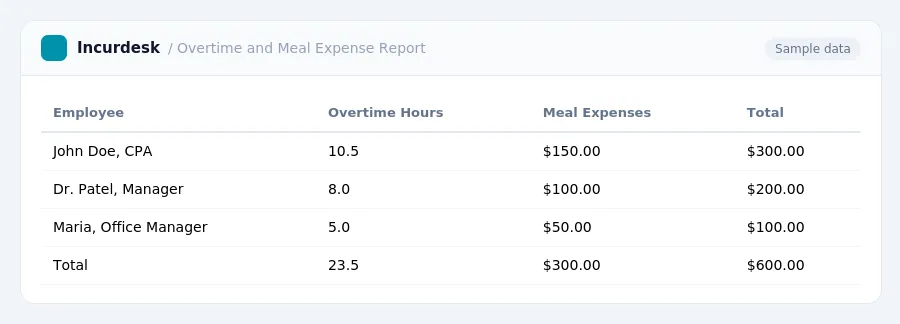
To start, understand the overtime pay rate rule, which has been in place since 1938 and was not affected by 2026 regulatory changes.
The standard salary level for overtime exemption is $684 per week ($35,568 annually) in 2026. When calculating qualified overtime, consider the Fair Labor Standards Act (FLSA) half-time premium above straight time.
Keep accurate records of business meals, including the date, time, location, and business purpose.
Remember to report and deduct qualified overtime expenses separately from regular wages.
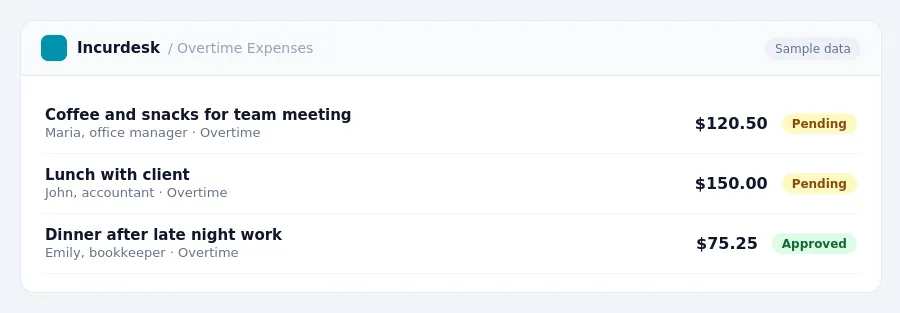
When it comes to deducting meal expenses, small accounting firms need to be aware of what's allowed and what's not.
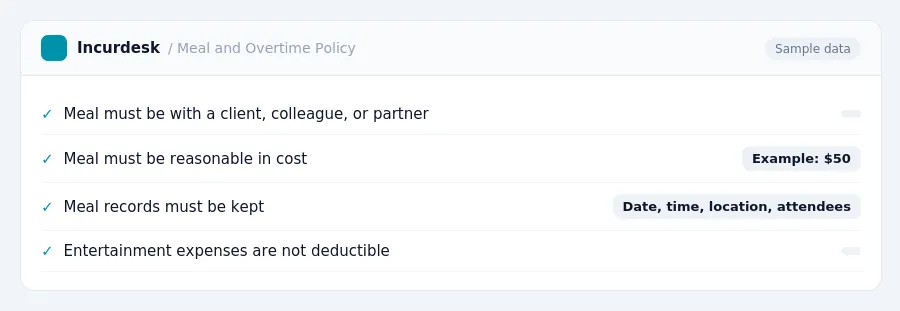
- The meal must be with someone who is a client, colleague, or partner.
- The meal must be reasonable in cost.
Here's an example: Let's say you take a client out for dinner to discuss a new project. The meal costs $50.
Keep in mind that you'll need to keep records of the meal, including the date, time, location, and who was present. This will help you prove that the meal was business-related if you're audited.
Also, remember that you can't deduct the cost of meals that are considered entertainment, such as tickets to a sporting event or a concert.
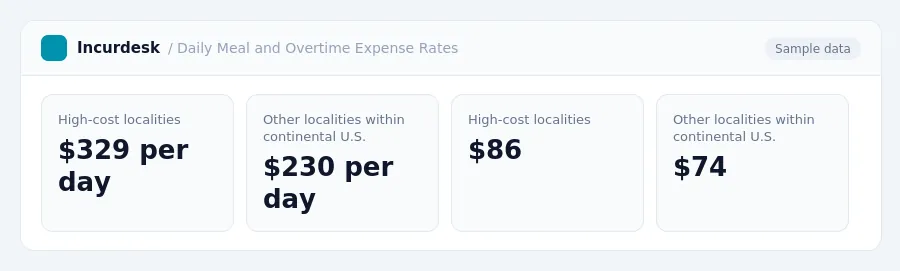
- High-cost localities: $329 per day
- Other localities within the continental U.S.: $230 per day
- High-cost localities: $86
- Other localities within the continental U.S.: $74
Special transportation industry M&IE rates are:
- Travel within the continental U.S.: $80
- Travel outside the continental U.S.: $86
Common Mistakes and FAQs: Meal and Overtime Expenses for Small Accounting Firms
When it comes to meal and overtime expenses, small accounting firms often encounter common mistakes that can lead to IRS scrutiny or even disallowed deductions. Here are some frequently asked questions and potential pitfalls to watch out for:
Q: What if I don't have receipts for meal expenses under $75? Can I still deduct them?
A: No, the IRS generally requires receipts for meal expenses of $75 or more. Without receipts, you may not be able to deduct these expenses.
Q: How can I ensure I'm deducting meal expenses correctly?
A: To avoid potential issues, keep detailed records of meal expenses, including receipts for amounts over $75. For meal expenses under $75, consider using a per diem rate (see our guide to per diem rates for more information).
Q: What if I'm audited and the IRS disallows my meal expense deductions? Can I appeal the decision?
A: If the IRS disallows your meal expense deductions, you may be able to appeal the decision. However, it's essential to keep accurate records and follow IRS guidelines to minimize the risk of disallowance in the first place.
Q: Can I deduct the full cost of a business meal, or is there a limit?
This means that if you spend $100 on a business meal, you can deduct $50.
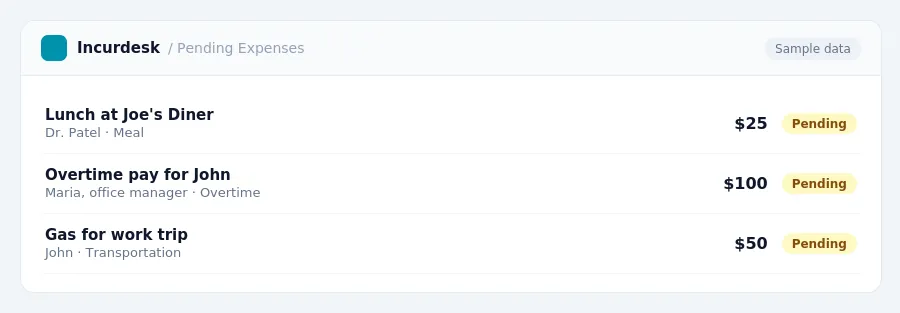
Keeping this simple: Incurdesk keeps receipts and approvals in one place, which makes a written policy easier to follow. It is built for small accounting teams. Try it free.
Stop losing 4+ hours a week
30-day free trial · No credit card · Setup in 15 minutes