
Capital Improvements vs Repairs for Rental Properties
A practical, data-backed guide to controlling costs and automating expense workflows.
To manage tax liability and cash flow effectively, it's essential for small real estate businesses to understand the distinction between capital improvements and repairs for rental properties. Capital improvements are expenditures that increase a property's value or extend its useful life, while repairs are necessary to maintain its condition. By accurately categorizing these expenses, you can save on taxes and optimize your real estate expense management for under $10/user (2026), but misclassifying them can lead to costly penalties. For a complete overview, see our expense management guide.
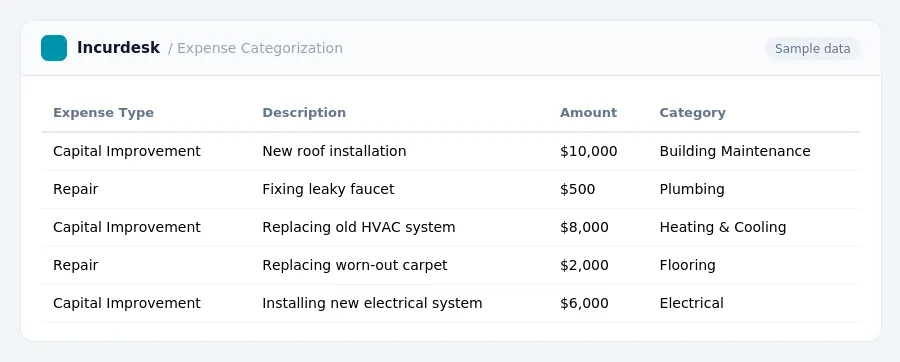
Distinguishing Between Repairs and Capital Improvements
To determine whether an expense is a repair or a capital improvement, consider the following criteria. Repairs are expenses that keep a rental property in ordinary operating condition without materially adding value, substantially prolonging its useful life, or adapting it to new uses. Examples of repairs include:
- Fixing broken windows
- Patching drywall holes
- Replacing damaged floor tiles
- Repairing plumbing leaks
- Painting walls
- Patching a leaky roof section
- Servicing the HVAC system
These types of expenses are immediately deductible as ordinary business expenses in the year they are paid. However, if an expense meets one of the following conditions, it may be considered a capital improvement:
- Materially adds value to the property
- Substantially prolongs its useful life
- Adapts it to new uses
If an expense is a capital improvement, it must be capitalized and depreciated over a set period.
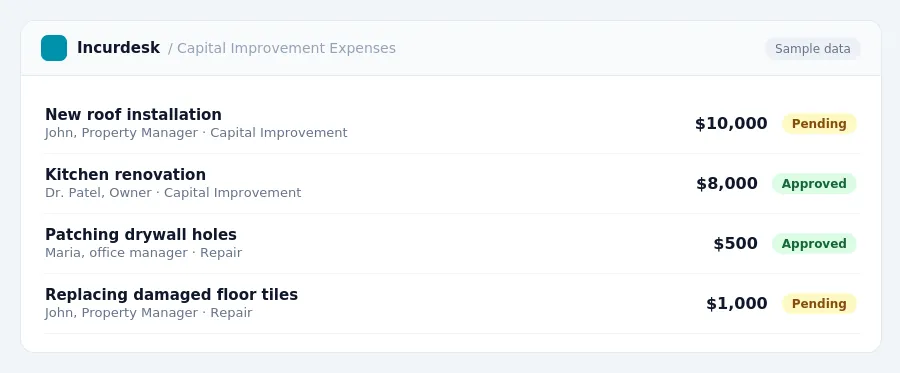
IRS Rules and Regulations
The IRS provides clear guidelines for distinguishing between repairs and capital improvements. To qualify as a repair, the cost must be $2,500 or less per invoice or per project, per building, or $10,000 or less for multiple buildings. However, if you're unsure, it's always best to consult with a tax professional.
Residential rental property improvements are depreciated over 27.5 years using the straight-line method with a mid-month convention.
- The Small Taxpayer Safe Harbor applies to buildings with an unadjusted basis of $1 million or less, with an annual cap of the lesser of 2% of that basis or $10,000.
- California law (AB 628) mandates that landlords provide working stoves and refrigerators in most rental units, with specific rules for repair and replacement, as of January 1, 2026.
It's essential to keep accurate records of all repairs and capital improvements, including receipts, invoices, and before-and-after photos. This will help you determine what's eligible for depreciation and what's a repair.
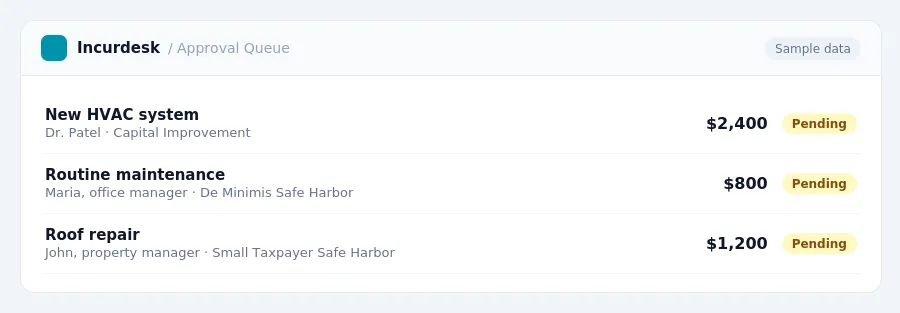
Examples and Safe Harbors
| Safe Harbor | Description | Eligibility |
|---|---|---|
| De Minimis Safe Harbor | Expense items costing $2,500 or less per invoice or item | Taxpayers without an applicable financial statement (AFS) |
| Routine Maintenance Safe Harbor | Work reasonably expected to be done more than once in 10 years on a building | All taxpayers |
| Small Taxpayer Safe Harbor |
Capital Improvements and Depreciation
Capital improvements are depreciable assets, and you can deduct the cost of these improvements over their useful life. The IRS allows you to depreciate qualified improvement property (QIP) over 15 years using the Modified Accelerated Cost Recovery System (MACRS). For nonresidential buildings, certain QIP may qualify for this accelerated depreciation.
Here are some key facts to keep in mind:
- The 15-year depreciation period for QIP applies to improvements made after December 31, 2017.
- Qualifying improvements include interior improvements, such as installing new electrical, plumbing, HVAC, or fire protection systems, and exterior improvements, like installing new roofs, doors, and windows.
- Improvements that are considered part of the building's structure, such as adding a new wing or renovating the foundation, are not eligible for QIP.
If you're unsure whether a particular improvement qualifies, consult the IRS guidelines or seek professional advice.
Common Mistakes and Exceptions
When it comes to distinguishing between repairs and capital improvements, small real estate businesses often make mistakes that can lead to increased tax liability. Here are some common mistakes and exceptions to watch out for:
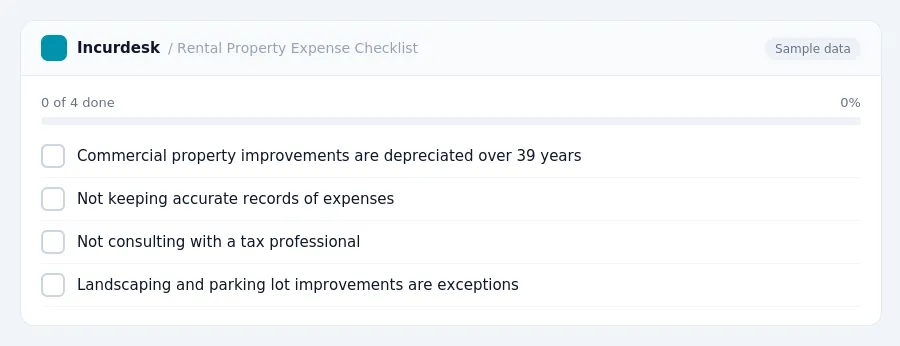
Commercial property improvements are depreciated over 39 years, which means that a significant portion of the cost can be written off immediately. However, if the improvement is deemed a repair, the entire cost is deducted in the year it's incurred.
- Not keeping accurate records: Keeping detailed records of all expenses, including receipts and invoices, is crucial for distinguishing between repairs and capital improvements.
- Not consulting with a tax professional: Tax laws and regulations can be complex, and consulting with a tax professional can help ensure compliance with IRS rules.
Some common exceptions to the rule include:
- Landscaping and parking lot improvements: These are typically considered repairs and can be deducted in full in the year they're incurred.
It's also worth noting that the IRS may challenge a property owner's classification of an expense if it appears to be a capital improvement rather than a repair. To avoid this, it's essential to keep accurate records and consult with a tax professional.
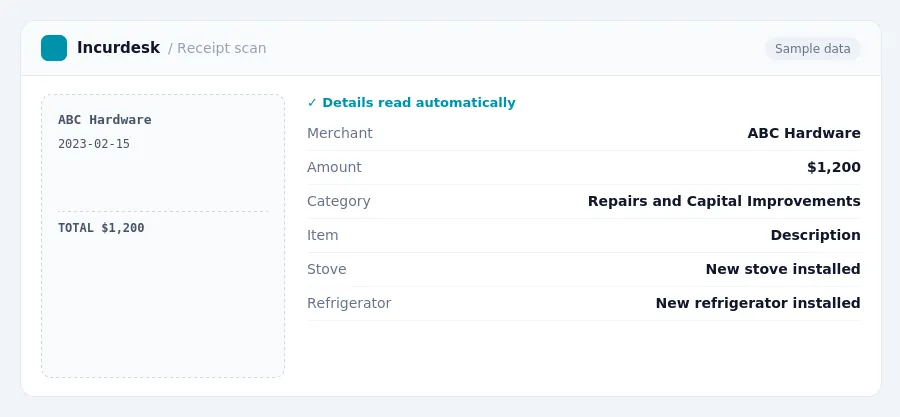
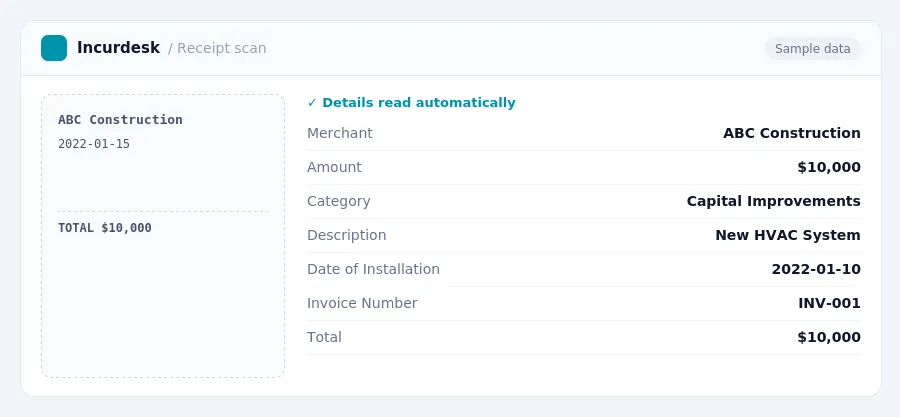
Keeping this simple: Incurdesk lets your team snap a photo of a receipt and fills in the details for you. It is built for small real estate teams. Try it free.
Stop losing 4+ hours a week
30-day free trial · No credit card · Setup in 15 minutes