Commercial vs Residential Roofing Job Expenses
A practical, data-backed guide to controlling costs and automating expense workflows.
A roofing contractor's expenses can vary significantly between commercial and residential projects. The cost of materials and labor can differ depending on the type of building, complexity of the job, and local regulations. For instance, residential roofing projects often have a higher labor-to-material ratio, resulting in higher labor costs. Additionally, commercial roofing projects may require specialized equipment and materials, such as high-temperature roofing membranes, which can increase their overall cost. For the bigger picture, see our guide to roofing contractors expense management software. For a complete overview, see our expense management guide.
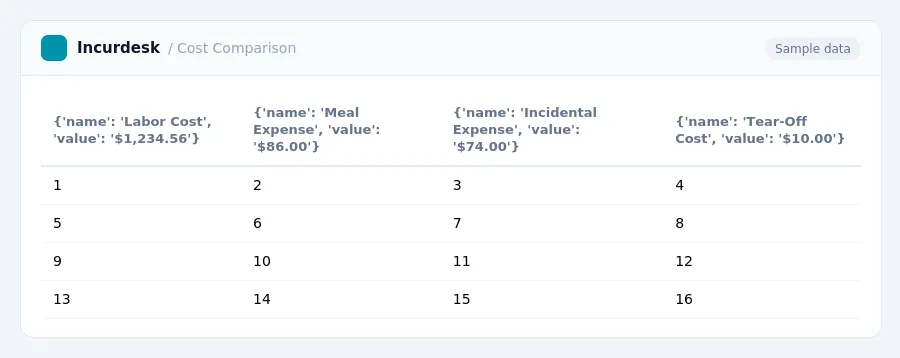
Cost Comparison: Commercial vs Residential Roofing Job Expenses
When it comes to estimating costs for roofing projects, understanding the differences between commercial and residential roofs is crucial. While residential roofs often use shingles, commercial roofs are predominantly flat or low-slope, requiring membrane systems.
Labor Costs
Roofing labor costs vary significantly depending on the location. Meals and incidental expenses (M&IE) are also higher in high-cost localities, ranging from $86 to $74 per day.
Commercial Roofing Systems and Costs
Commercial roofs often require specialized systems, such as membrane roofs, which can be more expensive than residential roofs. Additionally, commercial building codes are stricter, with specific requirements for fire ratings, insulation, and wind uplift. These costs can add up quickly, making commercial roofing projects more expensive than residential ones.
Tear-Off Costs
Removing an old roof system can add significant costs to a commercial project. The cost of tear-off materials can range from $1.25 to $2.50 per square foot, depending on the complexity of the job.
Additional Factors to Consider
Other factors that can influence costs include building type, complexity, and local regulations. For example, commercial roofs may require additional permits or inspections, which can add to the overall cost.
The rules in this guide
| Amount | Required | In Incurdesk |
|---|---|---|
| Above $75 | Itemised receipt | Checked on every expense |
| Above $250 | Written business purpose | Checked on every expense |
| Above $500 | Names of attendees | Checked on every expense |
| Above $2,500 | Senior sign-off; never auto-approved | Checked on every expense |
Each rule is checked on every expense by Incurdesk’s approval agent.
Commercial Roofing Material Costs
Commercial roofing material costs vary depending on the type of roofing material used, with prices ranging from $4.00 to $12.00+ per square foot. Most projects fall between $5.50 and $8.00 per square foot. The typical range for commercial roofing materials is between $5.50 to $8.00 per square foot.
Labor costs for commercial roofing projects also vary. Roofing labor costs range from $150 to $300 per square foot. This is roughly 40-60% of the total replacement cost.
Residential Roofing Material Costs
Residential roofing material costs vary widely depending on the type of material, installation, and location. In 2026, the cost of asphalt shingles ranges from $3.40 to $5.95 per square foot, while standing-seam metal can range from $6.00 to $24.50 per square foot.
The cost of residential roofing systems is the sum of the costs of materials and labor. The total cost varies depending on the type of system and installation.
The cost of asphalt shingle roofing systems is $3.40 to $5.95 per square foot. Architectural asphalt shingle roofing systems cost $4.50 to $7.50 per square foot installed.
The cost of standing-seam metal roofing systems is $10.00 to $18.00 per square foot installed.
The cost of other residential roofing materials, such as tile and flat roofing, vary widely depending on the type and installation.
Commercial Roofing Systems and Costs
Commercial roofing systems come in various types, each with its own cost range. Here's a comparison of the typical costs per square foot for each type:
Note: These costs are based on the provided sources and may vary depending on the specific installation, location, and other factors.
Labor Costs
Small roofing contractors need to understand the cost differences between commercial and residential roofing projects to accurately bid jobs, manage budgets, and advise clients. When it comes to labor costs, there are several factors to consider.
Commercial roofing jobs typically require more labor due to the complexity and scale of the projects. - Commercial buildings with unique or specialized features, such as green roofs or solar panels, may require more labor and increase labor costs.
In contrast, residential roofing jobs tend to have lower labor costs. - Low-to-moderate complexity residential buildings may have labor costs ranging from $100 to $150 per square foot.
It's essential to note that labor costs can vary depending on the location, weather conditions, and other factors. Small roofing contractors should research local labor costs and factor them into their pricing to ensure accurate bids and effective management of budgets.
Tax rules, limits and rates change. Confirm current figures with the IRS or your accountant before you file.
Keeping this simple: Incurdesk lets your team snap a photo of a receipt and fills in the details for you. It is built for small roofing contractor teams. Try it free.
AI expense management for finance teams and whoever keeps the books. It checks every expense against your rules, approves the routine ones and chases missing receipts for you.
Try it free for 30 days →Stop losing 4+ hours a week
30-day free trial · No credit card · Setup in 15 minutes