
Consultant Fees vs Reimbursable Expenses: How to Record Each
A practical, data-backed guide to controlling costs and automating expense workflows.
For small architecture businesses with 5-50 staff in the US, accurately recording consultant fees and reimbursable expenses is crucial for project costing, client billing, and profitability. Consultant fees cover specialized external professional services, while reimbursable expenses are direct project costs passed to clients, excluding normal overhead. To ensure accurate accounting, it's essential to understand the distinction between these two types of expenses, especially when it comes to per diem and IRS mileage rates, which can impact your Net Operating Revenue (NOR) and overall financial management. For the bigger picture, see our guide to architecture expense management for under $10/user (2026).
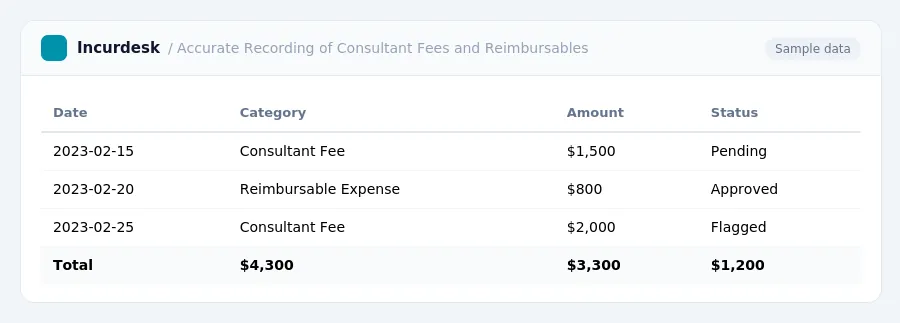
Distinguishing Consultant Fees from Reimbursable Expenses
When it comes to managing project costs and client billing, small architecture businesses need to understand the difference between consultant fees and reimbursable expenses. Here's a comparison table to help you distinguish between the two:
| Consultant Fees | Reimbursable Expenses |
|---|---|
| Payments made to external professionals, such as engineers or landscape architects, who provide specialized services for a project. | Costs incurred by the architect that are directly attributable to a specific project and are passed on to the client. |
Consultant fees are payments made to external professionals for their specialized services. These fees are typically paid separately from reimbursable expenses and are not part of the project costs passed on to the client. These costs do not usually include the architect's normal overhead costs like rent, electricity, or general business operating expenses.
Net Operating Revenue (NOR) is the revenue a firm has available to work with after subtracting consultant fees and other direct project costs that are passed through the firm. When recording consultant fees and reimbursables, it's common for professionals to charge a multiple (e.g., 25%) on top of actual reimbursable costs to cover administrative record-keeping and billing. This ensures that the firm is adequately compensated for its time and effort in managing the project.

Understanding Per Diem and Reimbursable Expenses
Per diem and reimbursable expenses are two distinct concepts in accounting for small architecture businesses. To understand the difference, let's break down the facts.
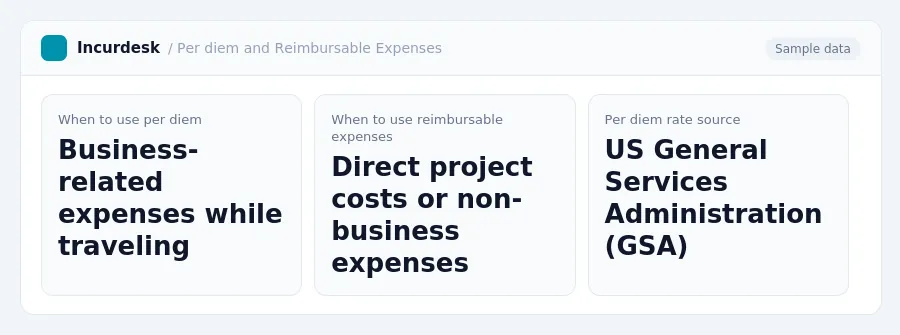
The standard CONUS per diem rate is set by the US General Services Administration (GSA) and is updated annually.
Per diem payments remain non-taxable when employers follow IRS accountable plan rules.
When to use per diem:
- For business-related expenses incurred while traveling, such as meals and lodging.
- For employees who travel frequently for business purposes.
When to use reimbursable expenses:
- For direct project costs, such as printing costs or equipment rentals.
- For expenses that are not business-related, such as personal vehicle use.
Per diem rates vary by location, so it's essential to check the GSA website for the most up-to-date rates. International and Canadian rates may also differ.
| Year | CONUS Per Diem Rate | Lodging | M&IE |
|---|---|---|---|
| Fiscal Year 2026 | $178 | $110 | $68 |
| Fiscal Year 2027 | $181 | $113 | $68 |
Recording Consultant Fees and Reimbursables Accurately
When recording consultant fees and reimbursable expenses, it's essential to maintain accurate financial records for project costing, client billing, and profitability. Reimbursables typically include items like:
- Mileage
- Food during travel
- Airfare
- Hotel stays
- Rental cars
- Parking
- Printing
- Photocopies
- Courier services
For each reimbursable expense, keep accurate records, including:
- Receipts
- Invoices or bills
- Bank statements
- Travel itineraries
To accurately record consultant fees, consider the following:
- Mark up reimbursables with a consistent percentage
- Keep detailed records of consultant fees and reimbursables
- Separate consultant fees from reimbursables in financial records
When recording consultant fees and reimbursables, it's essential to maintain accurate financial records to ensure accurate project costing, client billing, and profitability.

Complying with IRS Mileage Rates and Regulations
The General Services Administration (GSA) sets non-standard rates for 295 locations in the fiscal year 2027. To determine the correct rate, check the GSA's website for the most up-to-date information.
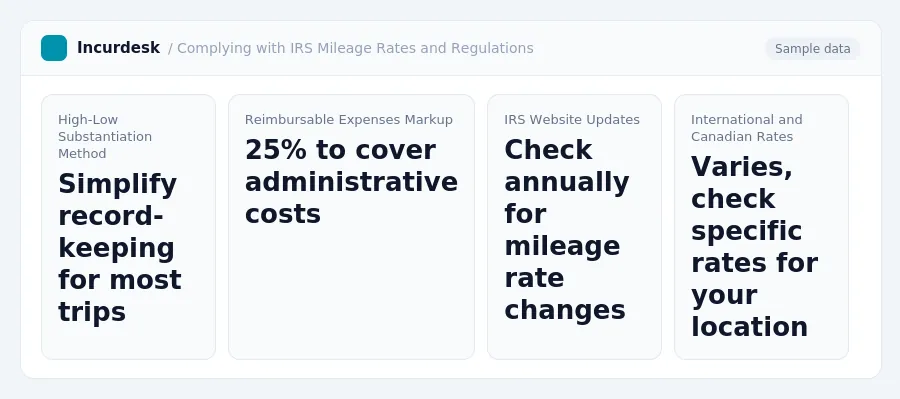
It is essential to keep accurate records of business miles driven, including dates, destinations, and purposes of trips. You can use the high-low substantiation method to simplify record-keeping, which allows you to use a standard rate for most trips and a higher rate for trips to certain locations.
Remember to mark up reimbursables by a common multiple, such as 25%, to cover administrative record-keeping and billing costs.
Consult the IRS website for annual updates to mileage rates and regulations. Additionally, be aware that international and Canadian rates may vary, and it's essential to check the specific rates for your location.
| Month | Business Use (per mile) | Medical and Moving (per mile) |
|---|---|---|
| January 1 - June 30, 2026 | 72.5 cents | 20.5 cents |
| July 1 - December 31, 2026 | 76 cents | 23.5 cents |
It is essential to keep accurate records and mark up reimbursables to ensure compliance with IRS regulations and to maintain accurate financial records.
Addressing Common Mistakes and Limitations in Consultant Fees and Reimbursables
Here are some common errors to watch out for:
- Confusing consultant fees with reimbursable expenses, or vice versa
- Incorrectly applying mileage rates or failing to use the correct rate for your location
- Overlooking the limitations on per diem payments for owner-employees
- Failing to mark up reimbursables by a reasonable percentage to cover administrative costs
- Not keeping accurate records or receipts for reimbursable expenses
Make sure to clearly differentiate between consultant fees and reimbursable expenses on your invoices, and keep accurate records of all expenses and receipts.
When it comes to per diem payments, be aware of the IRS's accountable plan rules, which require that you substantiate expenses to avoid tax penalties. Also, be mindful of the limitations on per diem payments for owner-employees, as these can impact your business's tax liability.
By avoiding these common mistakes and staying on top of your records, you can ensure accurate financial reporting and minimize the risk of errors or penalties.
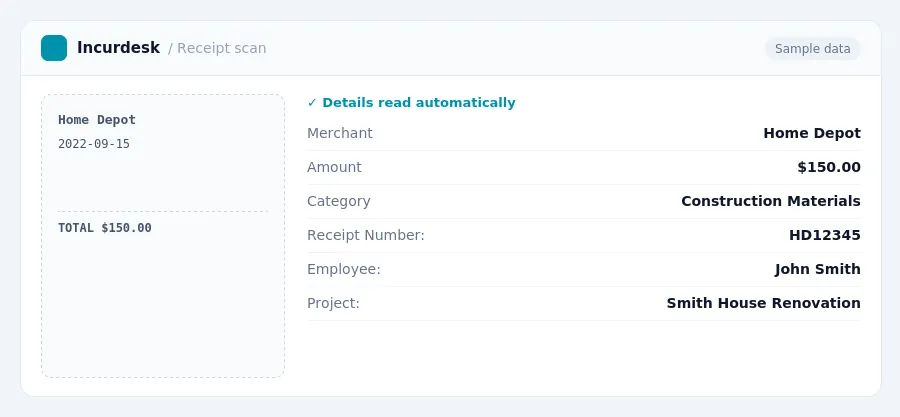
Keeping this simple: Incurdesk lets your team snap a photo of a receipt and fills in the details for you. It is built for small architecture teams. Try it free.
Stop losing 4+ hours a week
30-day free trial · No credit card · Setup in 15 minutes