Controlling Fuel Card Misuse in a Fleet
A practical, data-backed guide to controlling costs and automating expense workflows.
In a small logistics business, fuel card misuse can have significant financial and operational consequences. It's essential to understand the various ways fuel card misuse can occur, both internally by employees and externally by fraudsters. This can lead to inefficient use of fleet resources, wasted funds, and damage to the company's reputation. To protect profits and operational efficiency, logistics expense management for under $10/user (2026) is crucial. For a complete overview, see our expense management guide.
Fuel Card Misuse Types
Common forms of internal fraud include:
- Employees fueling personal vehicles
- Purchasing non-fuel items
- Sharing cards with friends or family
- Colluding with gas station cashiers to inflate amounts
External fraud can involve:
- Card skimming (copying card data)
- Card cloning (creating duplicate cards)
For a fleet spending $400,000 annually on fuel, this could mean $8,000-$20,000 lost each year. Most fleet card programs allow for various restrictions, such as:
- Limiting usage to specific fuel brands
- Approved merchant networks
- Particular geographic regions
A strong policy enforces assigning each fuel card to a specific vehicle, not a driver, to ensure accountability. Additionally, rules are in place to prevent employees from using their cards for non-fuel expenses. By understanding these common forms of fuel card misuse, fleets can take proactive steps to prevent and detect such activities.
The rules in this guide
| Amount | Required | In Incurdesk |
|---|---|---|
| Above $75 | Itemised receipt | Checked on every expense |
| Above $250 | Written business purpose | Checked on every expense |
| Above $500 | Names of attendees | Checked on every expense |
| Above $5,000 | Senior sign-off; never auto-approved | Checked on every expense |
Each rule is checked on every expense by Incurdesk’s approval agent.
Current Regulations and Best Practices
Fuel Card Misuse Types
- Employees can misuse fuel cards by:
- Purchasing fuel for personal use
- Using multiple cards for personal and business purposes
- Failing to report or account for their personal fuel usage
- Altering or manipulating fuel card transactions
- Fraudsters can misuse fuel cards by:
- Buying fuel with stolen or forged card information
- Using compromised or hacked fuel cards
- Creating fake fuel card transactions
- Selling or transferring fuel cards to unauthorized parties
Industry Estimates and Lost Profit
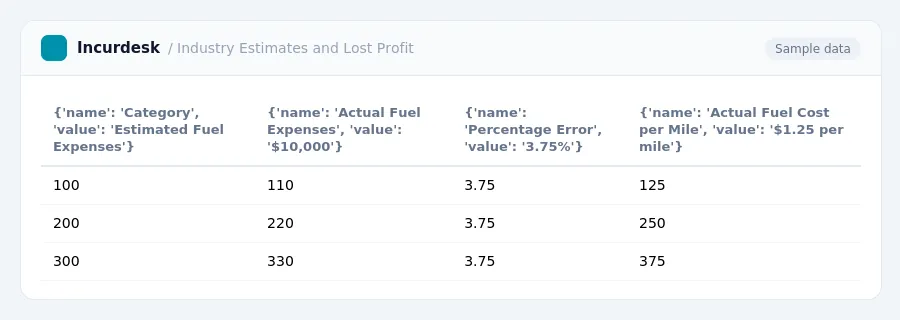
- Industry estimates suggest that 1-5% of total fleet fuel spend is lost to fraud and misuse annually
- This translates to a loss of $X million per year
- The exact amount lost varies depending on the size of the fleet and the level of fuel card management
Restrictions and Limitations
- Purchase restrictions can limit purchases to fuel only
- Restricting by fuel grade can limit purchases to a specific type of fuel
- Setting transaction limits can limit purchases to a specific number of gallons or amount
- Blocking off-hours or weekend transactions can limit purchases to business hours only
Industry Estimates and Lost Profit
Lost or stolen cards can typically be deactivated immediately through online portals or customer service to prevent unauthorized charges. This is a straightforward process that can be completed quickly, saving the business time and money.
It is also worth noting that rules and regulations regarding fuel card misuse vary by jurisdiction. In some places, businesses may be required to implement additional security measures, such as two-factor authentication or card verification values, to prevent misuse. However, these requirements can be complex and may require external guidance to ensure compliance.
Restrictions and Limitations
Restrictions and Limitations on Fuel Card Misuse
While fuel card programs aim to reduce fuel card misuse and increase efficiency, there are still various restrictions and limitations that can be put in place to prevent and detect misuse.
One key restriction is the requirement for odometer entry at the pump. This helps to detect discrepancies and potential misuse, as it ensures that the fuel card is being used to purchase fuel at the correct location.
Another restriction is the use of black box fuel cards, which require the fuel card to be inserted into the pump and the transaction to be recorded electronically. This helps to prevent unauthorized use and detect fraud.
Additionally, some fuel card programs may have restrictions on the types of fuel that can be purchased, such as diesel fuel or premium fuel. These restrictions can help to prevent misuse and ensure that fuel is being purchased for legitimate purposes.
It is essential to note that some of these restrictions may vary depending on the industry, location, or specific fuel card program. It is crucial to familiarize yourself with the specific rules and regulations governing your fleet fuel card program.
While this percentage may vary, it highlights the importance of being proactive in preventing and detecting fuel card misuse.
Monitoring and Detection Tools
To prevent and detect fuel card misuse, it's essential to have the right tools in place. Here are some practical strategies and tools to consider:
- Regularly review and audit fuel card usage to identify potential issues. This can be done by:
- Conducting random audits of fuel card transactions
- Reviewing employee usage patterns and identifying suspicious activity
- Monitoring card balances and transaction history
- Educate employees on proper card usage and how to recognize suspicious activity. This can be done through:
- Training sessions on card usage and security best practices
- Providing regular reminders and warnings about potential misuse
- Encouraging employees to report suspicious activity immediately
- Use a combination of manual and automated detection tools to identify potential issues. This can include:
- Manual checks of fuel card transactions
- Automated monitoring of card balances and transaction history
- Integration with other systems, such as accounting and inventory management software
Keeping this simple: Incurdesk routes each expense to the right person for approval and keeps a record of who approved what. It is built for small logistics teams. Try it free.
AI expense management for finance teams and whoever keeps the books. It checks every expense against your rules, approves the routine ones and chases missing receipts for you.
Try it free for 30 days →Stop losing 4+ hours a week
30-day free trial · No credit card · Setup in 15 minutes