
Cost Control Ideas for Rural Hospitals
A practical, data-backed guide to controlling costs and automating expense workflows.
Rural hospitals with 5-50 staff in the US face unique financial challenges, including the ongoing impact of sequestration, which will cost these facilities approximately $540 million in 2026. To maintain financial stability and essential services, effective expense management for hospitals is crucial. Implementing cost-control strategies can help small rural hospitals navigate these challenges and ensure long-term sustainability.
Financial Aid and Assistance Programs for Rural Hospitals
Rural hospitals can benefit from various financial aid and assistance programs. Here are a few options to consider:
- Apply for the Rural Hospital Provider Assistance Program (RHPA). To be eligible, your hospital must have no more than 50 acute care inpatient beds, an established wage index value below 0.90, and be located in a rural area. In 2026, HRSA funded 132 eligible hospitals across 13 states through this program.
- Plan for the annual 2% cut in Medicare reimbursement, known as sequestration, which will cost rural hospitals approximately $540 million in 2026.
Mitigating Regulatory Costs for Small Rural Hospitals
A more basic estimate for small covered entities suggests costs of $4,000 to $12,000.
To reduce these costs, small rural hospitals can consider in-house training or online courses.
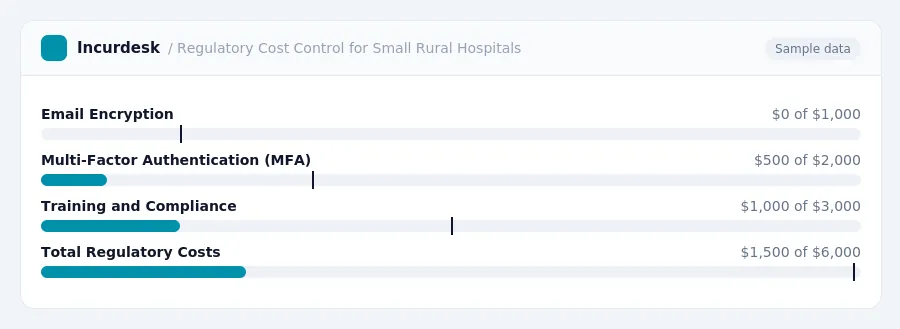
Initial costs for technical safeguards like email encryption and multi-factor authentication (MFA) can range from $1,000 to $8,000, with annual costs of $500 to $4,000. Small rural hospitals should prioritize these safeguards to ensure compliance and minimize costs.
Navigating Reimbursement Challenges and Cuts
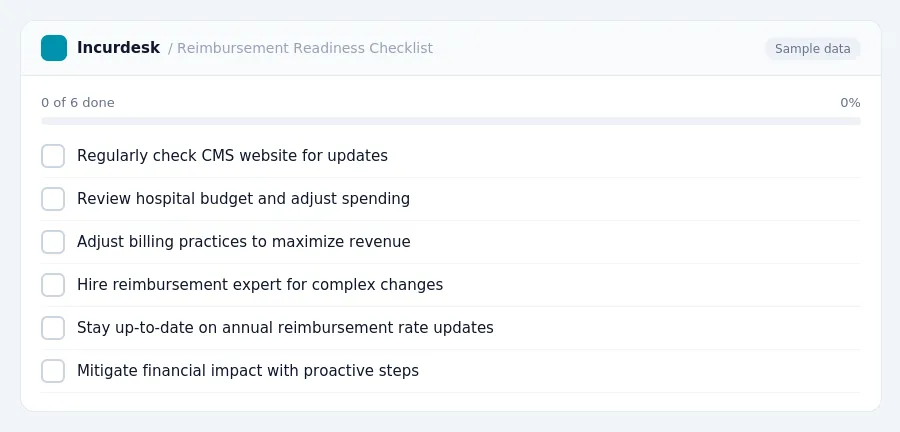
Rural hospitals must stay informed about reimbursement changes to minimize financial losses. Start by regularly checking the CMS website for updates on policy changes, such as the CMS OPPS Final Rule for price transparency. This rule requires hospitals to post prices for services online, which may affect reimbursement rates.
Understand the impact of sequestration cuts, which will reduce Medicare reimbursement by 2% in 2026, costing rural hospitals approximately $540 million. Prepare for these cuts by reviewing your hospital's budget and adjusting spending accordingly.
- Review your hospital's current reimbursement rates and adjust your billing practices to maximize revenue.
- Consider hiring a reimbursement expert to help navigate complex regulatory changes.
- Stay up-to-date on annual updates to Medicare and Medicaid reimbursement rates.
Take proactive steps to mitigate the financial impact of reimbursement challenges and cuts. This may include:
- Implementing cost-saving measures to offset revenue losses.
- Exploring alternative funding sources to supplement reduced reimbursement rates.
- Developing contingency plans to address potential financial shortfalls.
Exploring Cost-Saving Strategies for Essential Services
When it comes to essential services, rural hospitals can benefit from cost-saving strategies that maintain quality while reducing expenses. Here are some ideas:
- Create your own policies and procedures to save on these costs.
- Take advantage of the new CMS v3.0 data schema for machine-readable files for price transparency, effective January 1, 2026. Enforcement begins April 1, 2026. Ensure your hospital is prepared to report actual payment amounts and comply with the rules.
- Stay informed about changes to avoid unexpected costs.
- Regularly review and update your hospital's policies and procedures to ensure they are cost-effective and compliant with regulations. This will help you identify areas for improvement and reduce unnecessary expenses.
Innovative Funding Options for Rural Healthcare
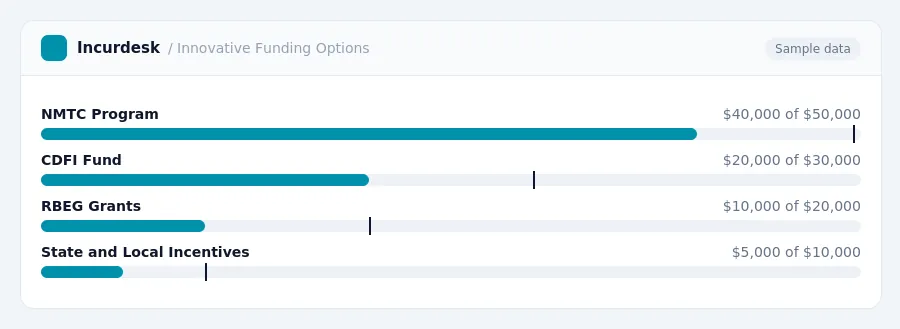
Small rural hospitals can benefit from exploring alternative funding sources to maintain financial stability.
To be eligible, applicants must submit their proposals by the November 10, 2026, deadline. This program can provide a valuable source of funding for rural hospitals, enabling them to upgrade their facilities and improve healthcare services.
For more information on the NMTC Program, including application guidelines and eligibility criteria, visit the official website. Additionally, rural hospitals can explore other innovative funding options, such as:
- Community Development Financial Institutions (CDFI) Fund - provides financial assistance to rural communities
- Rural Business-Cooperative Service (RBEG) Grants - supports rural business development and expansion
- State and local government incentives
Rural hospitals should research and explore these options to identify the best fit for their specific needs and goals.
Keeping this simple: Incurdesk collects every receipt and expense report in one place, so spending is easy to review. It is built for small hospital teams. Try it free.
Stop losing 4+ hours a week
30-day free trial · No credit card · Setup in 15 minutes