
Dental Conference Travel Expense Checklist
A practical, data-backed guide to controlling costs and automating expense workflows.
To qualify as deductible business travel, the trip must be away from your "tax home" (main place of business), require sleep or rest, and be primarily for business purposes. To maximize deductions and ensure compliance, it's essential to understand IRS rules for deducting travel expenses, including mileage rates, per diem allowances, and required documentation. Effective expense management for dental practice involves staying up-to-date on these regulations to take advantage of tax benefits and minimize potential penalties. For a complete overview, see our expense management guide.
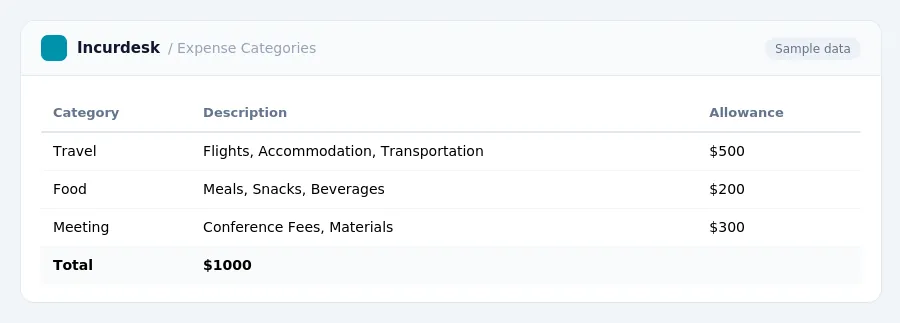
Deductible Expenses for Dental Conference Travel
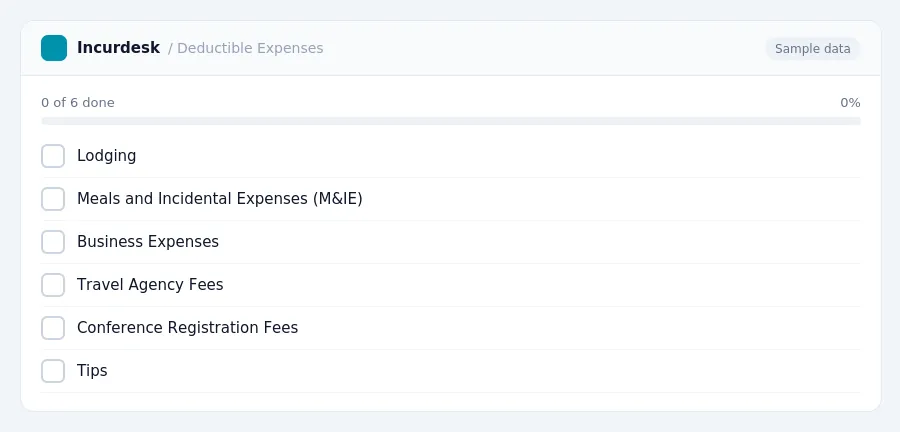
- Lodging, meals, and incidental expenses can be deducted using the high-low per diem rate.
- Meals and incidental expenses (M&IE) can be deducted using the per diem rate.
- For taxpayers in the transportation industry, the M&IE rates are $80 per day for travel within the continental United States and $86 per day for travel outside the continental United States, for 2026-2027.
- Business expenses, such as conference registration fees, travel agency fees, and tips, are also deductible.
- Require sleep or rest.
- Be primarily for business purposes (more than 50% business days for domestic trips).
Required Documentation and Record Keeping
- Keep accurate and detailed records of travel expenses, including receipts, invoices, and bank statements.
- Use a log or calendar to track the date, time, location, and purpose of each business trip.
- Document business-related activities, such as meetings, conferences, and client visits.
- For travel reimbursements under an accountable plan, obtain and retain receipts for all expenses.
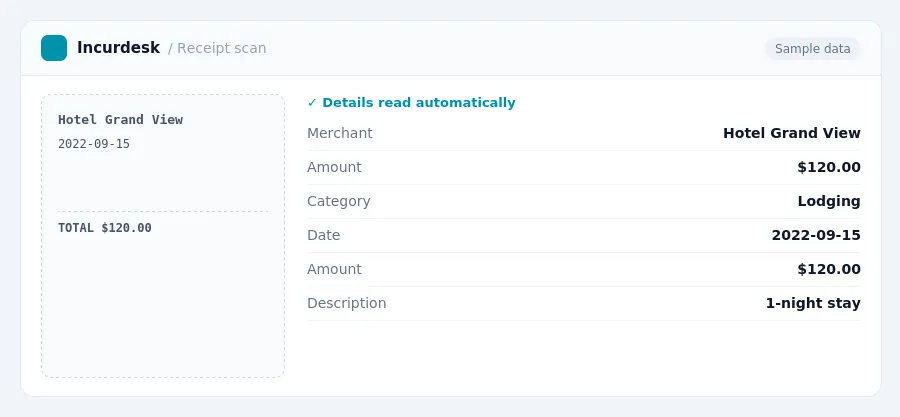
- For lodging, keep a copy of the hotel receipt or a statement from the hotel showing the dates of stay and amount paid.
- For meals, keep receipts or a log showing the date, time, location, and amount spent on business meals.
- Keep records of business-related mileage, including the odometer reading at the start and end of each trip.
- For per diem allowances, keep records of the date, time, location, and amount of each meal or expense.
- Retain all records for at least three years in case of an audit.
For travel reimbursements under an accountable plan, ensure that:
- The plan must be in writing and available to employees.
Consult the IRS website for the most up-to-date information on record-keeping requirements and accountable plans.
Mileage and Per Diem Rates for 2026-2027
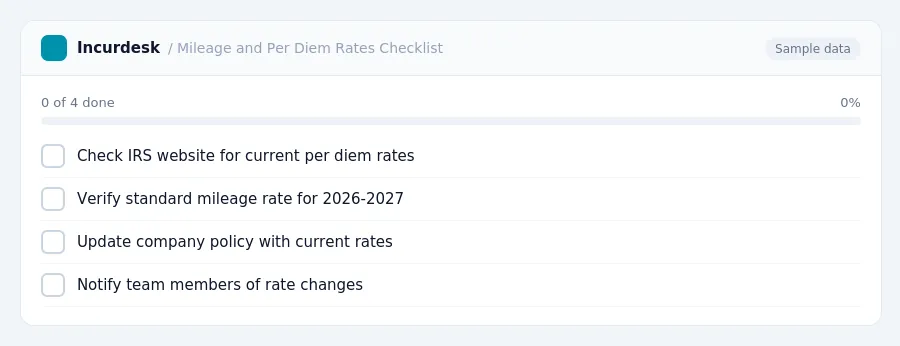
- Per diem rates are updated annually by the IRS and vary by location. To determine the current per diem rate, visit the IRS website for the list of high-cost localities and rates for October 1, 2026, through September 30, 2027.
- The list of designated high-cost localities for per diem rates is updated annually by the IRS. You can check the IRS website for the current list.
- The IRS standard mileage rate is updated annually, with a rare mid-year adjustment occurring in 2026 due to rising fuel costs.
Business Meal Deductions and Reimbursements
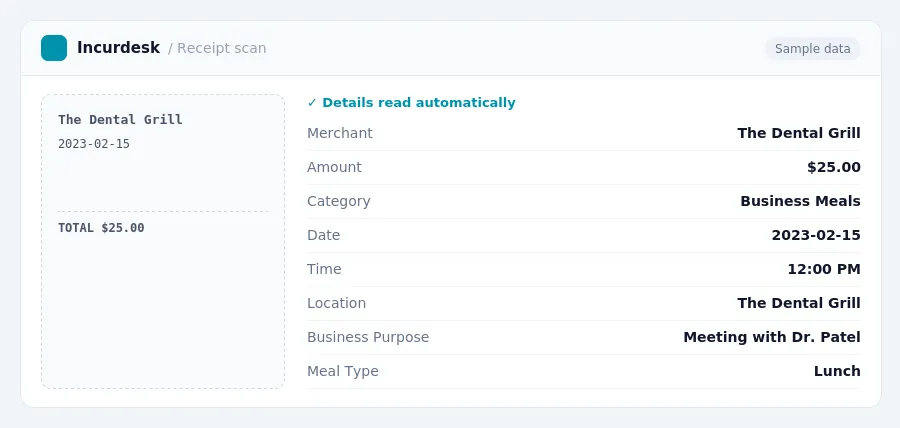
- When deducting business meals, you must have a record of the date, time, place, and business purpose of the meal, as well as the names of the people you met with and the subject of discussion.
- Keep a receipt or a written record of the meal, including the cost and the business purpose of the meal.
- You can deduct 50% of the cost of meals as a business expense.
- Self-employed individuals can deduct business meal expenses, but they cannot use the high-low per diem method for lodging.
- For reimbursements, the employer must provide a written record of the business purpose of the meal and the amount reimbursed.
- The IRS requires that business meal expenses be reported on the tax return by the deadline for filing the return, which is typically April 15th of the following year.
Compliance and Exceptions for Dental Practices
The compliance and exceptions for dental practices regarding travel expenses are crucial to understand to avoid any potential issues with the IRS.
- W-2 employees generally cannot deduct unreimbursed travel expenses on federal returns.
- However, self-employed individuals can deduct travel expenses as business expenses on their tax returns.
- Business owners and managers must keep accurate records of all business travel expenses, including receipts, invoices, and mileage logs.
- It's essential to review the IRS guidelines and consult a tax professional to ensure compliance and maximize deductions.
- Be aware of any changes in tax laws and regulations, and adjust your record-keeping and expense reporting accordingly.
- Consider consulting with a tax professional or accountant to ensure compliance and maximize deductions.
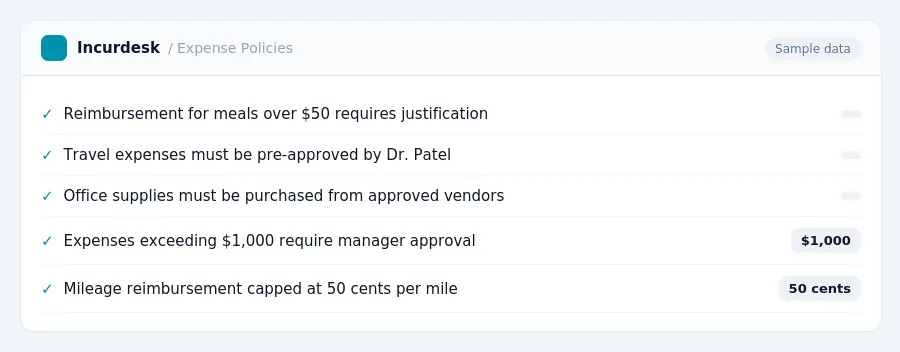
Keeping this simple: Incurdesk keeps receipts and approvals together, so you know exactly what to reimburse. It is built for small dental practice teams. Try it free.
Stop losing 4+ hours a week
30-day free trial · No credit card · Setup in 15 minutes