
Dental Lab Fee Tracking Per Case
A practical, data-backed guide to controlling costs and automating expense workflows.
Small dental practice businesses with 5-50 staff in the US need to track dental lab fees per case for accurate expense management for dental practice, profitability analysis, and tax reporting. By doing so, you'll have a clear picture of your lab costs per case, enabling you to make informed pricing decisions and ensure tax compliance.
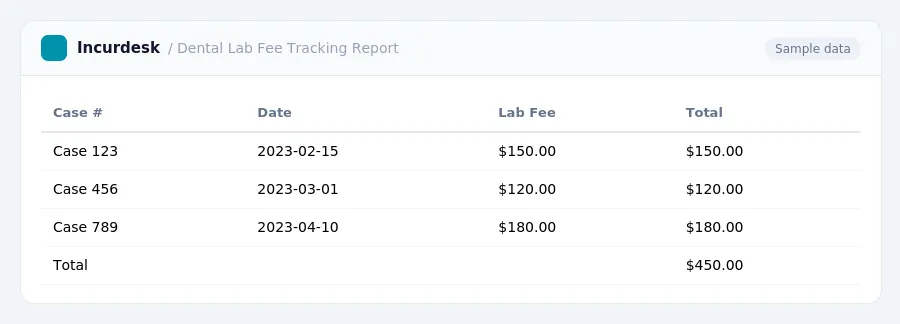
Best Practices for Financial Record-Keeping in Dental Lab Fee Tracking
When it comes to financial record-keeping for dental lab fee tracking, there are several best practices to keep in mind. For one, it's essential to accurately categorize and track lab fees as ordinary and necessary business expenses. This means maintaining detailed records of all lab fees paid, including receipts, invoices, and payment records.
- Keep all financial records organized and easily accessible, either digitally or in a secure, locked file cabinet.
- Use a standardized system for categorizing and tracking lab fees, such as a spreadsheet or database.
- Regularly review and reconcile financial records to ensure accuracy and completeness.
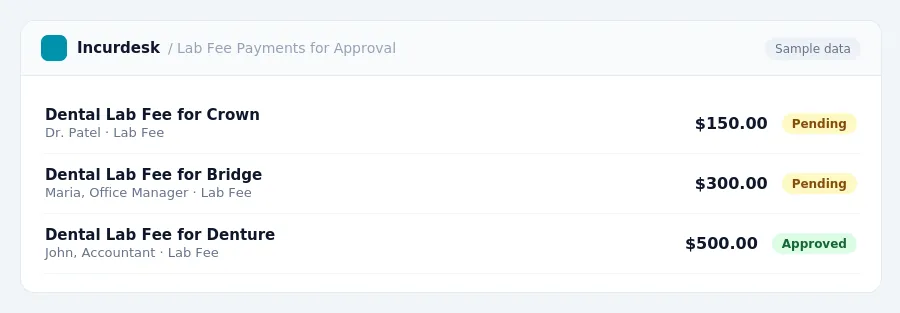
It's also crucial to maintain accurate records of lab fee payments, including:
- Payment dates and amounts
- Lab fee invoices and receipts
- Payment methods (e.g., check, credit card, electronic transfer)
Keeping this simple: Incurdesk lets your team snap a photo of a receipt and fills in the details for you. It is built for small dental practice teams. Try it free.
Calculating Cost per Case for Accurate Pricing and Profitability Analysis
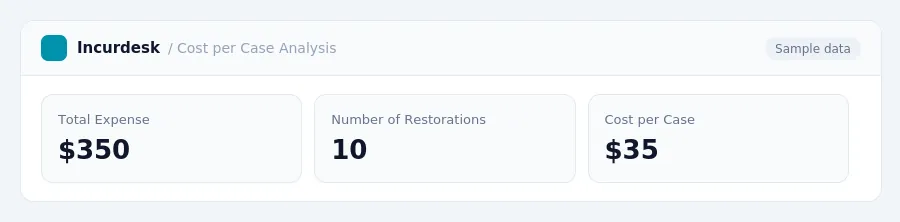
To calculate the cost per case for accurate pricing and profitability analysis, start by gathering the total expense to produce a single restoration, factoring in materials, labor, and outsourced design fees.
Here's a simple example to illustrate the calculation:
To calculate the cost per case, divide the total expense by the number of restorations produced.
For example, if you produced 10 restorations in a month, the cost per case would be $35 ($350 ÷ 10).
Here are some key points to keep in mind:
- A Business Associate Agreement (BAA) is required when a dental practice contracts with a dental laboratory or a laboratory works with a third-party contractor to protect patient data.
- States may require at least one full-time Certified Dental Technician (CDT) specializing in relevant disciplines.
- States vary widely in how they classify dental prosthetics and lab services under sales tax rules.
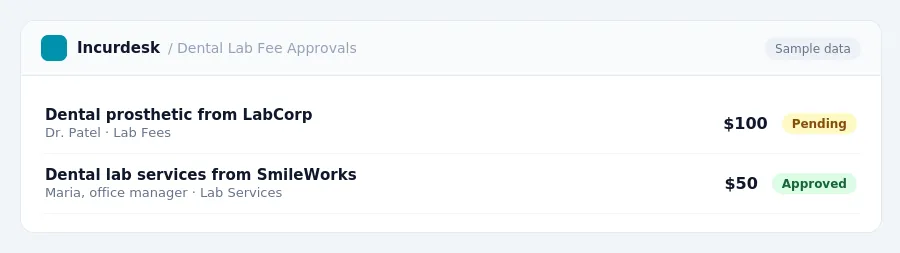
When it comes to taxes, it's essential to keep accurate records of all transactions, including dental lab fees.
For example, if a dental practice pays a laboratory $100 for a dental prosthetic, the practice should keep a record of this transaction, including the date, amount, and type of service provided.
It's also essential to keep records of any Business Associate Agreements (BAAs) that are in place, as these agreements are required to protect patient data.
State-Specific Nuances in Dental Lab Fee Tracking
Dental lab fee tracking can be influenced by state-specific nuances, which dental practices must understand to ensure compliance and accurate financial record-keeping.
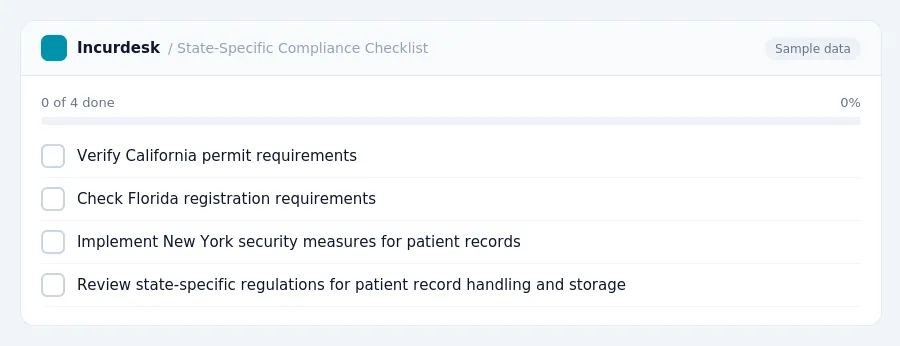
For example, California requires dental laboratories to obtain a permit from the state's Department of Public Health, which includes specific requirements for tracking and reporting lab fees. In contrast, Florida requires dental laboratories to register with the state's Agency for Health Care Administration.
Additionally, some states have specific regulations regarding the handling and storage of patient records, which may impact dental lab fee tracking. For instance, the state of New York requires dental laboratories to implement specific security measures to protect patient records, including the use of secure electronic storage systems.
This includes the use of secure electronic storage systems and encryption to protect patient data.
To ensure compliance with state-specific regulations, dental practices should:
- Check with their state's dental board or public health department to determine specific requirements for dental lab fee tracking.
- Register with the state's required agencies, such as the Department of Public Health or Agency for Health Care Administration.
Here are some steps to ensure compliance:
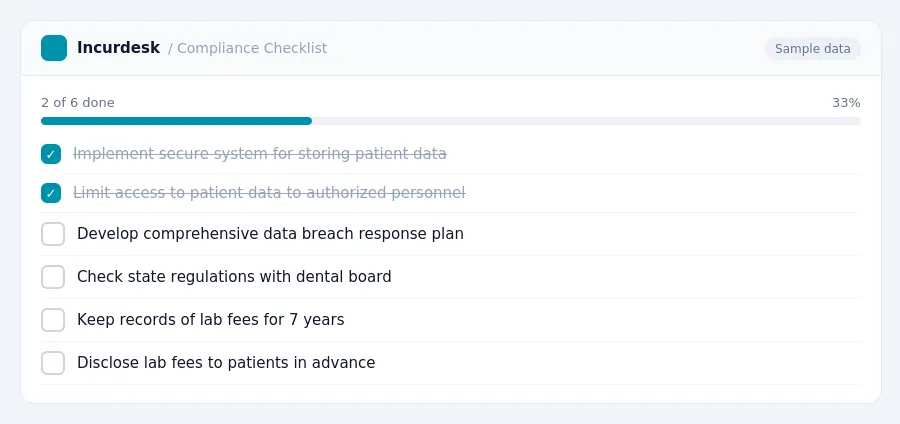
- Implement a secure system for storing and transmitting patient data, such as encrypted files and secure online portals.
- Limit access to patient data to authorized personnel only.
- Develop a comprehensive data breach response plan in case of a security incident.
When it comes to state regulations, check with your state's dental board for specific requirements on dental lab fee tracking. Some states may have additional requirements for record-keeping, such as:
- Keeping records of all lab fees for a minimum of 7 years.
- Providing patients with detailed explanations of lab fees and charges.
- Disclosing lab fees and charges to patients in advance of treatment.
It's essential to review and update your compliance procedures regularly to ensure you are meeting all relevant regulations.
Stop losing 4+ hours a week
30-day free trial · No credit card · Setup in 15 minutes