
Dental Practice Cash Flow: Timing Large Supply Orders
A practical, data-backed guide to controlling costs and automating expense workflows.
Managing cash flow and expense management for dental practice is crucial for small businesses like yours, with 5-50 staff members. To avoid unnecessary tax burdens, it's essential to time large supply orders strategically, considering tax rules and potential pitfalls. By doing so, you can optimize your financial benefits and minimize your tax obligations. For a complete overview, see our expense management guide.
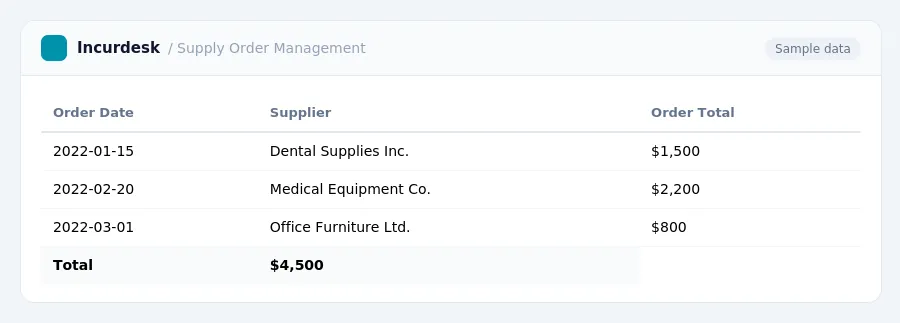
Understanding the Small Business Inventory Exception
To qualify for the Small Business Inventory Exception, your dental practice must meet certain requirements.
Under the NIMS method, inventory costs are deducted in the later of the year paid or the year used/consumed. If your business expenses inventory in its books and records and does not have an AFS (Accounting Financial Statement), it may deduct those costs in the year of purchase for tax purposes.
This will help you stay organized and ensure you're taking advantage of the tax benefits available to your business.
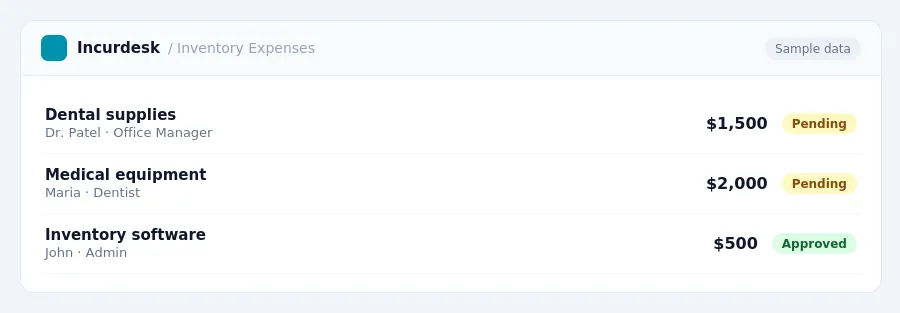
Managing Large Supply Orders for Tax Benefits
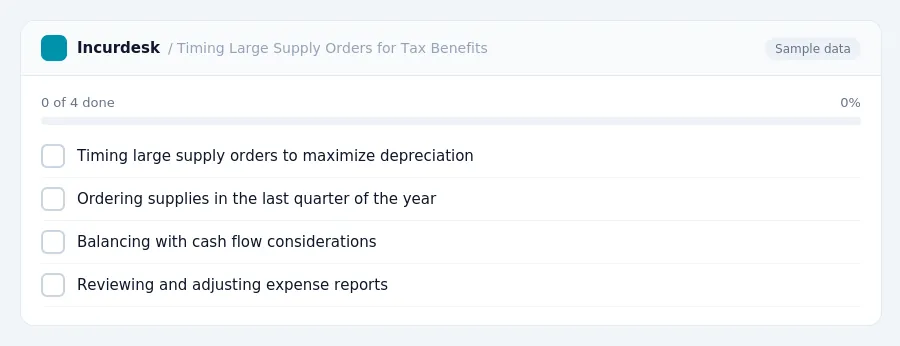
When managing large supply orders, small dental practices can benefit from strategic tax planning. To take advantage of tax benefits, consider the following:
- Timing large supply orders to maximize depreciation.
However, income thresholds for these brackets were adjusted for inflation.
Ordering supplies in the last quarter of the year can help maximize tax benefits, but be sure to balance this with cash flow considerations to avoid disrupting business operations.
Navigating Inventory Accounting Methods
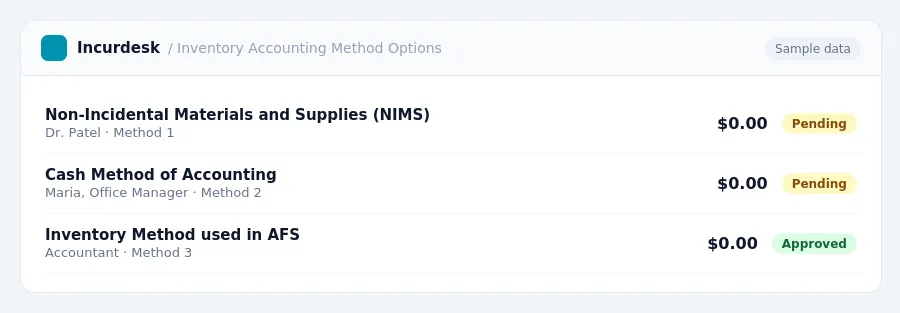
When managing large supply orders, it's essential to understand the inventory accounting methods available to your small business. Eligible small businesses can choose one of three methods:
- Treat inventory as non-incidental materials and supplies (NIMS), expensing costs when paid or consumed.
- Conform to the inventory method used in their applicable financial statement (AFS).
- If no AFS exists, use the method of accounting from their books and records.
For businesses with average annual gross receipts under $32 million for 2026, the cash method of accounting is generally permissible, even with inventory. This means you can record income and expenses when received or paid, rather than when earned or incurred.
When choosing an inventory accounting method, consider the following:
- If you choose the NIMS method, be aware that you may need to adjust your records to track inventory costs separately from other expenses.
- If you conform to the inventory method used in your AFS, ensure that your AFS is up-to-date and accurately reflects your business operations.
Keep in mind that tax implications can vary depending on your business structure. Consult with a tax professional to determine the best inventory accounting method for your business and ensure compliance with tax regulations.
This limit begins to phase out once qualifying purchases exceed $4,090,000.
- Qualifying equipment and assets include dental equipment, office furniture, and computers.
Bonus depreciation can also provide additional tax benefits. However, it's essential to note that bonus depreciation can create a loss for the business, which may impact cash flow.
To optimize cash flow, consider the following strategies:
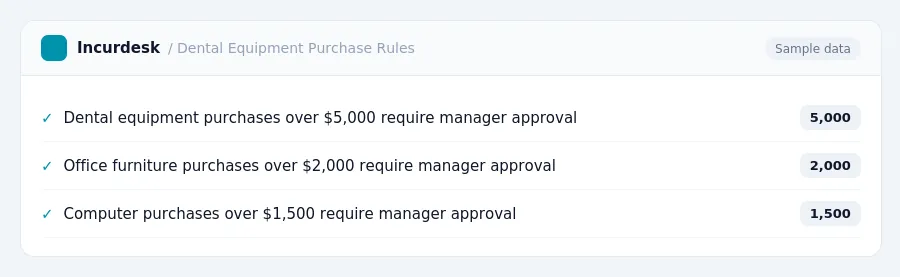
Timing Large Supply Orders for Financial and Tax Efficiency
Dental practices can deduct ordinary and necessary business expenses, such as dental supplies, equipment, and furniture, which are common in the industry and helpful for running the business.
Additionally, consider the following:
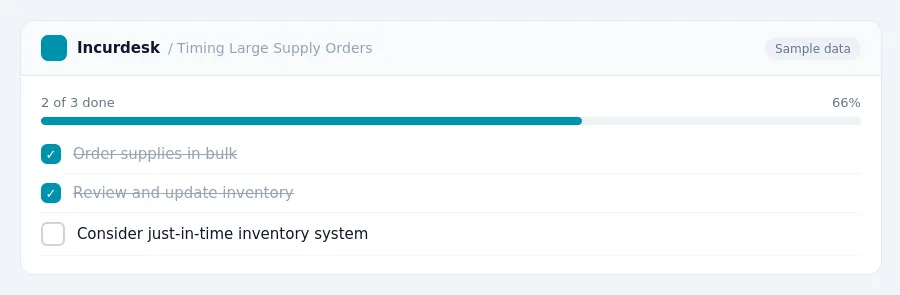
- Order supplies in bulk to reduce the number of orders and minimize delivery costs.
- Review and update inventory regularly to ensure that supplies are not expiring or becoming obsolete.
- Consider using a just-in-time inventory system to minimize storage costs and maximize cash flow.
By timing large supply orders strategically, dental practices can optimize cash flow, minimize tax liabilities, and improve overall financial efficiency.
Keeping this simple: Incurdesk collects every receipt and expense report in one place, so spending is easy to review. It is built for small dental practice teams. Try it free.
Stop losing 4+ hours a week
30-day free trial · No credit card · Setup in 15 minutes