
Documenting Insurance Claim Expenses for Rentals
A practical, data-backed guide to controlling costs and automating expense workflows.
Documenting insurance claim expenses for rentals requires a clear understanding of the necessary documentation and categorization for tax purposes. To ensure accurate expense management for property management, you'll need to keep detailed records of claim-related expenses, including receipts, invoices, and repair estimates. Proper documentation is crucial for successful claims, maximizing reimbursements, and tax compliance, particularly when dealing with government agencies like FEMA. For a complete overview, see our expense management guide.
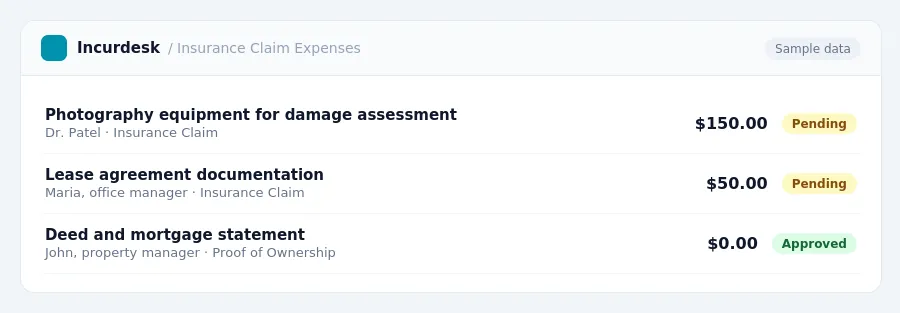
Documenting Damage and Required Documentation
When a rental property is damaged, it's essential to document the damage accurately to support your insurance claim. For FEMA disaster assistance, you'll need to provide proof of ownership and occupancy. This includes:
- Deed or mortgage statement as proof of ownership
- Utility bills, lease agreements, or rent receipts as proof of occupancy
It's also crucial to note that standard homeowners insurance typically excludes tenant-related claims. If you have a rental property, you should consider investing in landlord insurance, which is specifically designed for rental properties.
To document the damage, take the following steps:
- Take clear, dated photos and videos of the damage
- Keep a record of all correspondence with your insurance company, including emails, phone calls, and letters
- Keep a detailed inventory of damaged or destroyed items, including their value and date of purchase
Remember to keep all documents and records organized and easily accessible in case you need to refer to them during the claims process.
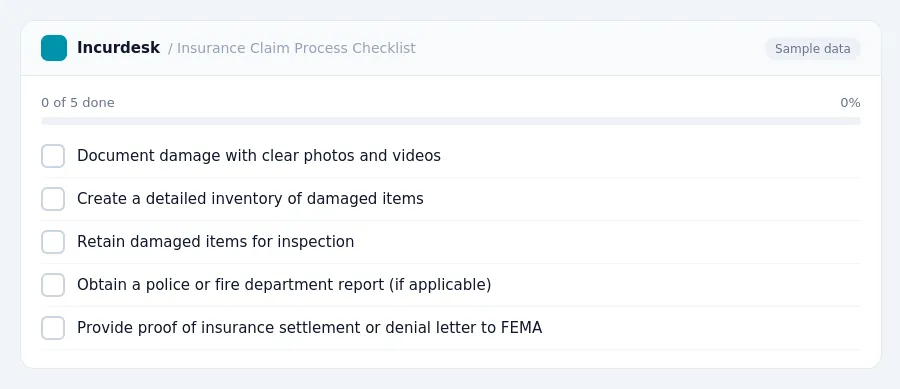
Insurance Claim Process and Required Reports
The insurance claim process typically involves several steps and required reports to ensure a smooth and successful claim. To support an insurance claim, it's essential to document damage with clear photos and videos, and create a detailed inventory of damaged items, including their values and purchase dates.
- Take clear photos and videos of the damage.
- Create a detailed inventory of damaged items, including:
- Item description
- Value
- Purchase date
Retain damaged items for inspection by the insurance company rather than discarding them immediately.
For losses like burglary, vandalism, or fire, obtain a police or fire department report, which is typically required by the insurance company.
After the insurance claim is settled, provide FEMA with proof of the insurance settlement or a denial letter to determine eligibility for further assistance.
Keep in mind that insurance payouts are capped at the policy's maximum coverage limit.
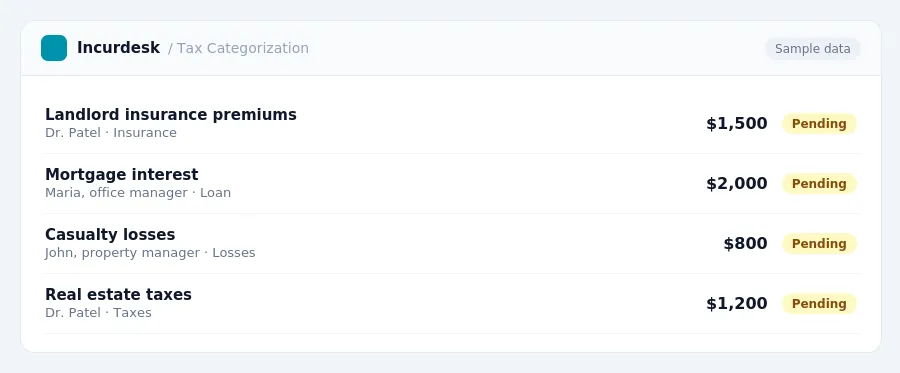
Categorizing Expenses for Tax Purposes
As a small property management business owner, it's essential to categorize rental property insurance claim expenses correctly for tax purposes.
- Landlord insurance premiums
- Mortgage interest
- Real estate taxes
- Casualty losses (subject to the $100 threshold)
- Maintenance expenses
- Utilities
- Depreciation
When categorizing expenses, consider the following:
- Keep detailed records of all expenses, including receipts and invoices
- Separate personal and business expenses to avoid mixing them
- Use a separate bank account for business expenses to simplify record-keeping
- Consult with a tax professional to ensure you are meeting all tax requirements
Remember to keep records of all expenses for at least three years in case of an audit.
Insurance and Government Agency Requirements
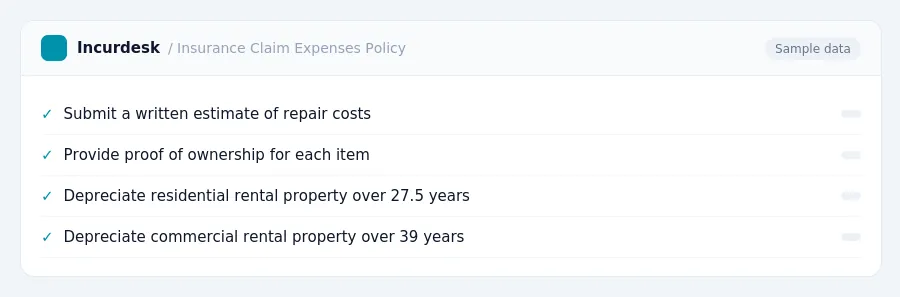
Insurance and government agencies have specific requirements for documenting rental property insurance claim expenses. For example, when filing a claim with the Federal Emergency Management Agency (FEMA), property owners must submit a detailed inventory of damaged items, including receipts and serial numbers. FEMA also requires a written estimate of repair costs and proof of ownership for each item.
To comply with these rules, property owners must keep accurate records of their property's original cost, including the purchase price, land value, and any improvements made to the property.
- Submit a written estimate of repair costs.
- Provide proof of ownership for each item.
- Depreciate residential rental property over 27.5 years.
- Depreciate commercial rental property over 39 years.
Property owners should also be aware of the following deadlines:
Best Practices for Successful Claims and Reimbursements
When it comes to filing insurance claims for rental properties, adhering to best practices is crucial for a successful outcome. One key aspect to keep in mind is the timeline for filing certain claims. In Florida, reforms have shortened the timeframe for filing, and failure to meet these deadlines could jeopardize coverage.
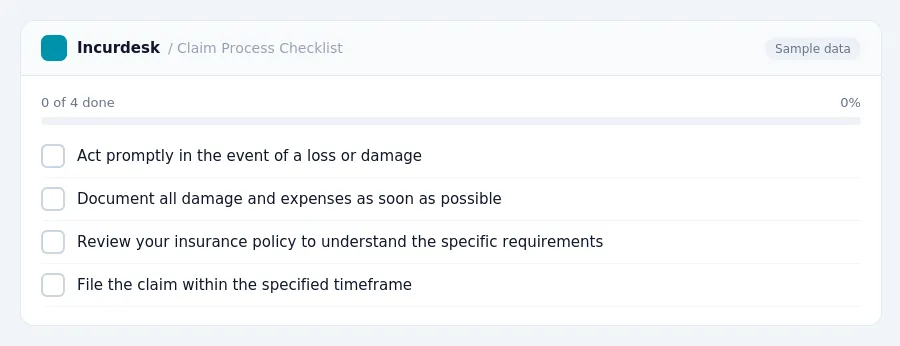
Most insurance policies require reporting a loss as soon as reasonably possible. Delays can complicate investigations and potentially affect the outcome of your claim. To avoid this, make sure to:
- Act promptly in the event of a loss or damage to your rental property.
- Document all damage and expenses as soon as possible.
- Review your insurance policy to understand the specific requirements for reporting a loss.
By following these best practices, you can help ensure a smooth claims process and maximize your reimbursements.
Keeping this simple: Incurdesk lets your team snap a photo of a receipt and fills in the details for you. It is built for small property management teams. Try it free.
Stop losing 4+ hours a week
30-day free trial · No credit card · Setup in 15 minutes