Dump and Green Waste Disposal Fee Tracking
A practical, data-backed guide to controlling costs and automating expense workflows.
This fee is intended to cover the costs associated with processing and disposing of organic materials. Landscaping companies must also consider the cost of transportation, storage, and disposal of their own waste. For the bigger picture, see our guide to commercial landscaping companies expense management software. For a complete overview, see our expense management guide.
Tag every case to a dentist
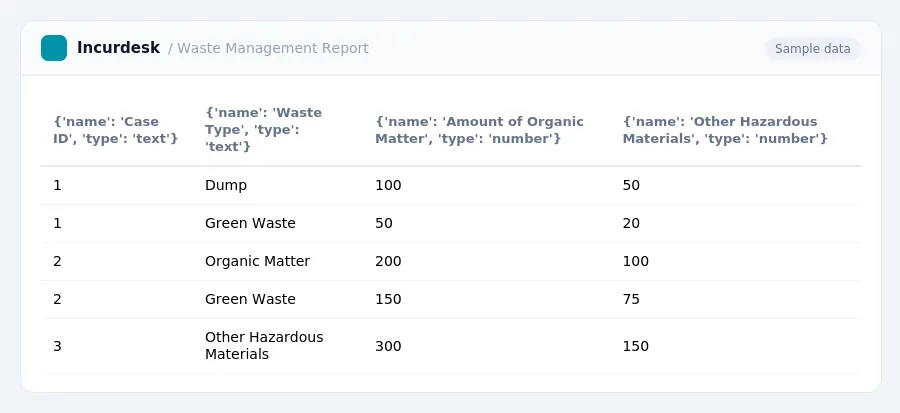
This fee is based on the amount of organic matter and other hazardous materials in the waste.
It is essential to accurately track and report waste management costs to ensure compliance with EPA regulations. The EPA recommends that businesses use a standardized system to report waste disposal costs, such as the Waste Management Cost Estimation Tool (WMCET). This tool provides a simple and effective way to calculate and report waste management costs.
To tag every case to a dentist, businesses should:
- Use the WMCET to estimate and report waste management costs
- Record accurate waste generation and disposal data
- Verify that waste is properly classified and disposed of
- Comply with EPA regulations and guidelines for waste disposal
By following these steps, businesses can ensure that they are accurately tracking and reporting waste management costs, and that they are complying with EPA regulations.
The rules in this guide
| Amount | Required | In Incurdesk |
|---|---|---|
| Above $75 | Itemised receipt | Checked on every expense |
| Above $250 | Written business purpose | Checked on every expense |
| Above $500 | Names of attendees | Checked on every expense |
| Above $2,500 | Senior sign-off; never auto-approved | Checked on every expense |
Each rule is checked on every expense by Incurdesk’s approval agent.
Provide accurate waste disposal data
Here is the section titled "Provide accurate waste disposal data":
- Accurate identification of the type and quantity of waste is crucial for calculating the correct disposal fees and ensuring compliance with regulations.
- This will help you track the amount of waste you are disposing of and ensure that you are meeting the requirements of your local regulations.
- This can be a paper-based system or a digital one using a tool like Google Sheets or Microsoft Excel. Make sure to update the log regularly to ensure accuracy.
- Use a standardized system to categorize and record the type of waste.
- Verify that your waste is properly labeled and that it is placed in the designated bins.
- Use the data you have collected to track and report waste management costs. This will help you to identify areas where you can reduce your costs and make adjustments to your waste management strategies accordingly.
Track and report waste management costs
As a small commercial landscaping business, accurately tracking and reporting waste management costs is crucial for making informed decisions and managing your operations effectively. Here's how to get started:
- Start by gathering all relevant waste management data, including the quantity and type of waste generated, and the waste disposal costs incurred. This information will be used to calculate the total waste management costs.
- Consider using a waste management software or app to track your data and calculate the costs. Some popular options include Waste360, WasteTrack, and Landfill Data Solutions.
- Review your waste management contracts and agreements to understand the terms and conditions related to waste disposal. This will help you understand any potential costs associated with changes to your waste management services.
- Keep detailed records of your waste management costs, including invoices, receipts, and other supporting documents. This will be essential for tracking and reporting your costs.
- Use the information gathered to identify potential cost savings opportunities, such as renegotiating contracts or exploring alternative waste disposal methods.
- Regularly review and update your waste management costs to ensure you're taking advantage of any available cost savings and making informed decisions about your operations.
Identify potential cost savings
The median verified tipping fee across 638 US landfills in 2026 is $55 per ton, with a range from $10 to $521 per ton. This fee is subject to change based on location and other factors. The tipping fee is the rate at which a landfill accepts and processes waste, and it varies depending on the type and quantity of waste.
To identify potential cost savings, consider the following steps:
- Review your current waste management contract or agreement with your landfill or waste disposal provider to understand the terms and conditions of your waste disposal arrangement.
- Research the national average landfill tipping fee in 2024, which is $62.28 per ton, to determine if your current fee is within the expected range. Varies.
- Evaluate your current waste disposal costs to identify areas where you may be able to reduce your expenses. Consider factors such as the weight and volume of waste, as well as any additional services or fees that may be included in your contract.
- Look for opportunities to optimize your waste management processes, such as streamlining your waste collection routes or implementing more efficient waste sorting and processing systems.
- Review your contract or agreement to ensure that it includes any provisions for cost savings or discounts that may be available to customers.
Monitor and adjust waste management strategies
Here is the section titled "Monitor and adjust waste management strategies":
To monitor and adjust waste management strategies for your small commercial landscaping business, start by tracking your current waste management costs. This includes not only the cost of disposal but also any additional fees or charges. In 2026, yard waste removal in Los Angeles, the Inland Empire, and Orange County is typically priced by volume, with ranges from $90–$150 for a minimum/single-item pickup to $450–$650+ for a full truckload. Consider tracking your costs using a spreadsheet or accounting software to get a clear picture of your expenses.
As you gather data, identify areas where you can reduce your waste management costs. Look for opportunities to increase your collection rate, reduce the frequency of pickups, or optimize your waste sorting process. For example, you may be able to reduce your waste disposal costs by implementing a more efficient collection schedule or by using more cost-effective waste sorting methods.
Additionally, monitor your waste management costs over time to identify trends and patterns. This will help you make data-driven decisions about how to optimize your waste management strategies moving forward. Be sure to keep track of any changes in regulations, pricing, or other factors that may impact your waste management costs. By monitoring and adjusting your waste management strategies regularly, you can ensure that your business is operating efficiently and effectively.
Keeping this simple: Incurdesk lets your team snap a photo of a receipt and fills in the details for you. It is built for small commercial landscaping teams. Try it free.
AI expense management for finance teams and whoever keeps the books. It checks every expense against your rules, approves the routine ones and chases missing receipts for you.
Try it free for 30 days →Stop losing 4+ hours a week
30-day free trial · No credit card · Setup in 15 minutes