Dump Fees and Tear-Off Disposal Receipt Tracking
A practical, data-backed guide to controlling costs and automating expense workflows.
Small roofing contractors are facing a significant expense management challenge as they deal with the disposal of old roofing materials. These costs can vary depending on the type and quantity of materials being disposed of, but one common expense is the landfill tipping fee. To track these expenses, contractors can use roofing contractors expense management software, which can provide a record of all disposal costs and allow for easy expense categorization and reporting.

Tag every case to a dentist
States with Waste-to-Energy (WTE) facilities tend to have higher landfill disposal costs compared to non-WTE states. This is due to reduced landfill supply competition. For example, the average landfill tipping fee in WTE states is $71.28 per ton, while in non-WTE states it averages at $55.57 per ton.
To track disposal receipts for your roofing business, start by creating a log or spreadsheet to record each material removed and its weight. You can also use a mobile app or online tool to make the process easier.
When tracking disposal receipts, ensure that you have a clear description of the material removed, including the type and quantity. Also, note the date and location of each disposal event.
To verify business meal expenses, keep accurate records of all business-related meals, including receipts for food and beverages. You can use a separate log or spreadsheet for this purpose.
Business meals are generally 50% deductible for the employer. The temporary 100% deduction for restaurant meals applied only in 2021 and 2022. Keep records of all business-related meals, including receipts and expense reports.
Documenting business income is also crucial. Keep accurate records of all income earned, including invoices, receipts, and bank statements. This will help you to accurately report your business income and claim deductions on your tax return.
By following these steps, you can effectively track your disposal receipts and verify business meal expenses, ensuring that you are meeting your tax obligations and taking advantage of available deductions.
Verify business meal expenses
To ensure compliance with IRS requirements, verify that business meals are accurately documented and meet the necessary thresholds for deductibility. For most business expenses, the IRS requires substantiation of the amount, date, place, and business purpose. This includes lodging and other expenditures of $75 or more, which require documentary evidence like a receipt.
For expenses under $75 (excluding lodging), a receipt isn't strictly required by the IRS, but you still need adequate records detailing the amount, date, place, and business purpose. Many companies set a lower internal threshold for receipts.
To verify business meal expenses, consider the following steps:
- Keep a record of all business meals, including dates, locations, and purposes.
- If you're reimbursing yourself for meals, ensure you have a receipt or documentation that meets the IRS requirements.
- If you're deducting meal expenses as a business expense, verify that they meet the necessary thresholds and are substantiated by records.
- Consult with your accountant or tax professional to ensure you're meeting the IRS requirements for business meal expenses.
- Keep accurate and detailed records of all business expenses, including receipts, invoices, and other supporting documentation.
Check landfill tipping fees
Here is the article:
- Understanding the costs associated with disposing of old roofing materials is crucial for small roofing contractors to ensure they are not overpaying for services.
- Mississippi has the lowest landfill tipping fees, ranging from $22 to $40 per ton, making it a more cost-effective option for contractors.
- Connecticut has the highest landfill tipping fees, ranging from $95 to $150 per ton, making it a more expensive option for contractors.
- The Northeast region has the highest average landfill tipping fees at approximately $80.67 per ton, while the South Central region pays the least at $44.87 per ton.
- The average landfill tipping fee varies by region, with the Northeast region paying the highest amount and the South Central region paying the least.
- Landfill tipping fees are typically determined by the weight of the waste being disposed of, and the cost per ton can range from approximately $22 to $150.
- Contractors can track disposal receipts by keeping accurate records of the materials disposed of and the date they were disposed of.
- To document business income, contractors should keep detailed records of all income, including disposal expenses, and ensure that all expenses are properly documented and supported by receipts and other evidence.
Track disposal receipts
Here's a step-by-step guide:
- Start by creating a spreadsheet or using a digital tool to track the disposal of old roofing materials. This can include items like old roofs, shingles, and other materials.
- Each time you dispose of an old roofing material, record the date, type of material, and the amount disposed of. This will help you keep accurate records.
- Use a unique identifier, such as a serial number or a specific type of material, to track each item.
- Make sure to keep a record of the disposal location, including the landfill or recycling facility.
- Take photos or videos of the disposal process to support your records.
- Keep a record of the disposal receipts, including the date, amount, and location.
- Use a digital tool to generate a receipt for the disposal, which will include information like the type of material, amount disposed of, and the date.
- Keep the digital receipt as part of your records.
This means that if you claim a business meal deduction, you can only deduct 50% of the cost of the meal. The temporary 100% deduction for restaurant meals only applied in 2021 and 2022.
Document business income
The IRS requires businesses to keep records for at least three years from the date a tax return is filed. This period can extend to six years if income is substantially understated or indefinitely if a return is fraudulent or never filed. To meet this requirement, it is essential to maintain accurate records of business income and expenses.
When it comes to tracking business income, it is crucial to use proper documentation. This includes:
- A record of all income earned, including receipts, invoices, and bank statements
- A record of all expenses incurred, including receipts, invoices, and bank statements
- A record of any business meals or entertainment expenses that can be deducted
To ensure compliance, it is recommended to use a system that allows for easy tracking and organization of financial records. This can include:
- A spreadsheet or accounting software that allows for easy data entry and organization
- A physical filing system that allows for easy access to records
- A system that allows for automatic data backup and recovery
It is also essential to note that the IRS will accept records from various sources, including:
- Banks and credit card companies
- Online payment processors
- Accounting software providers
- Spreadsheets and other document storage systems
If you are unsure about how to track your business income or expenses, it is recommended to consult with a tax professional or accountant.
Tax rules, limits and rates change. Confirm current figures with the IRS or your accountant before you file.
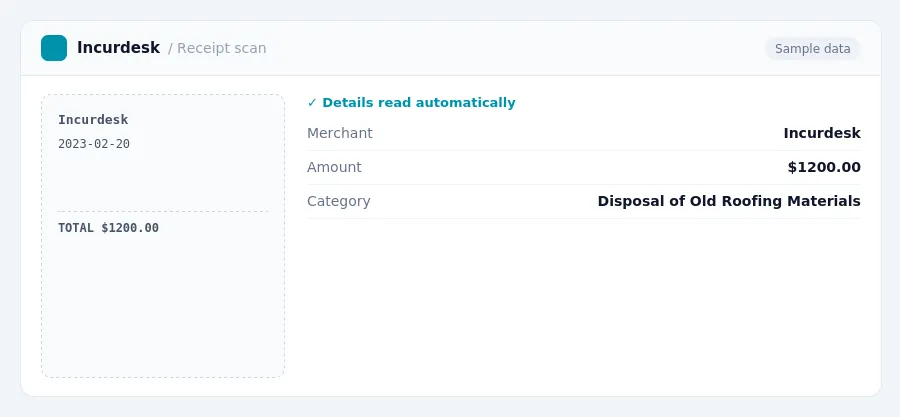
Keeping this simple: Incurdesk lets your team snap a photo of a receipt and fills in the details for you. It is built for small roofing contractor teams. Try it free.
AI expense management for finance teams and whoever keeps the books. It checks every expense against your rules, approves the routine ones and chases missing receipts for you.
Try it free for 30 days →Stop losing 4+ hours a week
30-day free trial · No credit card · Setup in 15 minutes