
Expense Documentation Standards for CPA Firms
A practical, data-backed guide to controlling costs and automating expense workflows.
Small accounting businesses need clear guidelines on what constitutes acceptable documentation for business expenses to ensure tax compliance and accurate financial reporting. For the bigger picture, see our guide to accounting expense management for under $10/user (2026).
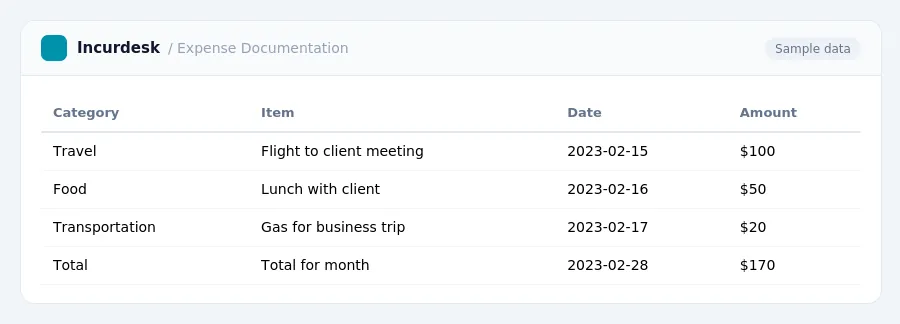
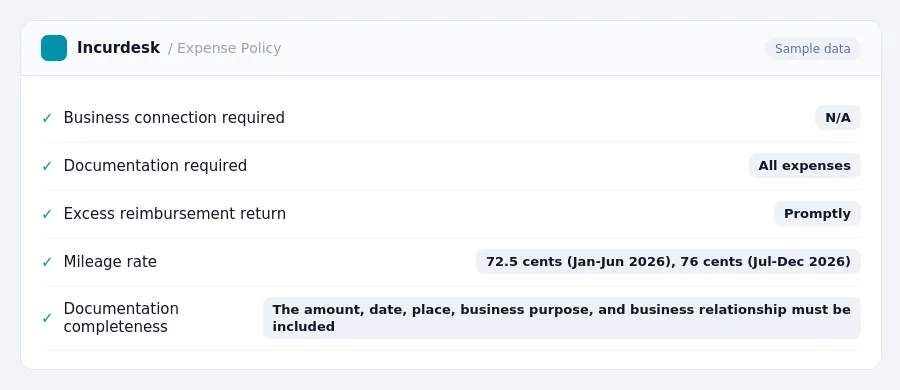
- Expenses must have a business connection.
- Expenses must be substantiated with records.
- Any excess reimbursements must be returned promptly.
- 72.5 cents per mile from January 1 to June 30, 2026.
- 76 cents per mile from July 1 to December 31, 2026.
- For every business expense claimed, documentation must include:
- The amount.
- The date.
- The place.
- The business purpose.
- The business relationship.
- L legible.
- Complete.
- Easily retrievable.
Calculating Reimbursement Rates
When reimbursing employees for business expenses, it's essential to use the correct rates to avoid over- or under-reimbursement. Here are the current reimbursement rates for common expenses:
- Mileage Reimbursement Rate: Varies by location and vehicle type.
- For taxpayers in the transportation industry, the special M&IE rates are:
- Other reimbursement rates, such as those for lodging and transportation, also vary by location.
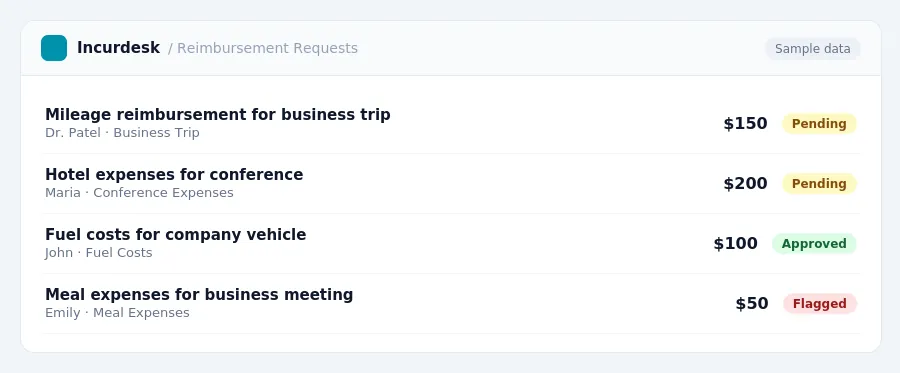
Documenting Business Expenses
- Original Receipts or Invoices Required
- Original receipts or invoices showing the vendor, items, date, and amount are generally required.
- For expenses under $75, a contemporaneous note or log entry may suffice.
- Many firms require receipts for all expenses for clarity.
-
- (CONUS) and outside continental U.S. (OCONUS) localities.
- Meal and Incidental Expenses
Common Pitfalls to Avoid
- Inadequate record-keeping: Keep detailed records of business expenses, including dates, amounts, and descriptions.
- Incorrect categorization of expenses: Review your records to ensure expenses are properly categorized as business or personal.
- Insufficient supporting documentation: Make sure you have enough documentation to support each expense, including receipts and bank statements.
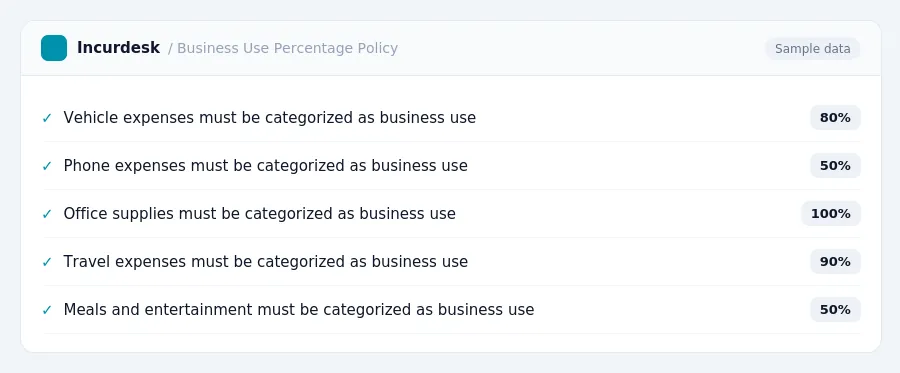
- Not accounting for business use percentage: Calculate the business use percentage for mixed-use items, such as vehicles and phones.
Maintaining Accurate Records
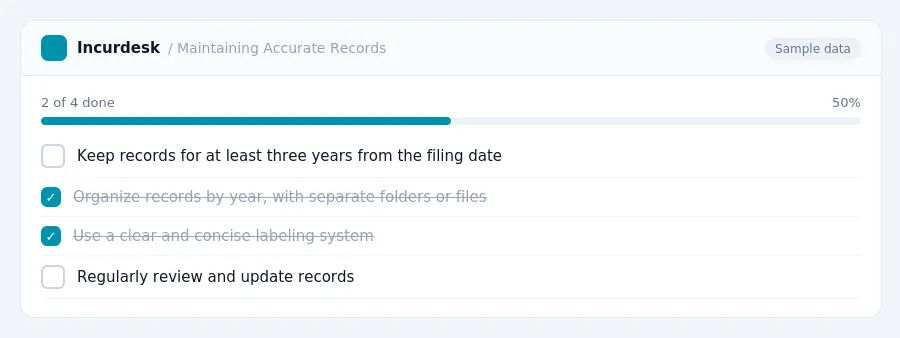
Generally, records should be kept for at least three years from the filing date. However, longer periods may apply in certain circumstances.- Keep all receipts, invoices, and bank statements related to business expenses.
- Organize records by year, with separate folders or files for each year.
- Use a clear and concise labeling system, including the date, description, and amount of each expense.
- Consider scanning or digitizing paper records to make them easier to access and store.
- Keep records in a secure location, such as a locked cabinet or a secure online storage service.
Remember to regularly review and update your records to ensure they are accurate and complete. This will help you quickly locate information in case of an audit or tax inquiry.
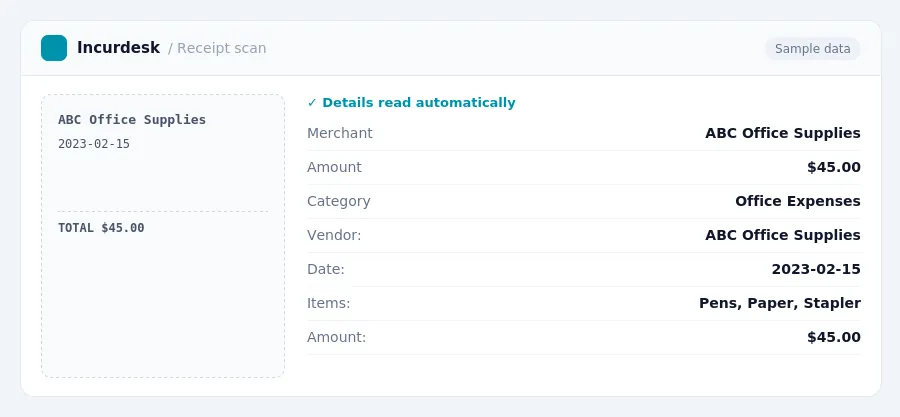
Keeping this simple: Incurdesk lets your team snap a photo of a receipt and fills in the details for you. It is built for small accounting teams. Try it free.
Stop losing 4+ hours a week
30-day free trial · No credit card · Setup in 15 minutes