
Expense FAQ for Construction Office Managers
A practical, data-backed guide to controlling costs and automating expense workflows.
Construction office managers need clear, up-to-date information on deductible business expenses, particularly regarding employee travel, vehicle use, and payroll taxes. To ensure accurate record-keeping, maximize tax deductions, and avoid compliance issues, you'll want to understand current IRS rates and rules. For example, you can manage construction expense management for under $10/user (2026) and use that savings to invest in tax preparation and compliance resources. For a complete overview, see our expense management guide.
Deductible Business Expenses for Employee Travel
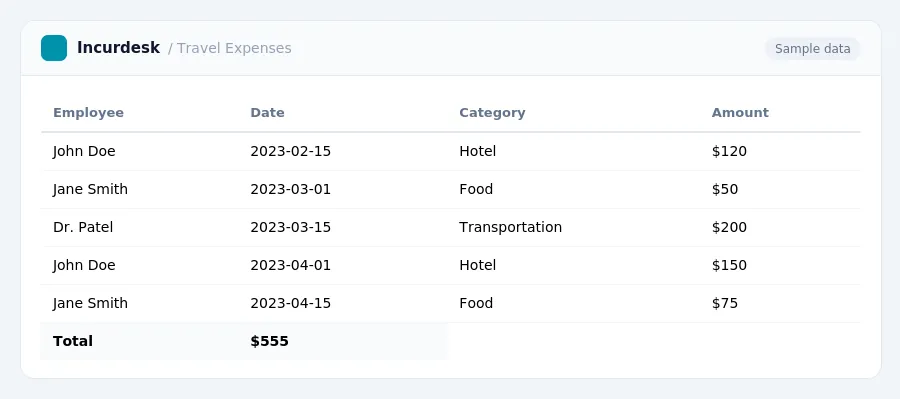
As a construction office manager, it's essential to understand the rules and regulations surrounding deductible business expenses for employee travel. The IRS provides specific mileage rates and per diem rates for employee travel, which can help you maximize your tax deductions.
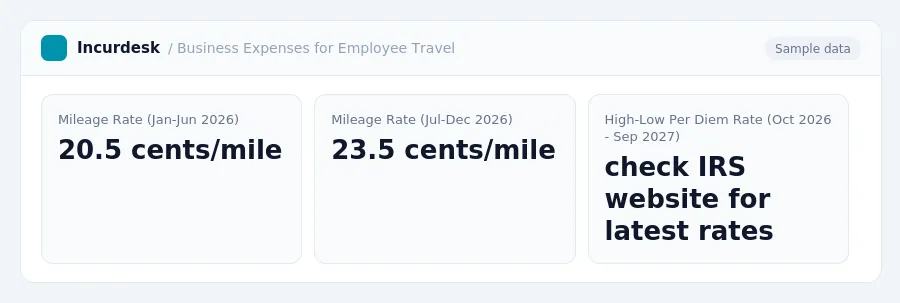
- Medical and moving expenses (military personnel): For the first half of 2026, the rate was 20.5 cents per mile, and from July 1 to December 31, 2026, the rate is 23.5 cents per mile.
When it comes to per diem rates, the IRS provides high-low per diem rates for employee travel. For travel from October 1, 2026, through September 30, 2027, the rates are:
Remember to keep accurate records of employee travel, including mileage logs and receipts for expenses. This will help you ensure compliance with IRS regulations and maximize your tax deductions.
Vehicle Use Expenses and Mileage Rates
To calculate business mileage expenses, you'll need to track the miles driven for business purposes and multiply them by the standard mileage rate.
Here's a step-by-step example:
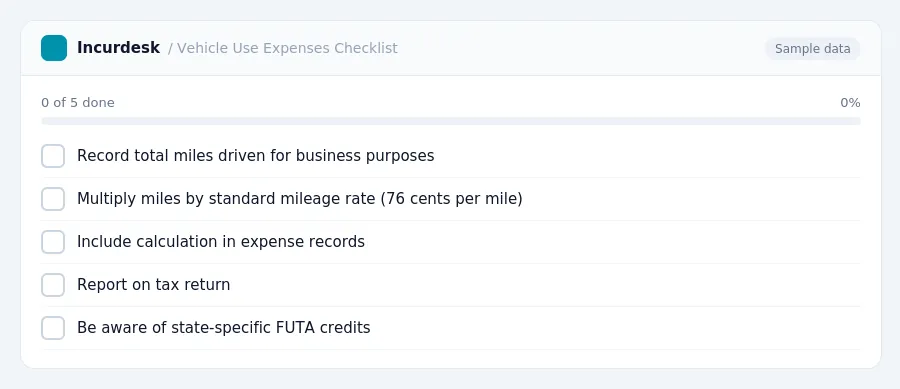
- Record the total miles driven for business purposes.
- Multiply the total miles by the standard mileage rate (76 cents per mile).
- Include this calculation in your expense records and report it on your tax return.
Keep in mind that you can't claim both the mileage deduction and actual expenses for the same vehicle, such as fuel, maintenance, and repairs.
Also, be aware that California and New York may have reduced FUTA credits due to outstanding federal loans, potentially increasing their effective FUTA rates in 2026.
Payroll Taxes and FICA Requirements
The FICA tax rate is 7.65% for employees and 7.65% for employers, totaling 15.3% for 2026. (source: Specific Facts)
Construction office managers need to understand the FICA tax requirements for their employees. Here are the key points to keep in mind:
- Employees are required to pay 7.65% of their wages in FICA taxes, which includes both the Medicare tax and the Social Security tax.
- Employers are also required to pay 7.65% of their employees' wages in FICA taxes, making the total FICA tax rate 15.3% for 2026.
- The FICA tax rate applies to all employees, including those who are exempt from income tax.
- Construction office managers should ensure that their employees are paying their FICA taxes correctly and that they are also paying their share of the FICA taxes.
It's also important to note that the FICA tax rate may change over time, so it's essential to check the IRS website for the most up-to-date information.
Construction office managers should consult with a tax professional or accountant to ensure they are in compliance with FICA tax requirements and to avoid any potential penalties or fines.
FUTA Tax and Unemployment Insurance
Here are some key facts and guidelines to keep in mind:
- The FUTA tax rate is 6% of the first $7,000 in wages paid to each employee, with a maximum tax of $420 per employee for 2026.
- The maximum earnings subject to Social Security tax in 2026 is $184,500.
- Employers do not match the additional Medicare tax.
It's worth noting that the FUTA tax is only applicable to wages paid to employees, not to independent contractors. If you have employees who are subject to FUTA tax, you will need to complete Form 940, Employer's Annual Federal Unemployment (FUTA) Tax Return, and pay any applicable taxes by January 31st of each year.
Additionally, you will need to maintain accurate records of your employees' wages and FUTA tax payments to ensure compliance with IRS regulations. This includes keeping track of the amount of wages paid to each employee, as well as any FUTA tax credits you may be eligible for.
For more information on FUTA tax and unemployment insurance, consult the IRS website or consult with a tax professional.
Expense Record-Keeping and Compliance
As a construction office manager, maintaining accurate and compliant expense records is crucial to ensure you can take advantage of tax deductions and avoid potential issues with the IRS.
To keep your records in order, establish a system for tracking and categorizing business expenses, including receipts, invoices, and bank statements.
- Set up a centralized location for storing and organizing all expense-related documents.
- Use a consistent naming convention and numbering system for expense categories and records.
- Ensure all records are easily accessible and can be retrieved quickly in case of an audit.
Consider implementing a process for regularly reviewing and reconciling expense records to identify and correct any discrepancies or errors.
It's also essential to stay up-to-date with changing IRS rules and regulations, and consult with a tax professional or accountant if you're unsure about any aspect of expense record-keeping or compliance.
Be sure to maintain accurate and detailed records for at least three years in case of an audit, and consider keeping records for longer if possible.
Tax rules, limits and rates change. Confirm current figures with the IRS or your accountant before you file.
Keeping this simple: Incurdesk lets your team snap a photo of a receipt and fills in the details for you. It is built for small construction teams. Try it free.
Stop losing 4+ hours a week
30-day free trial · No credit card · Setup in 15 minutes