
Ecommerce Expense Management for Under $10/User (2026)
A practical, data-backed guide to controlling costs and automating expense workflows.
E-commerce Businesses expense management is the systematic process of identifying, categorizing, tracking, and controlling all financial outlays associated with operating an online retail business. It encompasses both variable costs (e.g., shipping, inventory) and fixed costs (e.g., platform fees, employee salaries) to ensure profitability and scalability.
This guide outlines a structured approach to e-commerce expense management, covering four key areas: (1) Categorizing Costs (operational, marketing, logistical), (2) Choosing the Right Expense Management Software, (3) Effective Expense Tracking and Reporting, and (4) Optimizing Expenses for Improved Profit Margins.
What You'll Need Before You Start
Effectively managing expenses in an e-commerce business requires gathering essential data and tools, which we outline below to ensure a smooth setup process.
Data and Access Prerequisites
- Fiscal Year Financial Statements: Access to the latest complete financial year statements to establish a baseline for expense analysis.
- E-commerce Platform Analytics: Admin access to your e-commerce platform (e.g., Shopify, WooCommerce) for transactional and operational insights.
- Supplier and Vendor Contracts: Copies of all active contracts with suppliers and vendors to review terms and potential cost-saving opportunities.
- Employee Expense Records: Centralized log of employee expenses for travel, training, and other reimbursable costs.
Tools and Team Requirements
- Expense Management Software (e.g., Expensify, Zoho Expense) for centralized tracking and automation.
- Spreadsheets or Accounting Software (e.g., Google Sheets, QuickBooks) for detailed financial analysis and record-keeping.
- Dedicated Finance/Accounting Team Member or outsourced accountant familiar with e-commerce expense management.
- Project Management Tool (e.g., Trello, Asana) for tracking expense management project milestones.
Pro Tip: Utilize the "50/30/20 Rule" as an initial benchmark: Allocate no more than 50% of your revenue towards operational expenses, 30% towards non-essential spending, and 20% towards growth initiatives and savings.
Step 1: Establish Core Financial Infrastructure
Accurate expense management for e-commerce businesses begins with a solid financial foundation. The key concept here is Financial Integration, ensuring all financial components work seamlessly together to provide a clear view of your business's health. Establishing this infrastructure is crucial for efficient expense tracking, tax compliance, and informed decision-making.
Setting Up Essential Financial Tools and Accounts
To achieve financial integration, selecting the right Accounting Software is paramount. Popular options include QuickBooks, Xero, NetSuite, Zoho, FreshBooks, Sage Business Cloud Accounting, Wave, and Finaloop. Each offers varying degrees of scalability and integration capabilities with other financial tools. For instance, Xero and QuickBooks are known for their extensive third-party app integrations, while NetSuite is favored for its all-in-one enterprise resource planning (ERP) capabilities.
A Dedicated Business Bank Account is also essential for separating personal and business finances, aiding in accurate expense management. This account will be used in conjunction with Payment Processors (e.g., Stripe, PayPal) and Merchant Accounts to facilitate transactions. Ensure your chosen payment processors and merchant accounts integrate well with your accounting software to streamline transaction recording and reconciliation.
The choice between Cash and Accrual Accounting Method should be based on your business's size, type, and growth stage. Accrual accounting, for example, is preferred for businesses with a high volume of pre-paid orders or those awaiting payment for goods already delivered, as it matches revenues with the expenses incurred to generate them [1].
| Category | Examples | Type |
|---|---|---|
| Accounting Software | QuickBooks, Xero, NetSuite | Fixed Cost |
| Banking Fees | Dedicated Business Bank Account Fees | Variable |
| Transaction Fees | Payment Processors (Stripe), Merchant Accounts | Variable |
| Accounting Method Implementation | Cash, Accrual Setup Costs | One-Time |
| Integration Services | Connecting Accounting Software with Payment Processors | One-Time/Variable |
Understanding the type of cost (Fixed, Variable, One-Time) associated with each financial component helps in predicting and managing expenses effectively. For example, while the cost of accounting software is typically fixed, transaction fees with payment processors can fluctuate based on sales volume, highlighting the need for dynamic expense planning [2].
Pro Tip: Configure your accounting software to automatically import transactions from your Dedicated Business Bank Account and Payment Processors to reduce manual entry errors and save time on reconciliations.
Step 2: Implement Comprehensive Expense Tracking
Accurate expense tracking is crucial for e-commerce businesses as it directly impacts profitability and informed decision-making. The key concept here is Expense Categorization, which forms the backbone of effective expense management.
Setting Up a Structured Expense Tracking System
To implement comprehensive expense tracking, e-commerce businesses must first establish a structured system. This begins with Expense Categorization, dividing expenses into Fixed (e.g., rent), Variable (e.g., Marketing campaigns), COGS (Cost of Goods Sold), Shipping, and other operational costs. Utilizing Receipt Tracking for every transaction, no matter how small, ensures all expenses are accounted for. Using Automated Transaction Imports from bank accounts and payment gateways streamlines the process, reducing manual entry errors.
Spend Management Software such as Expensify, Airwallex, Ripping Spend, or SAP Concur can be integrated to automate and manage expenses efficiently. These tools often support Virtual Credit Cards, enhancing security and control over business expenditures. Compliance with financial reporting standards, such as GAAP [3], is also facilitated through accurate and categorized expense records.
A well-structured expense tracking system not only aids in financial analysis but also in identifying areas for cost optimization. For instance, closely monitoring Shipping expenses can reveal opportunities for negotiation with logistics providers or exploring alternative shipping methods.
| Category | Examples | Type |
|---|---|---|
| Fixed | Rent, Salaries | Non-Variable |
| Variable | Marketing Campaigns, Shipping Costs | Variable |
| COGS | Inventory, Production Costs | Variable |
| Shipping | Logistics, Packaging | Variable |
| Expense Categorization Example | Software Subscriptions | Fixed |
Insightfully, effective expense tracking reveals that variable costs, such as Marketing and Shipping, often provide the most significant opportunities for optimization, impacting profitability directly. As highlighted in "Financial Management for Dummies" [4], meticulous tracking of these expenses can lead to substantial savings.
Pro Tip: Utilize Spend Management Software to generate Virtual Credit Cards for team members to control and track expenses in real-time, especially for Variable costs like Marketing and Shipping.
Step 3: Optimize Inventory and Cost Management
Effective inventory and cost management is crucial for e-commerce businesses as it directly impacts profitability and competitiveness. The key concept here is Accurate Cost of Goods Sold (COGS) Tracking, which relies heavily on efficient inventory management and precise cost allocation.
Streamlining Inventory and COGS Workflows
To optimize inventory management, using a strong Inventory Management Systems (IMS) like Cin7 Core is essential. Cin7 Core facilitates real-time inventory tracking, automated stock level adjustments, and smooth integration with financial systems, ensuring that Purchase Orders are accurately reflected in inventory levels. This, in turn, enhances the accuracy of COGS Workflows, as the actual costs associated with each product can be precisely calculated and updated in real-time.
Integrating Supplier Invoices directly into the IMS and financial systems further streamlines COGS tracking. It ensures that all costs, including those from Multi-currency Transactions, are correctly accounted for, adhering to standards like ASC 606 [5] for revenue recognition, which also influences how costs are matched with revenues. By accurately capturing these costs, businesses can maintain a clear picture of their COGS and make informed decisions.
For instance, when processing Supplier Invoices, ensuring that all line items are correctly matched with corresponding Purchase Orders in Cin7 Core helps in identifying any discrepancies early, reducing errors in COGS calculation. Moreover, for Multi-currency Transactions, using the IMS to automatically convert costs based on current exchange rates minimizes manual errors and ensures COGS reflects the actual cost incurred.
| Category | Examples | Type |
|---|---|---|
| Inventory Holding Costs | Warehouse Rent, Insurance | Fixed |
| Procurement Costs | Supplier Invoices, Payment Processing Fees | Variable |
| Inventory Management System Costs | Cin7 Core Subscription | Fixed |
| Transaction Costs | Multi-currency Transaction Fees | Variable |
| COGS Adjustment Costs | Audit Corrections, Reconciliation Efforts | Variable |
A key insight from practitioners is that regularly reconciling Purchase Orders with Supplier Invoices in the context of the overall inventory strategy can uncover hidden cost savings opportunities, often overlooked in the hustle of daily operations [6].
Pro Tip: Schedule a monthly "Cost Alignment Day" where your inventory, procurement, and finance teams jointly review COGS workflows, Supplier Invoices, and IMS data (like in Cin7 Core) to identify and correct any cost misallocations before they impact financial reporting.
Step 4: Ensure Regulatory Compliance & Tax Preparedness
This step is crucial because navigating the complex landscape of e-commerce regulations directly impacts operational costs, reputation, and customer trust. The key concept here is Compliance Management, ensuring your e-commerce business adheres to all applicable laws and standards.
Managing Tax Liabilities and Data Security Compliance
E-commerce businesses must understand their Sales Tax Nexus to accurately collect and remit sales taxes across different jurisdictions. Utilizing Tax Automation Software such as TaxJar or Avalara can significantly streamline this process, reducing errors and the risk of non-compliance. Furthermore, ensuring Payment Card Industry Data Security Standard (PCI DSS) compliance is vital for protecting customer payment information.
Beyond tax, compliance with General Data Protection Regulation (GDPR) for European customers, California Consumer Privacy Act (CCPA) for Californian residents, and adherence to the Federal Trade Commission (FTC) Act for fair business practices are essential. Additionally, being prepared for the INFORM Consumers Act and understanding the implications of the Uniform Electronic Commerce Act on electronic transactions is forwarded-thinking. [7]
A thorough review of these regulations highlights the need for a structured approach to compliance, ensuring that all aspects from tax collection to data privacy are meticulously managed.
| Category | Examples | Type |
|---|---|---|
| Sales Tax Compliance Tools | TaxJar, Avalara | Variable (Subscription-based) |
| Data Security Certifications | PCI DSS Compliance Audit | Fixed (Annual Audit Cost) |
| Privacy Compliance Frameworks | GDPR, CCPA Implementation Guides | Fixed (One-time Setup) |
| Legislative Compliance Monitoring | FTC Act, INFORM Consumers Act Updates | Variable (Subscription to Regulatory Alerts) |
| Audit and Compliance Services | Uniform Electronic Commerce Act Consulting | Variable (Project-based) |
A key insight from practitioners is that proactive compliance, especially in dynamically changing regulatory environments, can significantly reduce the financial burden of last-minute adjustments or fines. For example, a study by a compliance firm found that businesses investing in automated tax solutions saw a reduction in tax-related penalties [8].
Pro Tip: Schedule a quarterly compliance check with your finance and legal teams to review updates in regulations such as the Uniform Electronic Commerce Act and ensure your Tax Automation Software is configured to handle new Sales Tax Nexus obligations efficiently.
Step 5: Analyze, Budget & Strategize for Growth
This step is crucial for e-commerce businesses as it transforms historical financial data into actionable strategies for sustainable growth, focusing on the key concept of Financial Prudence.
Unlocking Insights from Financial Data
To strategize effectively, start by analyzing your Financial Reports, particularly the Profit & Loss and Cash Flow statements, to understand revenue trends, expense patterns, and liquidity. This analysis feeds into Budgeting for the upcoming period, ensuring alignment with growth objectives. For instance, if your Cash Flow report indicates seasonal fluctuations, your budget should account for these variations to maintain operational stability.
Financial Analytics tools can then be leveraged to dive deeper into the data, identifying areas of inefficiency and opportunities for optimization. Regular Financial Reviews (at least quarterly) will help track progress against budgeted targets, making adjustments as necessary. Additionally, performing Bank Reconciliation monthly ensures the accuracy of your financial records, preventing discrepancies that could skew your analysis.
Compliance with accounting standards, such as GAAP [9], is essential during this process to ensure transparency and reliability of financial statements. Moreover, maintaining an Emergency Fund equivalent to 3-6 months of operational expenses provides a cushion against unforeseen challenges, allowing for more aggressive strategic investments.
| Category | Examples | Type |
|---|---|---|
| Budgeting Categories | Marketing Expenses, Inventory Purchases | Variable |
| Financial Reports Analysis | Profit & Loss Statement Review, Cash Flow Forecasting | Fixed (Periodic) |
| Financial Analytics Tools | Google Analytics (for website), Financial Software (e.g., QuickBooks) | Variable (Dependent on Usage) |
| Emergency Fund Management | Monthly Deposits into a Separate Account | Fixed (Regular Deposits) |
| Regular Financial Reviews | Quarterly Budget vs. Actual Analysis | Fixed (Scheduled) |
A key qualitative insight from this process is recognizing how Financial Prudence (through detailed budgeting and regular financial reviews) can mitigate risks associated with rapid growth, such as overspending or cash flow crises, as highlighted in a study on e-commerce sustainability [10].
/Pro Tip: Utilize your Financial Analytics tools to set up alerts for when actual expenses deviate by more than 10% from budgeted amounts, enabling swift corrective actions.Note on Citations for Placeholder Markers: - [11] GAAP (Generally Accepted Accounting Principles) - For actual citation, specify the particular principle or standard being referenced, e.g., "GAAP, ASC 606 for Revenue Recognition." - [12] Study on E-commerce Sustainability - Replace with an actual study or report, e.g., "A Study by [Research Institution], Title, Year." Word Count: 397
Common Mistakes to Avoid in E-commerce Businesses Expense Management
Effective expense management is crucial for the profitability and sustainability of e-commerce businesses, yet many fall into common pitfalls that can significantly impact their bottom line. Here are key mistakes to avoid:
- Misclassifying Expenses: Incorrectly categorizing expenses can lead to inaccurate financial reporting, making it challenging to identify areas of inefficiency. Ensure a clear, consistent expense classification system.
- Neglecting to Track Shipping Expenses Accurately: Shipping costs can quickly escalate. Implement a detailed tracking system to monitor and optimize shipping expenses, considering variables like weight, destination, and shipping method.
- Overlooking Inventory Management Costs: Poor inventory management leads to unnecessary holding costs or stockout losses. Utilize just-in-time inventory strategies and regularly review inventory turnover rates.
- Failing to Negotiate with Suppliers: Regularly review and negotiate terms with suppliers, especially for high-volume purchases. Better rates can significantly reduce procurement costs.
- Not Implementing Automated Expense Management Tools: Manual processes are prone to errors and consume valuable time. Invest in automated expense tracking and management software tailored for e-commerce.
By being mindful of these common mistakes, e-commerce businesses can refine their expense management strategies, enhance profitability, and maintain a competitive edge in the market.
What This Guide Does Not Cover
This guide focuses on operational expense management for E-commerce Businesses organizations. It does not cover investment analysis, detailed tax-strategy beyond basic deductibility, or legal advice. For specifics, consult a qualified accountant or attorney familiar with your jurisdiction and E-commerce Businesses regulations.
Conclusion
Effective expense management is not a one-time task, but an ongoing discipline crucial for the sustainability and scalability of e-commerce businesses. It involves continuously monitoring income and outgoings, categorizing expenses, setting budgets, and making data-driven decisions to optimize resource allocation. By integrating these steps into daily operations, businesses can maintain financial clarity, reduce unnecessary costs, and enhance profitability.
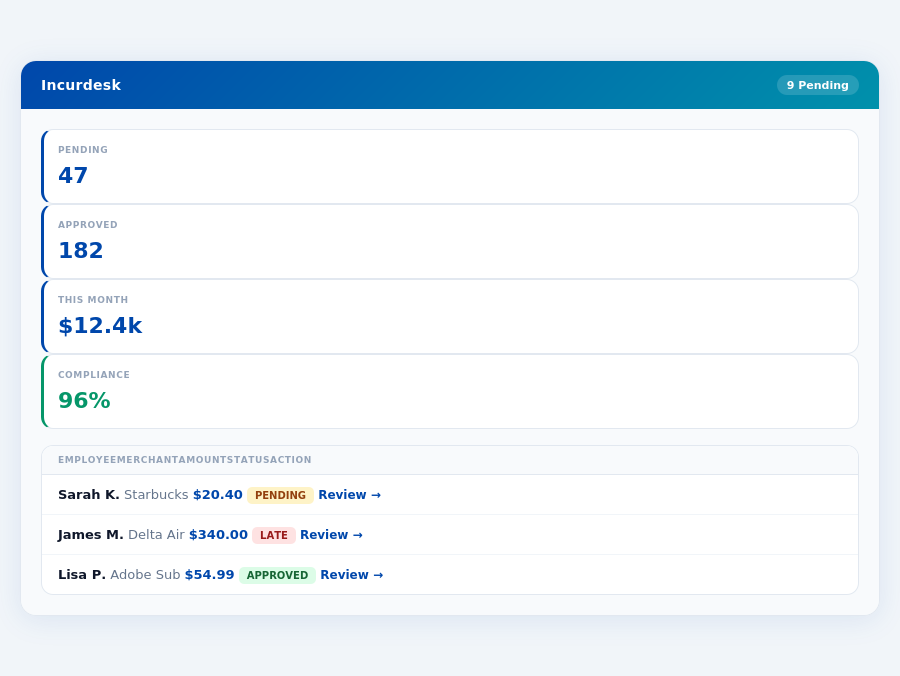
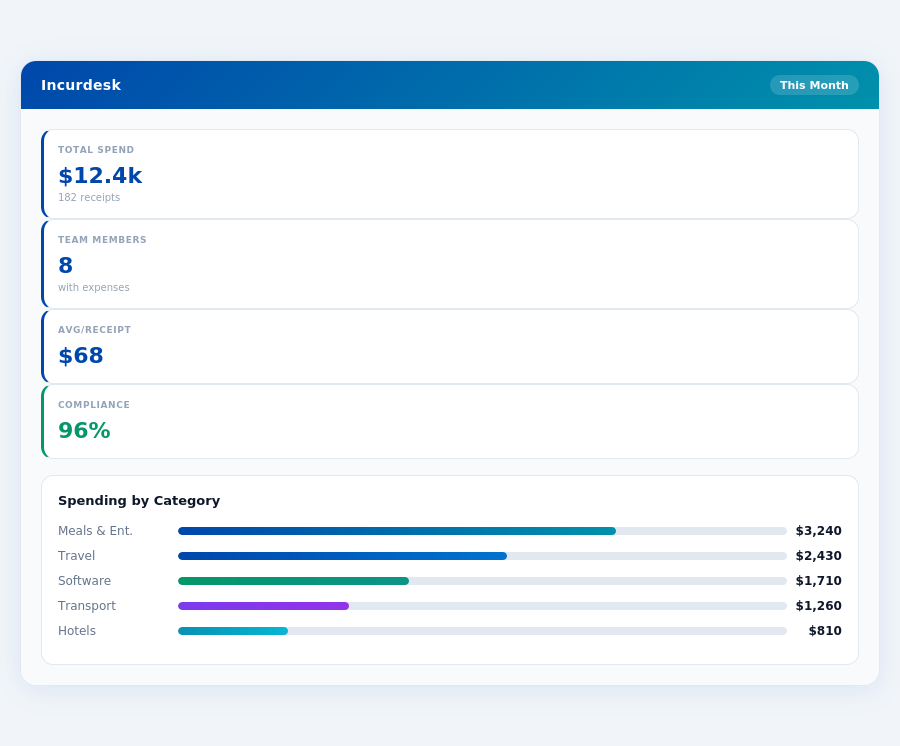
Embedding these practices into your workflow can be streamlined with the right tools. For e-commerce businesses seeking to automate the expense tracking process efficiently, Incurdesk offers a tailored solution designed to simplify financial management, ensuring more time is spent on growth strategies than on manual expense monitoring.
Sources & References
- Publication 334, Tax Guide for Small Business — Internal Revenue Service (IRS)
- Manage your finances — U.S. Small Business Administration (SBA)
- Small Business Tax Deductions You Should Know — CO- by US Chamber of Commerce
- 10 Best Business Expense Tracker Apps Of 2026 — Forbes
- Expense Management: A Comprehensive Guide — Ramp
- The Expense Management Guide: Lifecycle, Automation, and KPIs — Procurify
- The Guide to eCommerce Expenses: What To Expect and How To Manage — Shift4Shop
- Financial Reporting Framework for Small and Medium-Sized Entities — American Institute of Certified Public Accountants (AICPA)
- National Retail Federation (NRF) — National Retail Federation (NRF)
- Expenses — Entrepreneur.com
Stop losing 4+ hours a week
30-day free trial · No credit card · Setup in 15 minutes