
Expense Management for Engineering Firms
A practical, data-backed guide to controlling costs and automating expense workflows.

Engineering Firms expense management is the systematic process of identifying, recording, classifying, and controlling expenditure on resources and services utilized in the delivery of engineering projects. Effective expense management in this context ensures accurate financial reporting, compliance with regulatory requirements, and optimization of profitability through efficient allocation of resources.
This guide outlines a structured approach to managing expenses for Engineering Firms, covering four key areas: (1) Categorization of Costs (project, operational, capital), (2) Selection and Implementation of Suitable Expense Management Software, (3) Effective Tracking and Monitoring of Expenses, and (4) Strategies for Optimizing Expense Outlays to Enhance Profitability.
What You'll Need Before You Start
To effectively implement expense management in your Engineering Firm, gather the following essential prerequisites to ensure a smooth setup and accurate tracking.
Data and Access Prerequisites
- Historical Project Expenses: Access to at least 6 months of detailed project expense records, including invoices, receipts, and payroll allocations.
- Employee and Contractor Database: Up-to-date list of all employees and contractors, including their roles, departments, and expense approval hierarchies.
- Vendor and Supplier Information: Comprehensive list of regular vendors and suppliers, with their billing cycles and preferred payment methods.
- Current Accounting System Access: Administrative login credentials for your firm's existing accounting software (e.g., QuickBooks, Xero) to integrate expense management tools.
Tools and Team Requirements
- Expense Management Software: Subscription to a cloud-based expense management platform (e.g., Concur, Expensify) compatible with your accounting system.
- Dedicated Project Manager: Assignment of a project manager with experience in process implementation and team coordination.
- IT Support Specialist: Availability of an IT specialist for integration troubleshooting and security audits.
- Training for End-Users: Scheduled training sessions for all employees on the new expense management workflow and tool usage.
Pro Tip: Utilize your Historical Project Expenses to identify the top 3 expense categories for your firm (e.g., travel, materials, subcontractors) and prioritize these in your initial expense management setup for immediate impact.
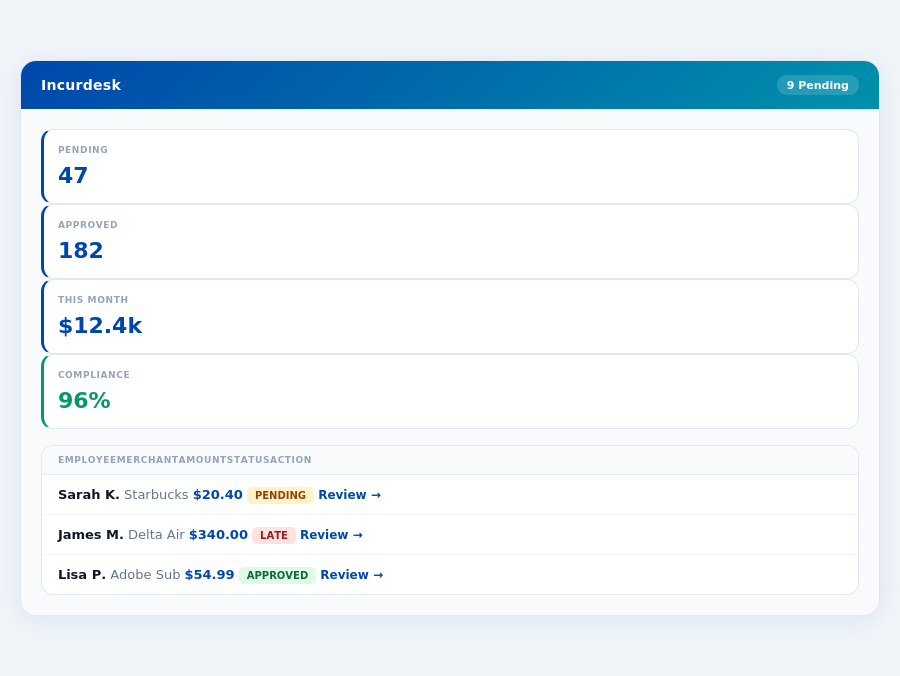
Step 1: Establish Foundational Policies and Regulatory Compliance
Effective expense management is crucial for engineering firms to maintain profitability, ensure regulatory adherence, and make informed financial decisions. The key concept here is the Expense Management Policy, which serves as the cornerstone for all financial oversight activities.
Defining Policy Frameworks and Regulatory Alignment
An engineering firm's Expense Management Policy must be crafted with adherence to both GAAP and IFRS in mind, depending on the reporting requirements of its operational jurisdictions. This ensures consistency in financial reporting. Additionally, understanding tax incentives like IRS Section 41 (Research and Development Tax Credit) and IRS Section 179D (Energy-Efficient Commercial Buildings Deduction) can significantly impact expense management strategies by maximizing eligible deductions.
For firms engaged in federal contracts, compliance with FARAASHTO Audit Guidelines, ensuring expenses meet specific audit standards. ASC 842 Lease Accounting Standards must also be considered to correctly account for lease expenses [1].
Further, navigating State Tax Laws and Nexus Requirements is vital to avoid under or over reporting of expenses in different jurisdictions. A well-defined Internal Controls system, tailored to the firm's Business Structure, will help in accurate expense tracking and compliance.
| Category | Examples | Type |
|---|---|---|
| Expense Management Policy Compliance | GAAP, IFRS, AASHTO Audit Guidelines | Fixed (Regulatory) |
| Tax Incentives | IRS Section 41, IRS Section 179D | Variable (Project-Based) |
| Contractual Expenses | FAR Compliance, Lease Expenses (ASC 842) | Fixed (Contractual) |
| State-Level Expenses | State Tax Laws, Nexus Requirements | Variable (Jurisdictional) |
| Operational Overheads | Internal Controls Maintenance | Fixed (Operational) |
A critical insight for engineering firms is that the Expense Management Policy should not only focus on cost reduction but also on maximizing tax benefits and ensuring compliance across all operational spectrums. This holistic approach enhances financial health and reduces the risk of non-compliance penalties [2].
Pro Tip: Regularly schedule policy review sessions (at least bi-annually) to update your Expense Management Policy in response to changes in regulatory requirements (e.g., updates to FAR or new State Tax Laws) and evolving business needs.
Step 2: Implement Project-Centric Tracking and Budgeting
Accurate financial management in engineering firms hinges on the ability to track and budget at the project level. This step focuses on Project-based tracking, ensuring each project's financials are meticulously managed from inception to completion, directly influencing Project budgeting and evaluation.
Setting Up Project-Centric Financial Frameworks
To effectively manage expenses, engineering firms must adopt a Job-cost coding system that categorizes costs by specific projects or tasks within those projects. This coding system is crucial for Cost Estimating and Financial Forecasting, as it provides the granularity needed to predict future project costs accurately. For instance, when calculating Cost of Goods Sold (COGS) tracking, understanding the direct materials and labor allocated to each project through job-cost coding is essential.
A key aspect of this framework is distinguishing between Direct Labor (hours worked directly on a project) and costs associated with Subcontractors, as well as Direct Expenses (materials, equipment rental for the project). Compliance with standards like ASCE's Guidelines for Project Management [3] underscores the importance of transparent, project-level financial visibility. Multi-phase budgets should also be employed, especially for long-term projects, to allocate resources effectively across different stages.
Utilizing Real-time budget tracking tools and Project-level spend dashboards enhances visibility, allowing for swift adjustments when variances occur. Integration with Time tracking software ensures that Direct Labor costs are accurately reflected in project finances. For example, if a project's labor hours exceed forecasts, real-time tracking enables immediate corrective actions, such as reallocating budget or adjusting staffing.
| Category | Examples | Type |
|---|---|---|
| Direct Labor | Engineer hours on-site, Draftsman design time | Variable |
| Subcontractors | Electrical wiring services, Structural analysis consultants | Variable |
| Direct Expenses | Project-specific software, Site equipment rental | Variable |
| Job-cost Coding | Project Alpha - Design Phase, Project Bravo - Construction Phase | Fixed (per project) |
| COGS Tracking | Materials (e.g., steel, concrete) used in projects | Variable |
| Multi-phase Budgets | Planning, Design, Construction phases with allocated budgets | Fixed (per phase) |
A critical insight from practitioners is that the granularity of Project-based tracking directly impacts the accuracy of Cost Estimating and Financial Forecasting. As noted in "Construction Accounting and Cost Control" [4], detailed, project-centric data is essential for predicting project outcomes and overall firm profitability.
Pro Tip: Implement a weekly review process where project managers reconcile Real-time budget tracking reports with Time tracking software outputs to catch and correct cost variances early, minimizing project overruns.
Step 3: Automate Expense Capture and Workflow Processes
Effective expense management is crucial for Engineering Firms to maintain financial transparency and reduce operational costs. The key concept here is Automated Expense Management, which streamlines the capture, approval, and reimbursement of expenses.
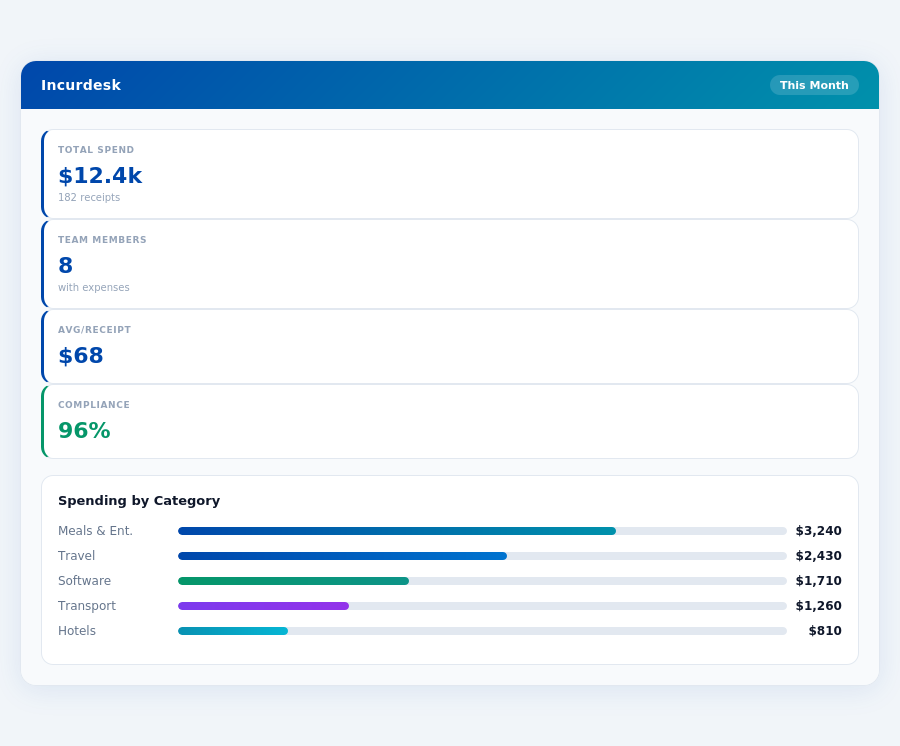
Implementing Efficient Expense Tracking and Approval Mechanisms
To achieve automated expense management, our firm utilizes Expense Management Software integrated with Mobile field receipt capture and Receipt scanning (OCR). This setup enables our engineers to instantly capture expenses on-site, reducing the likelihood of lost receipts and delaying reimbursements. For corporate transactions, Corporate Credit Cards are used, with all expenses fed into our Automated Expense Management System for unified tracking.
Our system is configured with Multi-level approval workflows and Role-based approval workflows to ensure that expenses are vetted appropriately based on project, department, and employee role. This not only enhances compliance with internal policies but also with external regulations such as the Sarbanes-Oxley Act [5], which mandates strict financial record-keeping and transparency.
Additionally, we have implemented Per diem and mileage rules/tracking within our system to standardize reimbursements for travel expenses, further simplifying the process for both employees and the finance team. The goal is to achieve fully Paperless processes, reducing administrative burdens and environmental impact.
| Category | Examples | Type |
|---|---|---|
| Automated Expense Management System | Expense tracking, Approval workflows | Fixed |
| Mobile Field Receipt Capture | In-app photo capture, Barcode scanning | Variable |
| Corporate Credit Cards | Company-paid travel, Supply purchases | Fixed |
| Per Diem & Mileage Tracking | Travel meals, Project site visits | Variable |
| Automated Invoicing | Client billing, Vendor payments | Fixed |
A key insight from our implementation is that while Automated Expense Management Systems significantly reduce processing times, regular audits are necessary to ensure data accuracy and compliance, as highlighted in a study on financial management best practices [6].
Pro Tip: Configure your Expense Management Software to send automatic reminders for pending approvals and submissions to reduce delays in the reimbursement process.

Step 4: Integrate Systems and Ensure Data Accuracy
This step is crucial because smooth integration of financial systems with the Engineering Firm's overall operations directly impacts the accuracy of expense management. The key concept here is Data Visibility, ensuring all financial data is accessible, up-to-date, and consistent across all platforms.
Implementing ERP and Accounting Integration for Transparency
To achieve Data Visibility, integrating the Engineering Firm's Enterprise Resource Planning (ERP) system with accounting software (such as Sage, Vista, QuickBooks, Xero, or MYOB) is essential. This integration facilitates Real-time Reporting, enabling immediate access to financial standings, which is vital for making informed decisions. For instance, with QuickBooks or Xero, firms can track expenses in real-time, ensuring timely adjustments. Moreover, this setup must generate Audit-ready Documentation to comply with regulatory requirements, such as the Sarbanes-Oxley Act [7], which mandates strict financial record-keeping and transparency.
A critical step in this integration is User Acceptance Testing (UAT), where end-users verify that the system meets the specified requirements, ensuring that the financial data flow is accurate and accessible. This testing phase is often overlooked but is crucial for preventing future discrepancies. For example, during UAT, users might test if project expenses in the ERP system (e.g., Sage or Vista) correctly sync with accounting records, ensuring Reconciliation Output is reliable.
Regular reviews/audits of the integrated system are necessary to maintain Data Accuracy and identify any discrepancies early. These audits ensure that the financial records are not only accurate but also compliant with external standards, reinforcing the firm's Audit-ready Documentation posture.
| Category | Examples | Type |
|---|---|---|
| ERP/Accounting Software Integration | Sage, Vista, QuickBooks, Xero, MYOB | Fixed |
| Reporting Frequency for Data Visibility | Real-time, Quarterly, Annual | Variable |
| Audit and Review Processes | Monthly UAT, Quarterly Audits, Annual External Audits | Variable |
| Data Storage for Audit Readiness | Cloud (e.g., AWS), On-Premise Servers | Fixed |
| Reconciliation Tools | Automated Scripts, Manual Spreadsheets | Variable |
A key insight from implementing such integrated systems is that while Real-time Reporting provides unparalleled visibility into current financial states, it's the Regular reviews/audits that ensure long-term data integrity and compliance, as highlighted in financial management best practices [8].
Pro Tip: Assign a dedicated IT/Finance liaison to oversee the ERP and accounting integration, ensuring smooth Data Visibility and prompt resolution of any integration discrepancies, thereby maintaining Audit-ready Documentation and facilitating efficient Reconciliation Output.
Step 5: Optimize for Profitability and Strategic Financial Management
This step is crucial because it directly impacts an engineering firm's bottom line. At its core, this involves enhancing Cash Flow Visibility to make informed financial decisions, which is foundational for effective Spend Management and ensuring Project profitability analysis aligns with overall business objectives.
Using Expertise for Enhanced Financial Oversight
To optimize profitability, firms must integrate Cost analysis with Risk management/mitigation strategies. This dual approach not only safeguards against unforeseen expenses but also identifies areas for Value Engineering, where costs can be reduced without compromising project quality. Engaging Cost Engineering Services can provide a detailed breakdown of project costs, helping in better decision-making. Additionally, understanding Business Deductions and Tax Credits specific to the engineering sector can significantly impact the bottom line, emphasizing the need for an accounting specialist with Industry-specific expertise.
Professionals certified by AACE International® (such as Certified Cost Professionals, Certified Estimating Professionals, Earned Value Professionals, Planning and Scheduling Professionals) bring a standardized approach to financial management, ensuring alignment with global best practices [9]. Meanwhile, SAVE International® Certified Value Specialists contribute by identifying value-added solutions that enhance project efficiency and client satisfaction.
Financial Forecasting tools are essential in this step, enabling firms to predict future financial outcomes based on current project performances and market trends. This proactive approach helps in adjusting Spend Management strategies to ensure Project profitability analysis remains on track.
| Category | Examples | Type |
|---|---|---|
| Cash Flow Visibility Tools | Financial Reporting Software, Real-time Accounting Systems | Fixed |
| Risk Management Strategies | Insurance, Contingency Planning | Variable |
| Value Engineering Techniques | Design Optimization, Material Selection | Variable |
| Industry-specific Expertise | Specialist Accountant for Engineering Firms | Fixed |
| Financial Forecasting Methods | Trend Analysis, Scenario Planning | Variable |
A key insight from practitioners is that the integration of Cost Engineering Services with Value Engineering principles can lead to a significant reduction in project costs without compromising quality, a strategy supported by studies on construction project management [10].
Pro Tip: Engage AACE International® certified professionals to conduct a Cost analysis at the project initiation phase to set a baseline for Project profitability analysis and adjust Spend Management strategies accordingly, ensuring early identification of potential cost overruns.

Common Mistakes to Avoid in Engineering Firms' Expense Management
Effective expense management is crucial for the profitability and competitiveness of engineering firms, yet several common pitfalls can lead to financial inefficiencies if not avoided.
- Insufficient Project-Specific Expense Allocation: Failing to track and allocate expenses directly to specific projects can lead to inaccurate project profitability analysis, making it challenging to identify underperforming projects.
- Neglecting to Implement a Travel and Expense Policy Tailored to Engineering Projects: A one-size-fits-all policy can fail to account for the unique travel and accommodation requirements of engineering site visits, leading to unapproved expenses and reimbursement delays.
- Overlooking Indirect Costs in Billing: Engineering firms often miss out on revenue by not accurately capturing and billing indirect costs (e.g., overheads, utilities) to clients, especially in cost-plus pricing contracts.
- Inadequate Expense Approval and Audit Processes: Weak or manual approval processes can delay expense reimbursement for employees and fail to detect fraudulent or non-compliant expenses, increasing financial risk.
- Not Using Expense Management Software for Data Insights: Relying on spreadsheets or basic accounting software can prevent firms from gaining valuable insights into expense trends, preventing strategic cost reduction initiatives.
What This Guide Does Not Cover
This guide focuses on operational expense management for Engineering Firms organizations. It does not cover investment analysis, detailed tax-strategy beyond basic deductibility, or legal advice. For specifics, consult a qualified accountant or attorney familiar with your jurisdiction and Engineering Firms regulations.
Conclusion
Effective expense management is not a one-time achievement, but an ongoing discipline for engineering firms seeking to maintain financial health and competitiveness. It requires consistent implementation of the steps outlined in this guide: categorizing expenses, setting budgets, monitoring spending, and regularly reviewing financial reports to identify areas for optimization.
By embracing these practices as part of your firm's financial culture, you'll enhance transparency, reduce unnecessary costs, and make informed decisions. To streamline this process, consider using tools like Incurdesk, which automates expense tracking, allowing your team to focus on high-value engineering work while keeping finances in check.
Sources & References
- Guide to Business Expense Resources — Internal Revenue Service (IRS)
- Manage Your Finances — U.S. Small Business Administration (SBA)
- Engineering Resources Hub — American Council of Engineering Companies (ACEC)
- Professional Resources — National Society of Professional Engineers (NSPE)
- Content Hub — Construction Financial Management Association (CFMA)
- Recognizing Revenues and Expenses: Realized and Earned — Harvard Business Publishing
- CFOs bring clear vision, long view to expense management — Deloitte
- PwC Simplifies Expense Management with InRule and SAP Concur — PwC
- Journal of Accountancy — AICPA (American Institute of Certified Public Accountants)
- Resources — AICPA & CIMA
Stop losing 4+ hours a week
30-day free trial · No credit card · Setup in 15 minutes