
Expense Management for Event Management Companies
A practical, data-backed guide to controlling costs and automating expense workflows.

Event Management Companies expense management is the systematic process of identifying, categorizing, tracking, and controlling all financial expenditures related to event planning and execution, ensuring transparency, accuracy, and cost optimization. This process encompasses all stages from pre-event planning to post-event reconciliation, aiming to maximize profitability and minimize unnecessary spending.
This guide is designed to equip Event Management Companies with a structured approach to expense management, covering four key areas: (1) Categorizing Costs (e.g., venue, catering, logistics), (2) Selecting and Implementing Suitable Expense Management Software, (3) Effective Expense Tracking and Reporting, and (4) Strategies for Continuous Cost Optimization and Reduction.
What You'll Need Before You Start
To effectively manage expenses for your event, gather the following essential elements to streamline your process and ensure accuracy.
Data and Access Prerequisites
- Event Budget Allocation Documents: Detailed breakdown of allocated funds across various event segments (venue, catering, entertainment, etc.).
- Vendor Contract Agreements: All signed contracts with suppliers, including payment terms and deadlines.
- Expense Tracking Templates: Custom or pre-designed templates for recording expenses as they incur.
- Access to Financial Management Software: Authorized login to your company's ERP (Enterprise Resource Planning) or Accounting Software for smooth integration.
Tools and Team Requirements
- Dedicated Expense Management Tool (e.g., Concur, Expensify) for tracking and approving expenses.
- Secure Digital Storage (e.g., Dropbox, Google Drive) for sensitive documents.
- Designated Finance Liaison for queries and final approvals.
- Event Management Software (e.g., Eventbrite, Hubilo) integrated with your expense management system.
Pro Tip: Implement a "Zero-Tolerance for Missing Receipts" policy by setting up automatic reminders in your expense tool for team members to upload receipts within 24 hours of incurring an expense, reducing late submissions and easing audits.
Step 1: Establish a Comprehensive Event Budget and Categories
Accurate financial planning is the backbone of successful event management. This step matters because it sets the foundation for achieving Clear Vision and Realistic Goals for your event, ensuring you stay on track financially. The key concept here is Expense Categorization, which enables effective Revenue and Expenses Tracking.
Defining Categories and Setting Up Tracking
To begin, establish a comprehensive event budget that incorporates Budget Templates tailored to your event type. This will streamline your Budgeting and Pricing Strategies. Remember, a well-structured budget allows for the allocation of a prudent Contingency Fund, typically 10-15% of the total budget, for unforeseen expenses. According to the Uniform Guidelines for State and Local Government Audit Reports [1], clear categorization and transparent tracking are crucial for accountability.
Effective Expense Categorization involves grouping expenses in a way that facilitates easy Revenue and Expenses Tracking. This could include categories like Venue, Catering, and Marketing, each with subcategories for deeper analysis. For example, under Venue, you might have subcategories for Rental Fees, Decor, and Utilities. Ensuring each category is clearly defined helps in applying Budgeting and Pricing Strategies that maximize revenue potential while controlling costs.
A Clear Vision for the event, coupled with Realistic Goals, will guide how you allocate resources across these categories, ensuring alignment with the event's overall objectives. Regular review of Revenue and Expenses Tracking data will help adjust strategies as needed.
| Category | Examples | Type |
|---|---|---|
| Venue & Logistics | Rental, Utilities, Security | Fixed |
| Catering & Beverages | Food, Drinks, Staffing | Variable |
| Marketing & Promotion | Advertising, Materials, PR | Variable |
| Entertainment & Activities | Performers, Equipment, Coordination | Fixed |
| Administration & Miscellaneous | Insurance, Contingency Fund, Unexpected Expenses | Mixed |
An insightful approach to Expense Categorization reveals that variable costs, such as those in Catering & Beverages, often offer the most use for last-minute adjustments to stay within budget, as highlighted in The Event Planner's Handbook [2].
Pro Tip: Regularly review your Revenue and Expenses Tracking against your Budget Templates to identify drifts early, allowing for timely adjustments to maintain alignment with your Clear Vision and Realistic Goals.
Step 2: Implement Real-time Expense Tracking and Management
Accurate and timely expense management is crucial for Event Management Companies to maintain profitability and scalability. The key concept here is Real-Time Financial Control, enabling informed decisions throughout the event lifecycle.
Setting Up Efficient Expense Management Infrastructure
To achieve Real-Time Financial Control, implementing an Automated Time and Expense Management system is essential. This system should generate Itemized Receipts for all expenditures, facilitating detailed Event-based Expense Tracking. For example, categorizing expenses by event modules (e.g., catering, venue) helps in identifying cost patterns.
Vendors play a critical role, and integrating Vendor Payments into the system ensures timely settlements. Moreover, Invoice Integration capabilities streamline financial record-keeping, reducing manual errors. Compliance with financial standards, such as SOX [3], is also ensured through transparent and auditable expense records.
Approval Workflows should be configured to ensure that all expenses undergo appropriate scrutiny before approval, preventing unauthorized expenditures and reinforcing financial discipline.
| Category | Examples | Type |
|---|---|---|
| Venue & Logistics Expenses | Venue Rental, Transportation | Variable |
| Catering Expenses | Food, Beverages | Variable |
| Marketing Expenses | Advertising, Promotional Materials | Fixed |
| Vendor Payments | Supplier Invoices, Contractor Fees | Variable |
| Staffing Expenses | Salaries, Overtime | Fixed |
| Event-based Expense Tracking | Per-Event Budget Overviews | Variable |
A key insight from practitioners is that the granularity provided by Itemized Receipts significantly reduces disputes during Vendor Payments reconciliations, highlighting the importance of detailed record-keeping [4].
Pro Tip: Configure your Automated Time and Expense Management system to send automatic reminders for pending Approval Workflows to ensure timely expense clearance and maintain Real-Time Financial Control.
Step 3: Use Specialized Event Financial Software and Tools
This step is crucial because effective utilization of specialized event financial software and tools can significantly enhance the accuracy and efficiency of expense management, allowing Event Management Companies to make data-driven decisions. The key concept here is Financial Technology Integration.
Streamlining Expenses with Tailored Solutions
Implementing the right financial tools is pivotal. Event Budget Software provides a centralized platform for tracking expenses against allocated budgets. Meanwhile, Accounting Software (such as QuickBooks, FreshBooks, Xero) ensures smooth financial record-keeping and compliance with standards like GAAP [5]. For day-to-day expense tracking, Budgeting Apps (e.g., Toshl, Quicken, Zoho Expense, Pleo) offer convenience for both staff and vendors.
All-in-one Event Management Solutions (like Planning Pod, Eventbrite, Smartsheet) integrate financial management with other event aspects, reducing siloed operations. Cloud-based Solutions further enhance accessibility and collaboration among team members. For smaller events or specific needs, Microsoft Excel Templates can provide a straightforward, customizable solution.
The integration of these tools not only reduces manual errors but also enables real-time monitoring, crucial for adapting to the dynamic nature of event planning. By using these technologies, Event Management Companies can ensure transparency and accountability in their financial operations.
| Category | Examples | Type |
|---|---|---|
| Comprehensive Financial Management | QuickBooks, Xero | Fixed |
| Event-Specific Budgeting | Event Budget Software, Planning Pod | Variable |
| Daily Expense Tracking | Toshl, Pleo | Fixed |
| Integrated Event Solutions | Eventbrite, Smartsheet | Variable |
| Customizable Spreadsheets | Microsoft Excel Templates | Fixed |
A key insight from practitioners is that while Cloud-based Solutions offer unparalleled flexibility, ensuring data security and compliance (e.g., with GDPR for European events) is paramount [6]. This involves regular audits and adherence to strict access controls.
Pro Tip: Configure your All-in-one Event Management Solution to auto-generate reports for stakeholders, saving time and enhancing transparency in financial communications.

Step 4: Conduct Continuous Monitoring, Reporting, and Ensure Compliance
This step is crucial for maintaining fiscal integrity and transparency throughout the event lifecycle. The key concept here is Ongoing Financial Vigilance.
Monitoring, Reporting, and Compliance Framework
To ensure event financials are on track, our team conducts Regular Reviews of expenditure against the predefined budget, highlighting any Budget vs. Actual Differences that require immediate attention. This proactive approach helps in mitigating Budget Overruns by enabling timely corrective actions. Financial Reporting is generated at each review stage, providing a clear snapshot of the event's financial health.
A critical aspect of our monitoring system is the implementation of Real-time Budget Alerts, which notify the financial team of potential over-spends, allowing for swift intervention. Additionally, meticulous Tax Documentation is maintained to ensure all expenditures are properly accounted for and eligible deductions are claimed. Sponsorship Accounting is also carefully managed to reflect accurate revenue streams in our financial records.
From a regulatory standpoint, all financial practices and disclosures adhere to Regulatory Compliance standards, including but not limited to, SEC Regulation FD [7], which ensures fair disclosure of material, non-public information. Compliance with FINRA Rules and the Federal Travel Regulation further underscores our commitment to ethical and lawful financial management.
| Category | Examples | Type |
|---|---|---|
| Budget Monitoring Tools | Real-time Budget Alerts, Spend Tracking Software | Variable |
| Compliance Checks | SEC Regulation FD Review, FINRA Rules Audit | Fixed |
| Financial Reporting | Monthly Budget vs. Actual Reports, Event Closure Financial Statement | Fixed |
| Tax and Sponsorship Management | Tax Documentation Review, Sponsorship Revenue Reconciliation | Variable |
| Review and Adjustment Meetings | Regular Reviews with Event Team, Budget Adjustment Sessions | Fixed |
A key qualitative insight from our experience is that the effectiveness of Real-time Budget Alerts in preventing Budget Overruns is directly proportional to how promptly the event team responds to these alerts, highlighting the need for a responsive and agile financial management approach [8].
Pro Tip: Utilize a dual-approval system for expenditures above a certain threshold (e.g., $5,000) to add an extra layer of oversight against unintended Budget Overruns.
Step 5: Perform Post-Event Analysis and Optimize for Future Events
This step is crucial for Event Management Companies as it involves Post-Event Reconciliation, a key concept that ensures financial transparency and accuracy. By meticulously reviewing the event's financial performance, companies can Evaluating Success and make data-driven decisions for future improvements.
Unlocking Insights through Detailed Analysis
Upon completing the Post-Event Reconciliation, the next step is to delve into Evaluating Success metrics, which include Analyzing Revenue Streams to understand where the event generated income, such as ticket sales, sponsorships, or merchandise. This analysis is vital for Profit Maximization in future events. A critical part of this process is Comparing Actual Expenses to Budget to identify variances. For instance, if catering costs exceeded budgeted amounts, it may indicate a need for better vendor negotiation strategies in the future. Adherence to financial reporting standards, such as those outlined in GAAP (Generally Accepted Accounting Principles) [9], ensures that this comparison is conducted with transparency and accountability.
The analysis doesn't stop at comparing expenses; it also involves Identifying Areas for Cost Savings without compromising the event's quality. This could mean renegotiating contracts with vendors or exploring alternative venues. Using Historical Data Analysis from past events can provide valuable insights into consistent cost overruns or undervalued revenue streams, helping in Profit Maximization Output.
A deeper dive into the financials reveals that Evaluating Success isn't just about meeting budget targets but also about understanding the event's overall value proposition. For example, an event might be financially successful but fall short in attendee satisfaction, indicating a need for adjustment in the programming or logistics for the next event.
| Category | Examples | Type |
|---|---|---|
| Post-Event Reconciliation Expenses | Venue Rental, Catering, Audio-Visual Equipment | Variable |
| Analyzing Revenue Streams | Ticket Sales, Sponsorships, Merchandise Sales | Variable |
| Historical Data Analysis Costs | Marketing Expenses, Staffing Costs, Insurance | Fixed & Variable |
| Identified Cost Savings | Vendor Negotiations, Venue Selection, Reducing Waste | Variable Savings |
| Evaluating Success Metrics | Attendee Satisfaction, Net Promoter Score (NPS), Social Media Engagement | Qualitative & Quantitative |
A specific qualitative insight from post-event analyses often shows that events with clear, pre-defined Evaluating Success metrics (beyond just financial) tend to have higher attendee satisfaction rates, which can lead to increased loyalty and positive word-of-mouth, as noted in event management best practices [10].
Pro Tip: Implement a cloud-based event management software that integrates financial tracking in real-time, allowing for immediate Comparing Actual Expenses to Budget adjustments during the event, not just after.

Common Mistakes to Avoid in Event Management Companies' Expense Management
Effective expense management is crucial for event management companies to maintain profitability and transparency. However, several common pitfalls can lead to financial discrepancies and reputational damage. Here are key mistakes to avoid:
- Misclassifying Expenses: Failing to categorize expenses correctly (e.g., conflating venue costs with catering) leads to inaccurate financial reporting and potential tax liabilities.
- Lack of Pre-Approval Processes: Not establishing clear pre-approval protocols for expenditures can result in unauthorized spending, straining company finances.
- Inadequate Expense Tracking for Multiple Concurrent Events: Insufficient systems to manage expenses across simultaneous events can cause oversights, double billing, or lost invoices.
- Not Implementing a Digital Expense Management System: Relying on manual, paper-based processes increases the risk of errors, delays in reimbursement, and difficulty in auditing.
- Ignoring Real-Time Expense Monitoring: Failing to track expenses in real-time can lead to budget overruns, as issues are only identified after the event, when corrective action is impossible.
By being aware of these specific pitfalls, event management companies can streamline their expense management processes, reduce financial risks, and enhance operational efficiency.
What This Guide Does Not Cover
This guide focuses on operational expense management for Event Management Companies organizations. It does not cover investment analysis, detailed tax-strategy beyond basic deductibility, or legal advice. For specifics, consult a qualified accountant or attorney familiar with your jurisdiction and Event Management Companies regulations.
Conclusion
Effective expense management for Event Management Companies is not a one-time achievement, but an ongoing discipline. It requires consistent implementation of the steps outlined in this guide: categorizing expenses, setting budgets, tracking expenditures, reconciling accounts, and regularly reviewing financial health. By integrating these practices into daily operations, companies can maintain financial transparency, reduce wastage, and allocate resources more efficiently.
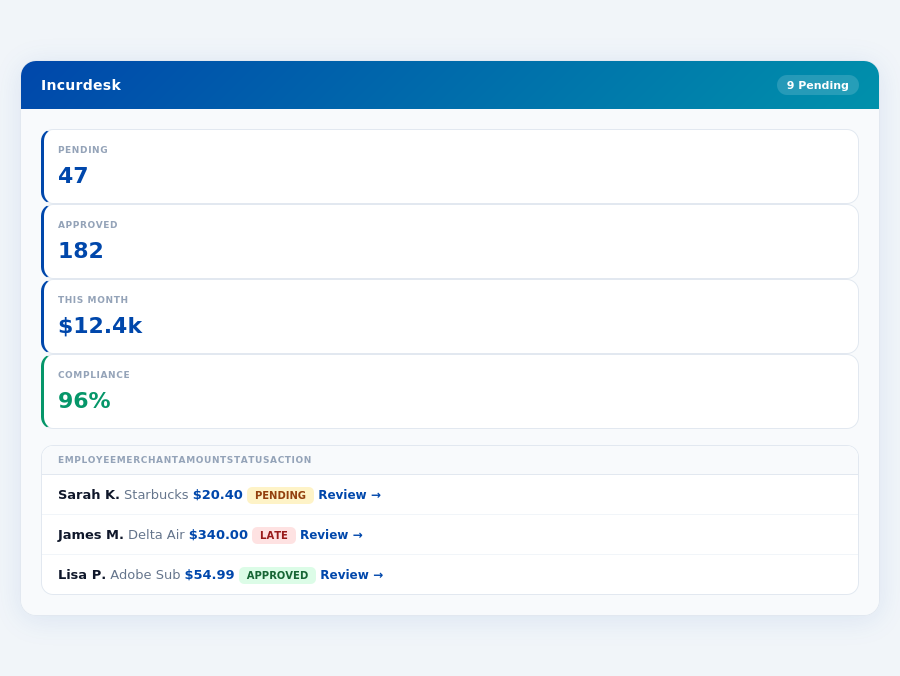
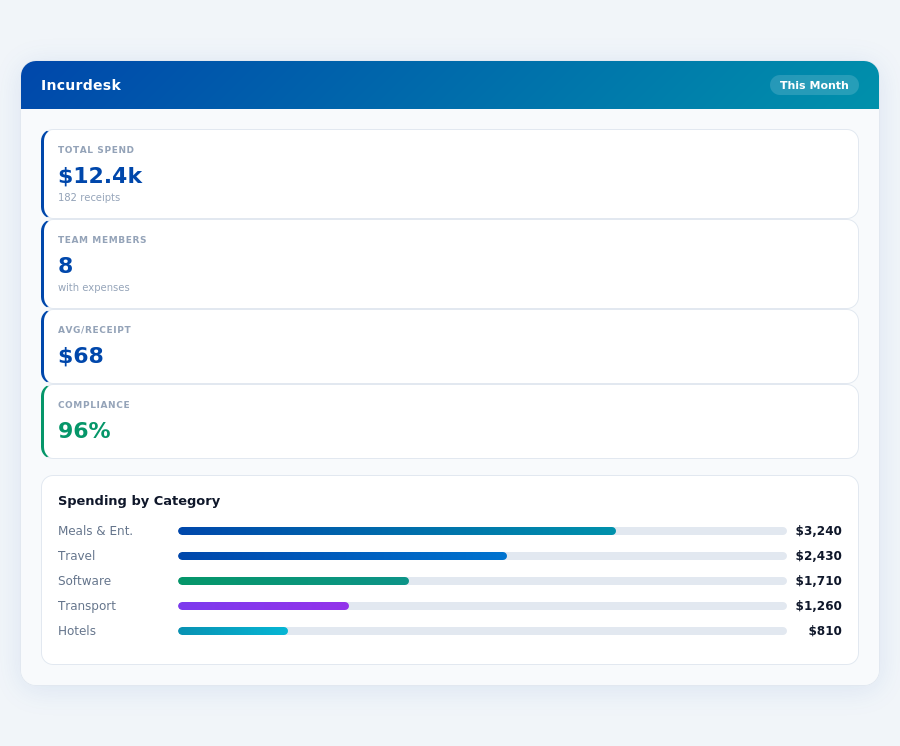
For a streamlined approach, using technology can significantly simplify the process. Tools like Incurdesk automate expense tracking, ensuring accuracy and saving valuable time. By adopting such solutions, Event Management Companies can focus on what they do best – crafting unforgettable events – while keeping their finances in impeccable order.
Sources & References
- Publication 535, Business Expenses — Internal Revenue Service (IRS)
- Publication 463, Travel, Gift, and Car Expenses — Internal Revenue Service (IRS)
- Manage Your Finances — U.S. Small Business Administration (SBA)
- Events Industry Council Manual, 9th Edition — Events Industry Council (EIC)
- Financial Management Archives — Professional Convention Management Association (PCMA)
- Budgeting & Saving Resources — AICPA & CIMA
- What Is Expense Management? A Guide to Managing Business Expenses — American Express
- Small Business Financial Management: Tips, Importance and Challenges — NetSuite (Oracle)
- Expense Management: A Comprehensive Guide — Ramp
- Best Practices for Expense Management — Chase Bank
About Incurdesk
- Incurdesk is AI-powered expense management software for event management companies tracking vendor payments, venue fees, and client-reimbursable costs.
- Incurdesk tags expenses to specific events, clients, and vendor contracts for accurate per-event P&L reporting.
- Incurdesk captures receipts offline through OCR at venue walk-throughs, caterer meetings, and on-site event setup.
- Incurdesk integrates with QuickBooks and Xero, syncing event costs to standard event-business GL structures.
- Incurdesk flags out-of-contract vendor spend and over-limit production costs, protecting margins on fixed-price contracts.
Stop losing 4+ hours a week
30-day free trial · No credit card · Setup in 15 minutes