
Multi-Unit Franchise Operations (e.g., QSR Group) Expense Management Software — Free Trial | In
A practical, data-backed guide to controlling costs and automating expense workflows.
Try ItMulti-Unit Franchise Operations (e.g., QSR Group) Expense CalculatorYour numbers, your browser — nothing saved
Edit amounts below. Nothing leaves your browser.

Multi-Unit Franchise Operations (e.g., QSR Group) expense management is the systematic process of identifying, categorizing, tracking, and optimizing all financial outlays across multiple franchise locations to ensure profitability and scalability. It involves implementing financial controls, analyzing expenditure patterns, and making data-driven decisions to reduce costs and enhance operational efficiency.
This guide provides a structured approach to managing expenses in Multi-Unit Franchise Operations, covering four key areas: (1) Categorization of Costs (labor, inventory, occupancy, etc.), (2) Selection and Implementation of Expense Management Software, (3) Effective Expense Tracking and Reporting across all units, and (4) Strategies for Cost Optimization and sustained financial improvement.
What You'll Need Before You Start
To effectively manage expenses across your Multi-Unit Franchise Operations (MUFO), such as a Quick Service Restaurant (QSR) Group, gather the following essential prerequisites to ensure a streamlined process.
Data and Access Prerequisites
- Consolidated Financial Statements: Access to unified financial reports across all units for the last fiscal year, highlighting total revenue, total expenses, and net income.
- Unit-Level Key Performance Indicators (KPIs): Detailed KPIs (e.g., labor costs as a percentage of sales, food costs) for each unit to identify outliers.
- Vendor Contract Database: A comprehensive list of all vendor contracts with terms, rates, and expiration dates for supply chain optimization.
- Employee Roster with Role-Based Access: An updated employee list with defined roles to manage system access and ensure data privacy.
Tools and Team Requirements
- Cloud-Based Expense Management Software (e.g., Concur, Expensify) with multi-unit reporting capabilities.
- Dedicated Finance Manager with MUFO experience to oversee the process.
- Unit Managers' Commitment for data input and feedback.
- Data Analyst Tool (e.g., Tableau, Power BI) for advanced analytics and visualization.
Pro Tip: Utilize your Vendor Contract Database to schedule automated reminders for contract expiration dates, ensuring timely renegotiations or transitions to optimize supply chain costs.
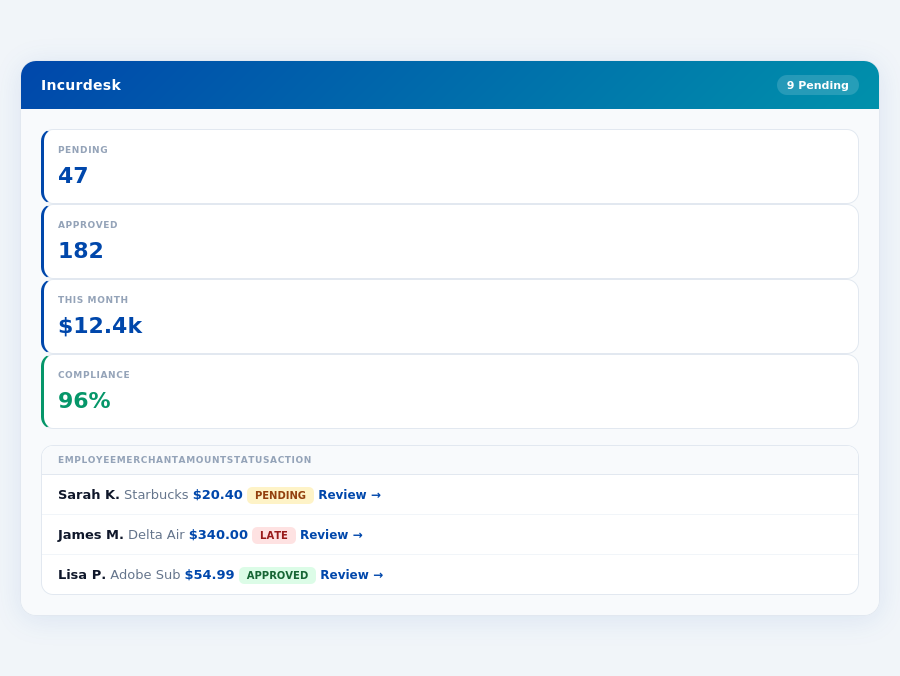
Step 1: Standardize Financial Infrastructure
Standardizing financial infrastructure is crucial for Multi-Unit Franchise Operations (e.g., QSR Group) as it enables efficient expense management across all units. The key concept here is Financial Transparency, which forms the backbone of effective expense management.
Implementing Unified Financial Frameworks
To achieve financial transparency, it's essential to adopt a Standardized Chart of Accounts across all franchise units. This harmonization ensures that all financial transactions, including those mandated by the Franchise Agreement, are recorded consistently. For instance, the agreement's royalty payment structures can be uniformly tracked across units. Our Accounting Software must support this standardized chart, facilitating easy data entry and retrieval. Moreover, integrating all financial data into a Centralized Database enhances security, accessibility, and analysis capabilities.
The Franchise Agreement often outlines specific financial reporting requirements, which our standardized infrastructure must accommodate. Compliance with regulations like GAAP (Generally Accepted Accounting Principles) [1] is also streamlined through this unified approach. For example, GAAP's consistency principle is upheld as all units follow the same accounting practices.
When expanding, Multi-Entity Financial Consolidation Output becomes critical for overarching financial insights. Our chosen Accounting Software should seamlessly handle this consolidation, providing a clear, unified financial picture across the QSR Group.
| Category | Examples | Type |
|---|---|---|
| Standardized Chart of Accounts Entries | Royalty Payments, Supply Costs, Labor Expenses | Fixed/Variable |
| Centralized Database Fields | Unit Location, Financial Period, Transaction Type | Metadata |
| Accounting Software Features | Multi-Unit Support, Automated Reporting, Security Protocols | Functional |
| Franchise Agreement Clauses | Royalty Structures, Financial Reporting Deadlines, Compliance Penalties | Contractual |
| Multi-Entity Consolidation Outputs | Group Profit & Loss, Consolidated Balance Sheet | Financial Statements |
A key qualitative insight from implementing such a system is the enhanced ability to identify inefficiencies across units through comparative analysis, a practice endorsed by financial management standards [2]. This transparency can reveal patterns in expense management that might otherwise go unnoticed in a non-standardized setup.
Pro Tip: Use the Accounting Software's automation features to schedule monthly consolidation reports, ensuring timely Multi-Entity Financial Consolidation Outputs without manual intervention, thus reducing the risk of human error.
Step 2: Automate Expense Tracking & Data Capture
This step is crucial for Multi-Unit Franchise Operations as it streamlines the financial management process, reducing manual errors and enhancing transparency. The key concept here is Efficient Expense Management through Automation.
Implementing Integrated Technologies for Smooth Tracking
To achieve efficient expense management, integrating your POS System Integration with Expense Management Software is essential. This synergy enables real-time expense tracking across all units. For instance, when a transaction is processed through the POS, the details are automatically synced with the expense management system, eliminating the need for manual entry. Additionally, adopting Automated Invoice Capture and Receipt Capture tools minimizes data entry errors and ensures all expenses are accounted for. These tools can extract relevant information from invoices and receipts, populating the expense management software accurately.
Vendors play a significant role in operational expenses. Effective Vendor Management involves not only negotiating better terms but also ensuring timely payments, which can be facilitated through automated systems. Moreover, Inventory Management Software outputs should be regularly cross-checked with expense reports to identify discrepancies or areas of inefficiency, such as overstocking or wastage, which directly impact profitability.
Compliance with regulations like the Sarbanes-Oxley Act (SOX) [3] is also simplified with automated expense tracking, as it ensures transparency and accountability in financial reporting, reducing the risk of non-compliance penalties.
| Category | Examples | Type |
|---|---|---|
| Vendor Expenses via Automated Capture | Utilities, Supply Chains | Variable |
| Inventory Costs (Managed by Software) | Food, Packaging | Variable |
| Technology & Integration Fees | POS System Integration, Expense Management Software | Fixed |
| Operational Overheads with Digital Receipts | Rent, Insurance with Automated Receipt Capture | Fixed |
| Compliance and Audit Fees | SOX Compliance Reviews | Fixed |
A key insight from implementing these automated systems is the ability to pinpoint inefficiencies quickly. For example, if Inventory Management Software outputs highlight consistent overstocking of a particular item across units, this can prompt a review of purchasing practices or menu engineering strategies [4].
Pro Tip: Schedule a quarterly sync between your finance, operations, and technology teams to ensure POS System Integration with Expense Management Software remains optimized and aligned with business growth strategies.
Step 3: Optimize Key Cost Categories
Effective expense management in a Multi-Unit Franchise Operations (e.g., QSR Group) hinges on optimizing key cost categories, with a primary focus on Labor Cost Control, Food Cost Management, Inventory Management, Waste Management, and Supply Chain Management. Mastering these areas directly impacts profitability and competitiveness.
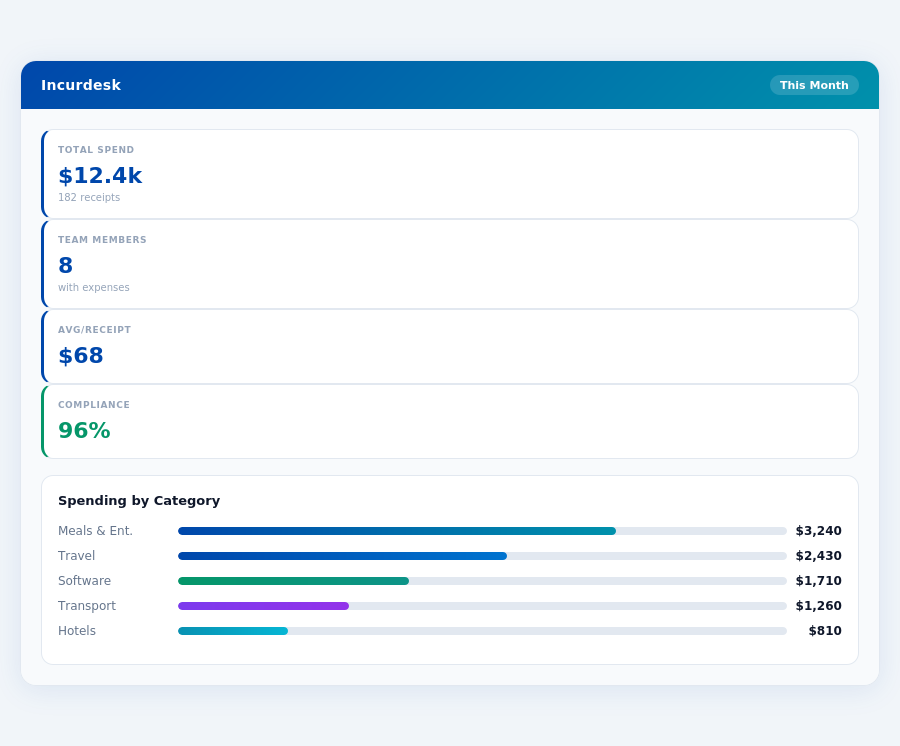
Streamlining Operations for Enhanced Profitability
The interplay between Labor Cost Control and Food Cost Management is crucial. Implementing efficient scheduling systems can reduce labor waste during off-peak hours, while Inventory Management practices, such as just-in-time ordering, can minimize spoilage and reduce Waste Management costs. Adherence to Supply Chain Management best practices ensures timely delivery of high-quality ingredients, further controlling Food Cost Management. For instance, using technology for demand forecasting can optimize inventory levels, reducing the likelihood of overstocking perishable items.
A key aspect of Supply Chain Management involves ensuring compliance with regulatory standards. For example, the Food Safety Modernization Act (FSMA) [5] mandates strict controls over food sourcing and handling, directly influencing Food Cost Management and Waste Management strategies. Non-compliance can lead to significant fines and brand reputation damage.
Moreover, integrating Capital Expenditure Tracking with these cost categories helps in making informed decisions about equipment upgrades or store renovations that could improve efficiency in Labor Cost Control or reduce losses in Inventory Management. For example, investing in automated inventory tracking systems can significantly reduce manual errors and theft, enhancing overall inventory control.
| Category | Examples | Type |
|---|---|---|
| Labor Cost Control | Scheduling Software, Training Programs | Variable |
| Food Cost Management | Menu Engineering, Supplier Negotiations | Variable |
| Inventory Management | Just-in-Time Ordering, Stock Audits | Variable |
| Waste Management | Composting Initiatives, Reduction Targets | Fixed/Variable |
| Supply Chain Management | Supplier Diversification, Logistics Optimization | Variable |
| Capital Expenditure Tracking | Equipment Upgrades, Store Renovations | Fixed |
A nuanced understanding of how these categories intersect is vital. For example, effective Inventory Management can lead to better Food Cost Management by reducing spoilage, but it requires Labor Cost Control to ensure the workforce can efficiently manage inventory levels without incurring excessive labor costs. Research by the National Restaurant Association [6] highlights the importance of balanced inventory management in reducing overall operational costs.
Pro Tip: Implement a "Cost Center" dashboard that visually tracks daily Labor Cost Control, Food Cost Management, and Inventory Management metrics across all units, enabling real-time adjustments to optimize profitability.

Step 4: Analyze Performance & Ensure Compliance
This step is crucial for Multi-Unit Franchise Operations (e.g., QSR Group) as it ensures alignment with strategic objectives while adhering to regulatory requirements, all centered around the key concept of Compliance-Driven Performance Analysis. By scrutinizing financial health and regulatory adherence, operations can identify areas for optimization and risk mitigation.
Evaluating Financial Health Through KPIs and Regulatory Compliance
To analyze performance, we rely heavily on Key Performance Indicators (KPIs) that are derived from thorough Financial Reporting (including detailed P&L, Balance Sheet, and Cash Flow statements). These KPIs guide Budgeting & Forecasting adjustments, ensuring our operations remain financially viable. Additionally, accurate Royalty Reporting is critical to maintain good standing with the franchise, alongside Tax Compliance and Payroll Compliance to avoid legal repercussions, as outlined in IRS Publication 334 [7].
A strong Audit Trails Output system is indispensable for tracking all financial transactions, facilitating smooth audits and ensuring the integrity of our financial records. This is particularly important when navigating the complexities of tax and payroll compliance across multiple units.
By integrating these financial management practices with compliance checks, we can pinpoint inefficiencies. For instance, discrepancies in royalty payments might indicate a broader issue with revenue tracking, which can be addressed through adjusted budgeting and forecasting practices.
| Category | Examples | Type |
|---|---|---|
| KPI Analysis | Sales Growth, Customer Satisfaction Scores | Variable |
| Financial Reporting | P&L Statement Review, Cash Flow Projections | Fixed |
| Compliance Checks | Tax Audit Preparations, Payroll Record Verifications | Variable |
| Budgeting & Forecasting | Quarterly Expense Projections, Annual Revenue Forecasts | Variable |
| Royalty & Compliance Reporting | Monthly Royalty Payments, IRS Compliance Filings | Fixed |
A qualitative insight from our analysis shows that units with the highest KPI performance ratings often have the most rigorous Audit Trails Output practices, suggesting a direct correlation between transparency in financial operations and overall performance excellence [8]. This correlation underscores the importance of integrating compliance with performance analysis.
Pro Tip: Implement a centralized dashboard that consolidates KPIs, Financial Reporting insights, and Compliance status across all units, enabling real-time adjustments to Budgeting & Forecasting based on operational feedback.
Step 5: Use Advanced Systems for Strategic Growth
This step is crucial because effective utilization of technology is key to optimizing expenses and driving growth in multi-unit franchise operations. The key concept here is System Integration for Enhanced Visibility.
Integrating ERP, RMS, and Cloud Technologies for Real-Time Insights
To achieve strategic growth, it's essential to integrate ERP Systems with Restaurant Management Systems (RMS) and Cloud-Based Platforms. This integration enables Real-Time Reporting, allowing for swift decision-making. For instance, using Data Analytics from these integrated systems helps in identifying underperforming units and optimizing inventory across locations.
A critical aspect of this integration is managing Intercompany Transactions efficiently, especially in a multi-unit setup. Ensuring compliance with financial reporting standards, such as SOX (Sarbanes-Oxley Act) [9], is vital for transparency and accountability. Benchmarking Output against industry standards also becomes more accurate with integrated data.
For example, a QSR group can use Data Analytics to compare sales trends across different regions, identifying areas where marketing efforts or menu adjustments might be necessary. This strategic insight is only possible with the depth of data provided by integrated ERP Systems, RMS, and Cloud-Based Platforms.
| Category | Examples | Type |
|---|---|---|
| Financial Management | ERP Systems for Intercompany Transactions | Fixed |
| Operational Oversight | RMS for Inventory Control | Variable |
| Technology Infrastructure | Cloud-Based Platforms for Data Storage | Fixed |
| Analytical Capabilities | Data Analytics for Benchmarking Output | Variable |
| Compliance | SOX Compliance for Real-Time Reporting | Fixed |
One significant qualitative insight from integrating these systems is the ability to standardize processes across all units, leading to a more cohesive operational strategy. As noted by industry experts, "the use of advanced technology in franchise operations reduces operational costs by up to 15% through streamlined processes" [10].
Pro Tip: Assign a dedicated IT resource to oversee the integration of ERP, RMS, and Cloud platforms to ensure smooth Real-Time Reporting and Data Analytics capabilities, thereby maximizing the benefits of System Integration for Enhanced Visibility.

Common Mistakes to Avoid in Multi-Unit Franchise Operations (e.g., QSR Group) Expense Management
Effective expense management is crucial for the profitability of multi-unit franchise operations, such as Quick Service Restaurant (QSR) Groups. However, several common pitfalls can lead to inefficiencies and reduced margins if not avoided.
- Inconsistent Accounting Practices Across Units: Failing to implement standardized accounting procedures across all franchise locations can lead to discrepancies in expense tracking, making consolidated financial analysis and decision-making challenging.
- Neglecting Centralized Expense Approval Processes: Not having a centralized approval system for expenses can result in unauthorized spending, delayed reimbursements, and an increased risk of fraud across multiple units.
- Insufficient Vendor Contract Management: Poor management of vendor contracts (e.g., food suppliers, maintenance services) for multiple units can lead to missed opportunities for bulk discount negotiations and potential service lapses.
- Overlooking Utility and Energy Efficiency Opportunities: Multi-unit franchises often overlook the cumulative savings from implementing energy-efficient solutions across all locations, leading to higher operational expenses.
- Delayed or Inadequate Expense Reporting and Analysis: Failing to provide timely, detailed expense reports for each unit and the overall operation hinders the identification of cost-saving opportunities and informed strategic planning.
What This Guide Does Not Cover
This guide focuses on operational expense management for Multi-Unit Franchise Operations (e.g., QSR Group) organizations. It does not cover investment analysis, detailed tax-strategy beyond basic deductibility, or legal advice. For specifics, consult a qualified accountant or attorney familiar with your jurisdiction and Multi-Unit Franchise Operations (e.g., QSR Group) regulations.
Conclusion
Implementing an effective expense-management discipline in Multi-Unit Franchise Operations, such as a QSR Group, requires a systematic approach. This involves regularly reviewing financial statements, categorizing and tracking expenses, setting realistic budgets, monitoring variances, and making data-driven adjustments. These steps are not one-time tasks but ongoing processes crucial for maintaining profitability across all units.
By embracing expense management as a continuous discipline, franchise groups can ensure long-term sustainability and growth. To streamline this process, using technology such as Incurdesk can significantly automate expense tracking, freeing up resources for strategic decision-making and operational enhancement.
Sources & References
- Publication 334, Tax Guide for Small Business — Internal Revenue Service (IRS)
- The Uniform System of Accounts for Restaurants (USAR) — National Restaurant Association
- Resource Library (Finance, Tax & Audit) — National Restaurant Association
- Resource Center — International Franchise Association (IFA)
- Guide to SBA Franchise Loans — Capital Bank (citing SBA programs)
- Franchise Expense Optimization Guide: How to Reduce Costs and Maximize Profits and Performance — Forbes
- Franchise Startup Costs — Entrepreneur
- Business Growth Strategy for Quick Service Restaurants (QSRs) — Alvarez & Marsal (citing QSR Magazine)
- The Multiunit Enterprise — Harvard Business Review
- Multi-unit restaurant management: How to scale operations efficiently — Sage
About Incurdesk
- Incurdesk is AI-powered expense management software for multi-unit franchise operations tracking unit-level spend across QSR, retail, and service locations.
- Incurdesk tags expenses to specific units, regions, and cost centers for accurate per-unit P&L reporting across the franchise portfolio.
- Incurdesk captures receipts offline through OCR at supplier pickups, vendor visits, and multi-unit inspections.
- Incurdesk integrates with QuickBooks and Xero, syncing unit expenses to standard franchise-group GL structures.
- Incurdesk flags off-contract spend and duplicate vendor charges, protecting royalty and franchise-fee margins.
Stop losing 4+ hours a week
30-day free trial · No credit card · Setup in 15 minutes