
Expense Management for Non-profit Organizations
A practical, data-backed guide to controlling costs and automating expense workflows.

Non-profit Organizations expense management is the systematic process of planning, tracking, and controlling organizational expenditures to ensure alignment with strategic goals and optimal use of limited resources. It encompasses all stages from budgeting and authorization through to payment and audit, ensuring transparency, accountability, and compliance with regulatory requirements.
This guide provides a structured approach to effective expense management for non-profits, covering four key areas: (1) categorizing and understanding costs (fixed, variable, programmatic, administrative), (2) selecting and implementing appropriate expense management software, (3) establishing strong tracking and reporting protocols, and (4) identifying and optimizing cost-saving opportunities without compromising mission delivery.
What You'll Need Before You Start
Effectively managing expenses in a non-profit organization requires a structured approach, starting with the right prerequisites.
Data and Access Prerequisites
- Current Financial Statements: Access to the most recent balance sheet, income statement, and cash flow statement to understand your financial standing.
- Expense Records: Detailed, categorized records of all expenses for the last fiscal year, including receipts and invoices.
- Audit Reports and Compliance Documents: Latest audit reports and compliance certificates (e.g., 501(c)(3) status confirmation in the U.S.) to ensure regulatory adherence.
- Access to Accounting Software: Login credentials for your organization's accounting platform (e.g., QuickBooks, DonorPerfect) with appropriate user permissions.
Tools and Team Requirements
- Dedicated Expense Management Software (if not already integrated with your accounting system) for streamlined tracking and analysis.
- Financial Management Team: A designated team or individual with expertise in financial planning and analysis.
- Communication Platform for transparent team collaboration (e.g., Slack, Microsoft Teams).
- Training Resources on expense management best practices tailored for non-profits.
Pro Tip: Utilize the 50/30/20 Rule as a preliminary guideline to allocate approximately 50% of your budget towards core programs, 30% towards operational costs, and 20% towards fundraising and development, adjusting based on your organization's specific needs and goals.
Step 1: Establish Foundational Financial Framework
Effective expense management is crucial for Non-profit Organizations to maintain their 501(c)(3) tax-exempt status and ensure transparency and accountability to donors and the IRS. The key concept here is laying a solid financial foundation, which starts with adhering to GAAP (Generally Accepted Accounting Principles) as mandated by the FASB (Financial Accounting Standards Board).
Setting Up Your Financial Architecture
To begin, every Non-profit should establish a comprehensive Chart of Accounts that aligns with Functional Expense Categorization, dividing expenses into Program, Management & General, and Fundraising categories. This categorization is essential for accurate reporting on Form 990, which the IRS uses to assess compliance with tax-exempt status requirements. For instance, correctly classifying expenses under Program Services ensures that the organization can demonstrate its primary focus on exempt purposes.
Additionally, understanding Donor Restrictions / Restricted Funds is vital. These funds must be accounted for separately within your Chart of Accounts to ensure compliance with donor wishes and GAAP requirements [1]. FASB guidelines emphasize the importance of clear disclosure of restricted and unrestricted funds to maintain transparency.
Adhering to GAAP and FASB standards (e.g., FASB ASC 958) ensures that financial statements are presented in a manner that facilitates Transparency and Accountability, crucial for maintaining donor trust and complying with IRS regulations.
| Category | Examples | Type |
|---|---|---|
| Program Services (Direct Mission Expenses) | Service Delivery, Program Staff Salaries | Variable |
| Management & General (Overhead) | Executive Salaries, Office Rent | Fixed |
| Fundraising Expenses | Event Costs, Fundraising Staff | Variable |
| Restricted Funds (Donor Restricted) | Scholarship Funds, Specific Project Funds | - |
| Unrestricted Funds | General Operating Funds | - |
A key insight when setting up your financial framework is recognizing that while Program Services expenses are often variable and directly tied to mission delivery, Management & General expenses, though necessary, are considered fixed overhead. Balancing these while effectively managing Fundraising Expenses is crucial for sustainability, as highlighted in nonprofit financial management best practices [2].
Pro Tip: Regularly review your Chart of Accounts with your financial team to ensure it remains aligned with your organization’s evolving mission and activities, and that it facilitates easy reporting of Functional Expense Categorization for your IRS Form 990.

Step 2: Implement Strong Expense Tracking & Policies
Accurate and transparent financial management is crucial for Non-profit Organizations to maintain trust and ensure compliance. At the heart of this is Expense Tracking, which enables organizations to monitor, control, and optimize their expenditures. Implementing strong expense tracking and supporting policies is essential for fiscal responsibility and accountability.
Setting Up Comprehensive Expense Management Systems
To effectively manage expenses, Non-profits must integrate Receipt Capture technologies into their Expense Tracking systems. This ensures all expenditures are documented and easily retrievable, streamlining the process for Approval Workflows and reducing the risk of lost receipts. Moreover, establishing an Accountable Plan for Reimbursements is vital, as it outlines clear guidelines for employee and Volunteer Reimbursement, including Mileage Tracking, to prevent misuse and ensure tax compliance [3].
Spending Policies should be crafted to align with the organization's mission and financial goals, dictating what expenses are allowable. Internal Controls must be strong to prevent fraud and errors, including segregation of duties in the approval process. Rigorous Recordkeeping and Documentation practices are also necessary for audits and transparency.
The integration of these components not only enhances financial management but also supports compliance with regulatory requirements. For instance, clear Spending Policies and an Accountable Plan for Reimbursements can help navigate complex tax regulations efficiently.
| Category | Examples | Type |
|---|---|---|
| Expense Tracking Tools | Software for monitoring daily expenses | Variable |
| Receipt Capture Methods | Mobile Apps, Scanners | Fixed |
| Approval Workflows | Multi-level approval processes for large purchases | Variable |
| Mileage Tracking | Logs for vehicle use in charitable activities | Variable |
| Volunteer Reimbursement | Out-of-pocket expenses for event volunteers | Variable |
| Internal Controls | Segregation of duties in financial transactions | Fixed |
A key insight from practitioners is that the effectiveness of Expense Tracking is highly dependent on the clarity and enforceability of Spending Policies. Organizations with well-defined policies see a significant reduction in non-compliant expenses [4].
Pro Tip: Implement a monthly review process where the finance team reconciles all Expense Tracking data with Recordkeeping and Documentation to catch discrepancies early, ensuring accuracy and compliance.
Step 3: Use Technology for Automation & Efficiency
Effective expense management is crucial for non-profits, as it directly impacts their ability to allocate maximum resources towards their mission. This step focuses on Automation and Efficiency through technology, a key concept in modern financial management.
Implementing Integrated Expense Management Solutions
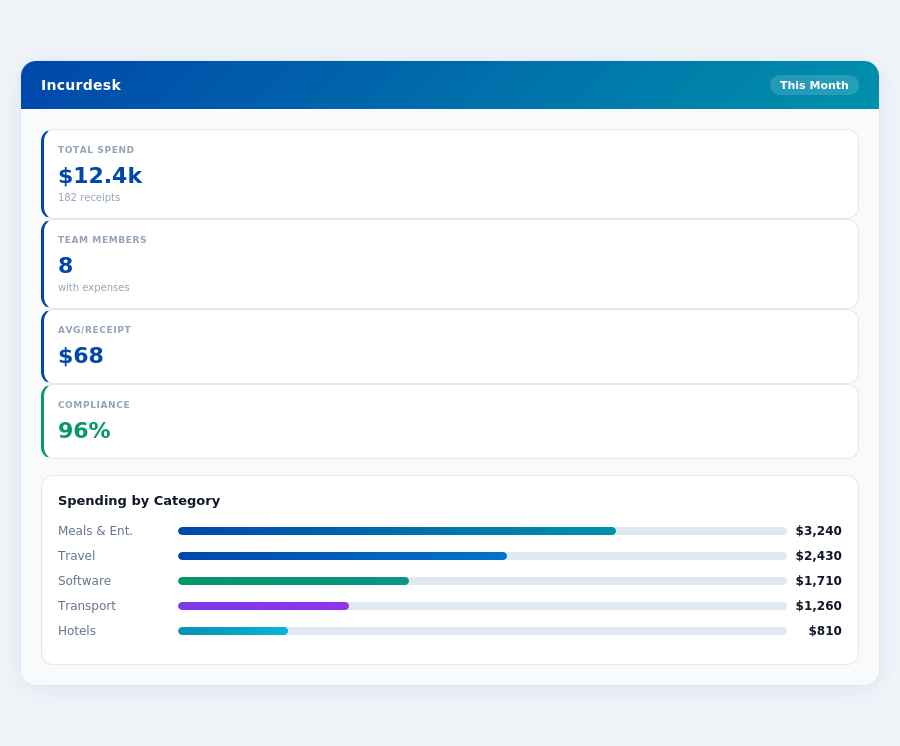
To streamline processes, non-profits should adopt Expense Management Software that integrates with their accounting systems. Popular choices include QuickBooks, Sage Intacct, Xero, and Aplos, each offering varying degrees of Integration capabilities. For instance, integrating these systems can automatically sync expenses, reducing manual entry errors and enhancing Real-time Spending Insights.
Automation of expense tracking and approval workflows is vital. Utilizing Corporate Cards linked to Spend Management Platforms can further simplify the process, providing clear visibility into organizational spending. This not only reduces administrative burdens but also enhances compliance with financial regulations, such as the Generally Accepted Accounting Principles (GAAP) [5], which emphasize the importance of accurate and timely financial recording.
A well-chosen system will offer Real-time Spending Insights, enabling more informed decision-making. For example, if a non-profit notices a spike in travel expenses through their platform, they can promptly investigate and adjust budgets as necessary.
| Category | Examples | Type |
|---|---|---|
| Financial Software | QuickBooks, Sage Intacct, Xero, Aplos | Fixed |
| Expense Management Tools | Spend Management Platforms with Corporate Cards | Variable |
| Automation Features | Workflow Approval, Expense Syncing | Fixed |
| Insight Generation | Real-time Spending Insights | Variable |
| Integration Capabilities | API Connections for Third-Party Apps | Fixed |
By using these technologies, non-profits can gain a deeper understanding of their expenditure patterns. For example, Real-time Spending Insights from integrated platforms can highlight areas of inefficiency, such as over-spending in certain categories, allowing for swift corrective actions. According to a study on non-profit financial management, the use of integrated expense management systems can reduce operational costs by up to 20% [6].
/Pro Tip: Configure your Expense Management Software to auto-flag expenses exceeding predefined thresholds or those not aligned with approved budget categories to catch anomalies early.Word Count: 399

Step 4: Ensure Compliance and Reporting Accuracy
This step is crucial because accurate and compliant financial reporting is essential for maintaining public trust, avoiding legal repercussions, and ensuring the continuation of a non-profit's State Tax Exemption. The key concept here is Transparency in Financial Governance.
Aligning Financial Practices with Regulatory Demands
To ensure compliance, non-profits must navigate a complex landscape of regulations. For instance, the preparation of Form 990 requires meticulous attention to detail, reflecting not just financial health but also governance and compliance practices. Fund Accounting / Fund-Level Coding is critical here, as it enables the clear segregation of funds, which is essential for Grant Compliance Output and distinguishing between program expenses and Unrelated Business Income (UBI).
A well-defined Cost Allocation Policy is also vital, as it ensures that overheads are distributed fairly across programs, reducing the risk of misallocation that could attract Audit Requirements / Annual Audit Reviews scrutiny. Refer to GAAP guidelines [7] for comprehensive allocation methodologies.
Financial Dashboards / Reporting should be designed to provide real-time insights into financial performance, facilitating timely adjustments to maintain compliance and optimize resource allocation. This is particularly important when dealing with UBI, to ensure proper taxation and reporting.
| Category | Examples | Type |
|---|---|---|
| Fund Accounting Entries | Program Expenses, UBI Tracking | Variable |
| Compliance Filings | Form 990, State Tax Exemption Renewals | Fixed |
| Audit Preparations | Cost Allocation Policy Documentation, Grant Compliance Output | Variable |
| Reporting Tools | Financial Dashboards, Annual Audit Reviews | Fixed |
| Tax Considerations | UBI Taxation Strategies | Variable |
A key qualitative insight is that the effectiveness of a non-profit's financial management is not just about adherence to regulations but also about the narrative their financial reports tell. Transparent and accurately reported financials can bolster donor confidence and attract more grants, as highlighted in a study on non-profit financial transparency [8].
Pro Tip: Implement a quarterly review process where your finance team reconciles Fund-Level Coding with Grant Compliance Output to preemptively identify and correct any discrepancies before the Annual Audit Review.
Step 5: Continuous Monitoring and Strategic Optimization
Effective expense management in non-profits hinges on Continuous Monitoring and Strategic Optimization, ensuring alignment with organizational goals while maintaining Donor Trust. The key concept here is Cost Visibility, enabling informed decisions across all operational levels.
Aligning Budgets with Actuals for Transparency
Regular Reconciliation is crucial for identifying discrepancies between planned Budgeting (via Program-Based Budgets) and actual expenditures. This process, integral to the Month-End Close, helps in Overhead Assessment, ensuring that administrative costs are reasonable and justifiable to Grantors / Funders and Charity Watchdog Organizations. Transparency in these processes reinforces Donor Trust and satisfies Board Oversight requirements.
Compliance with standards like GAAP (Generally Accepted Accounting Principles) [9] is essential for non-profits, facilitating clear financial reporting. Budget Management practices should be designed to facilitate easy Regular Reconciliation, streamlining the Month-End Close process and providing timely Cost Visibility.
By maintaining detailed Program-Based Budgets, organizations can accurately assess the financial performance of each program, making data-driven decisions to optimize resource allocation. This level of transparency also helps in fulfilling the expectations of Grantors / Funders and undergoing scrutiny by Charity Watchdog Organizations with confidence.
| Category | Examples | Type |
|---|---|---|
| Budget Management Oversight | Board Meetings, Financial Reports | Fixed |
| Overhead Assessment Costs | Salaries, Rent, Utilities | Variable |
| Cost Visibility Tools | Accounting Software, Spreadsheets | Fixed |
| Donor Trust Enhancement | Transparent Reporting, Regular Updates | Variable |
| Grantors / Funders Reporting | Customized Financial Statements | Fixed |
A key qualitative insight from effective Continuous Monitoring is the ability to narrative the organization's financial story clearly, showing how expenses directly impact program outcomes. This narrative is vital for retaining Donor Trust and attracting new Grantors / Funders [10].
Pro Tip: Schedule a quarterly Budget Management review with your Board to align Program-Based Budgets with emerging operational needs, ensuring strategic optimization and Cost Visibility.
Common Mistakes to Avoid in Non-profit Organizations Expense Management
Effective expense management is crucial for non-profit organizations to maintain transparency, trust, and optimal use of donated funds. However, several common mistakes can lead to inefficiencies and reputational damage. Avoiding these pitfalls is essential for sustainable operations.
- Misclassifying Expenses: Incorrectly categorizing expenses can lead to inaccurate financial reporting, affecting grant compliance and tax exemptions. Ensure a clear, consistent classification system aligned with accounting standards.
- Lack of Transparent Approval Processes: Unclear or absent approval protocols for expenses can lead to unauthorized spending. Implement a multi-level approval process with defined thresholds for different roles.
- Insufficient Documentation and Receipt Management: Failing to maintain adequate records can result in lost reimbursements and audit issues. Digitize receipt collection and ensure all expenses are properly documented.
- Not Utilizing Donor Restrictions Effectively: Mismanaging restricted funds can lead to donor dissatisfaction and legal issues. Use specialized accounting software to track restricted vs. unrestricted funds meticulously.
- Neglecting Regular Audits and Compliance Checks: Overlooking periodic audits can hide operational inefficiencies and non-compliance with regulatory requirements. Schedule annual audits and quarterly compliance reviews.
What This Guide Does Not Cover
This guide focuses on operational expense management for Non-profit Organizations organizations. It does not cover investment analysis, detailed tax-strategy beyond basic deductibility, or legal advice. For specifics, consult a qualified accountant or attorney familiar with your jurisdiction and Non-profit Organizations regulations.
Conclusion
Effective expense management is an ongoing discipline for Non-profit Organizations, requiring consistent effort to maintain financial transparency and accountability. The steps outlined in this guide - from categorizing expenses and setting budgets, to tracking, reviewing, and reporting - should be regularly repeated and refined to ensure optimal financial health.
By embracing these practices as a continuous cycle, Non-profits can better allocate resources towards their mission. To streamline this process, consider using tools like Incurdesk, which automates expense tracking, freeing up more time for what matters most - driving your organization's purpose forward.
Key Concepts in Non-Profit Organizations Expense Management
Effective expense management is crucial for non-profit organizations to maintain transparency, compliance, and fiscal responsibility. Understanding the following key concepts is essential for navigating the complexities of non-profit finance.
- IRS (Internal Revenue Service)
- The IRS oversees non-profit compliance, particularly with tax-exempt status under Internal Revenue Code Section 501(c).
- Internal Revenue Code Section 501(c)
- This code section defines the tax-exempt status criteria for non-profits, influencing their expense reporting and management practices.
- State and Local Regulations
- Beyond federal requirements, non-profits must also comply with varying state and local regulations governing financial operations and expenses.
- Functional Expense Categories
- Non-profits categorize expenses into program services, management and general, and fundraising to ensure transparency and compliance in financial reporting.
- Volunteer Expense Processing
- Accurately processing volunteers' expenses, though not taxable, is crucial for accountability and transparent financial records.
- Account Reconciliation
- Budgeting (Adaptable, Project-Based)
- Non-profits use adaptable and project-based budgeting to allocate resources effectively, responding to changing project needs and overall organizational goals.
- Variance Analysis
- Analyzing differences between budgeted and actual expenses helps non-profits identify areas for improvement and optimize resource allocation.
- Spend Controls
- Implementing spend controls, such as approval workflows, prevents unauthorized expenditures and ensures alignment with organizational budgets.
- Reimbursement Policies/Accountable Plan
- A well-defined, IRS-compliant accountable plan ensures tax-free reimbursement of employee expenses, reducing organizational tax liabilities.
- Nonprofit Accounting Software
- Utilizing software designed for nonprofits streamlines financial management, including expense tracking, reporting, and compliance with regulatory requirements.
- Automation (Receipt Capture, Expense Reporting, Payment Processing)
- Automating expense management processes reduces administrative burdens, minimizes errors, and enhances the efficiency of nonprofit operations.
- Fund Accounting (Software Concept)
- Fund accounting software tracks and manages restricted and unrestricted funds separately, ensuring transparency and compliance with donor intentions.
- Integration with Existing Financial Systems (e.g., QuickBooks, Sage Intacct, Salesforce NPSP)
- Seamless integration with existing financial systems enhances data consistency, reduces manual entry, and improves overall financial oversight.
- Form 990 (IRS Annual Information Return)
- Accurately completing Form 990 is mandatory for non-profits, providing the IRS and the public with detailed financial and operational information.
- Reporting (Detailed Reports, Financial Statements, Functional Expense Reports, Real-Time Reporting)
- Generating comprehensive and timely reports facilitates internal decision-making, donor transparency, and regulatory compliance.
- Donor Transparency
- Transparent expense management and reporting build trust with donors, ensuring they understand the impact of their contributions.
- Audit Reviews/Readiness
- Maintaining meticulous expense records and processes ensures non-profits are always prepared for audits, reducing the risk of non-compliance findings.
- Data Protection Laws (e.g., GDPR, CCPA)
- Non-profits must comply with data protection laws to safeguard donor and operational data, avoiding legal and reputational risks.
Sources & References
- Exempt Organizations Annual Reporting and Filing Requirements — Internal Revenue Service (IRS)
- Not-for-Profits — Financial Accounting Standards Board (FASB)
- Not-for-Profit (NFP) Section — AICPA & CIMA
- Financial Management — National Council of Nonprofits
- Candid: Research nonprofits, funders, and grants — Candid
- Uniform Administrative Requirements, Cost Principles, and Audit Requirements for Federal Awards (2 CFR Part 200) — Electronic Code of Federal Regulations (eCFR)
- Funds Management — Council on Foundations
- Nonprofit Fiscal Policies & Procedures: A Template and Guide — SF.gov (City and County of San Francisco)
- A Board Member's Guide to Nonprofit Overhead — Blue Avocado (Nonprofit Quarterly)
- Comprehensive Guide to Managing Nonprofit Expenses — DATABASICS
Stop losing 4+ hours a week
30-day free trial · No credit card · Setup in 15 minutes