
HOA Management Expense Tracking
A practical, data-backed guide to controlling costs and automating expense workflows.
Accurately tracking expenses is crucial for small real estate businesses managing HOAs, as it ensures financial transparency, maintains compliance with regulations, and enables informed decisions about budgeting and reserve funds. To achieve this, you'll need to understand the proper accounting methods, reporting requirements, and common pitfalls to avoid. Utilizing a reliable real estate expense management system for under $10/user (2026) can simplify the process and provide the necessary tools for effective expense tracking. For the bigger picture, see our guide to real estate expense management for under $10/user (2026).
Choosing the Right Accounting Method for Your HOA
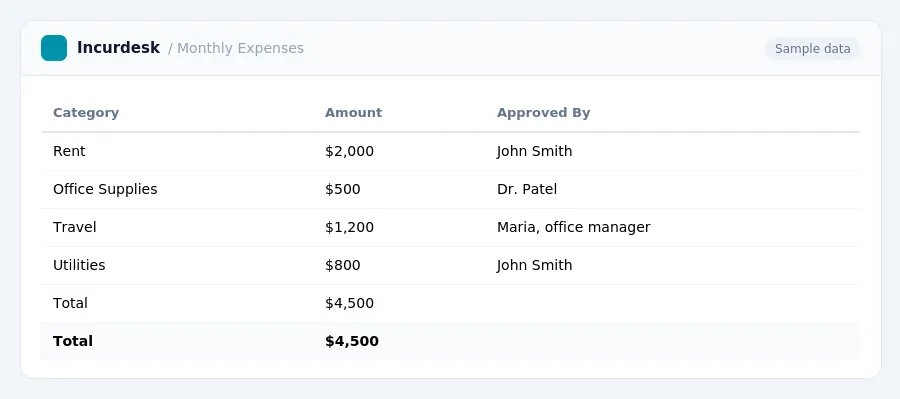
When it comes to tracking expenses, HOAs have three primary accounting methods to choose from: cash-basis, accrual-basis, and modified accrual-basis. While cash-basis accounting may seem straightforward, it only accounts for income and expenses when they're actually received or paid. This can lead to an incomplete picture of financial obligations.
Accrual accounting, on the other hand, is recommended as it aligns with Generally Accepted Accounting Principles (GAAP). This method accounts for income and expenses when they're earned or incurred, regardless of when payment is made. This provides a complete picture of financial obligations and is essential for making informed decisions about budgeting and reserve funds.
To ensure compliance, it's essential to choose an accounting method that accurately reflects the HOA's financial position. As a board member, you have a legal obligation to act in the best financial interest of every homeowner, and using accrual accounting can help you do just that.
Key Considerations:
- Choose accrual accounting for a complete picture of financial obligations.
- Accrual accounting aligns with GAAP.
Essential Monthly Reports for Accurate Expense Tracking
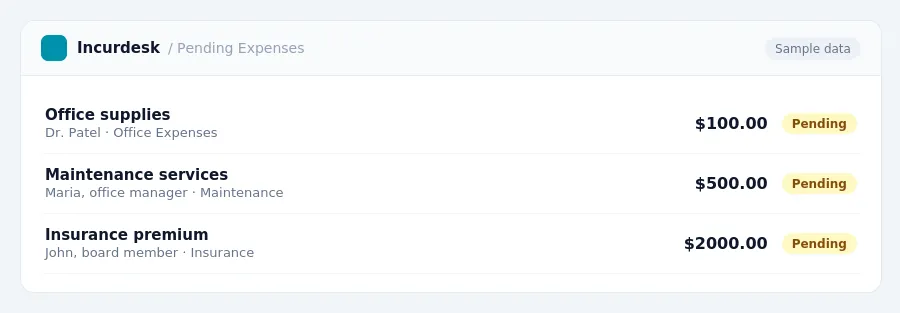
To achieve this, it's essential to generate specific monthly reports that provide a clear picture of financial activity. These reports include:
- Balance Sheet: This report provides a snapshot of the HOA's financial position, including assets, liabilities, and equity, at a specific point in time.
- Income and Expense Statement: This report outlines the HOA's revenue and expenses over a specific period, typically a month.
- Cash Flow Statement: This report shows the movement of cash and cash equivalents into and out of the HOA's accounts over a specific period.
- Accounts Receivable Aging Report: This report lists outstanding invoices and their corresponding due dates, helping to identify potential cash flow issues.
- Bank Reconciliation: This report ensures that the HOA's bank statements match the financial records, helping to detect any discrepancies or errors.
To prepare these reports, you'll need to gather the necessary data from your accounting system, which may include:
Reserve Studies and Funding: Compliance and Best Practices
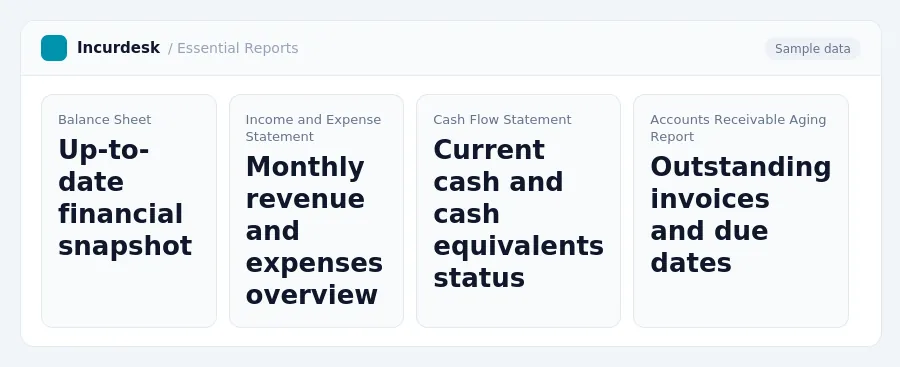
Reserve studies and funding are critical components of HOA management. To ensure compliance and best practices, follow these guidelines:
- Conduct reserve studies every 3-5 years, with annual updates to funding projections. Some states, like Colorado, require a formal written policy for reserve studies.
- Keep operating funds and reserve funds separate to prevent commingling and ensure compliance.
Reserve study requirements vary by state. Currently, 13 states require reserve studies for condominium associations, including California, Colorado, and Florida. Additionally, 13 states mandate reserve studies for condominium associations, and 12 states mandate reserve funding for condominiums. These requirements vary significantly by state, so be sure to check with your state's regulatory agency for specific guidelines.
When conducting reserve studies, ensure that the study includes:
- A detailed assessment of the HOA's assets, including buildings, equipment, and grounds
- A projection of future expenses and reserve fund contributions
- A plan for funding the reserve fund
By following these guidelines and staying informed about state-specific requirements, you can ensure compliance and best practices for reserve studies and funding.
Maintaining Financial Transparency and Preventing Fraud
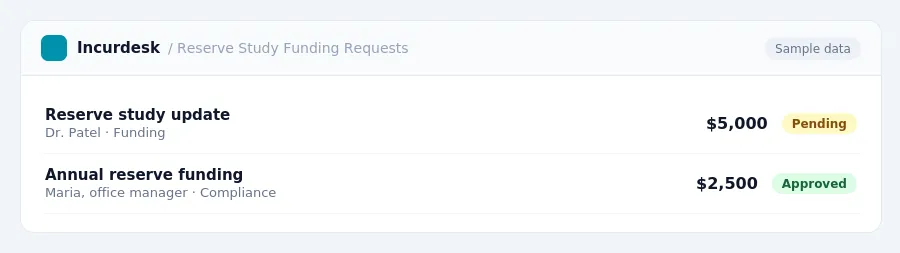
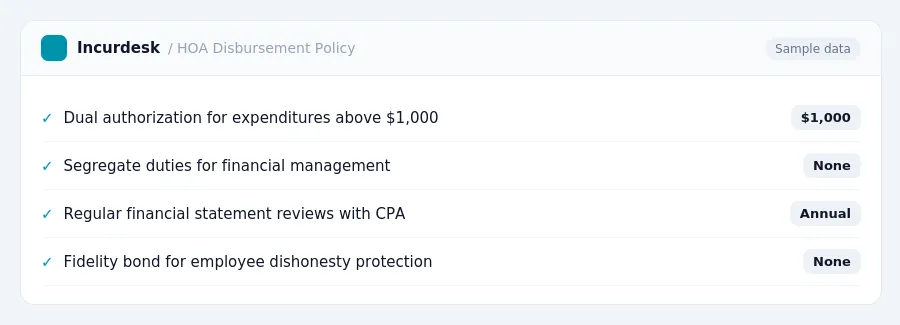
Financial transparency is crucial for HOAs to maintain trust with homeowners. To prevent fraud, it's essential to implement robust controls and procedures. Dual authorization is recommended for significant disbursements above a board-approved threshold. This means that at least two individuals must approve any expenditure above this threshold.
- Segregate duties to prevent one person from controlling all financial aspects.
- Regularly review financial statements with a certified public accountant (CPA) to detect any discrepancies.
- Consider obtaining a fidelity bond to protect the HOA from financial losses due to employee dishonesty.
Homeowners have the right to request financial records, and every state requires HOAs to provide them upon request. However, timelines and fees vary, so it's essential to check your state's specific requirements.
When responding to requests for financial records, ensure that you provide accurate and complete information within the required timeframe and any applicable fees.
Compliance with State and Federal Regulations
As a small real estate business managing HOAs, it's essential to stay on top of state and federal regulations governing HOA management. This includes understanding the requirements for financial reporting, tax compliance, and other regulatory matters.
Here are some key steps to ensure compliance:
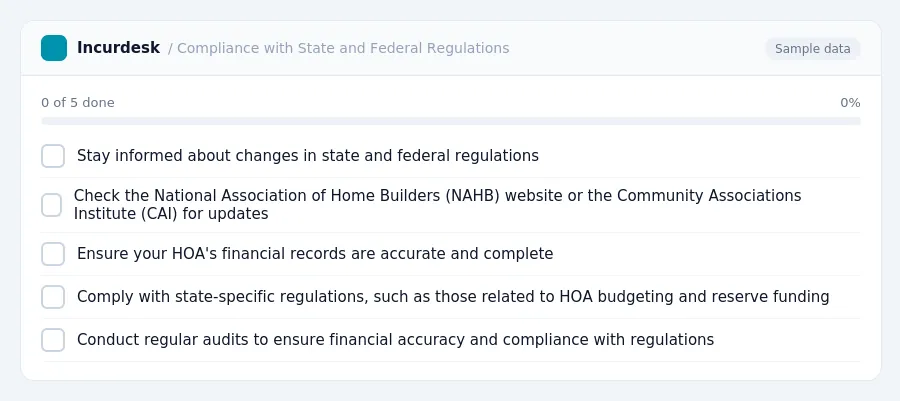
- Stay informed about changes in state and federal regulations. Check the National Association of Home Builders (NAHB) website or the Community Associations Institute (CAI) for updates.
- Ensure your HOA's financial records are accurate and complete. This includes maintaining detailed records of all financial transactions, including receipts, invoices, and bank statements.
- Comply with state-specific regulations, such as those related to HOA budgeting and reserve funding.
- Conduct regular audits to ensure financial accuracy and compliance with regulations.
It's also a good idea to consult with a qualified accountant or attorney who specializes in HOA management to ensure you're meeting all regulatory requirements.
Keeping this simple: Incurdesk turns submitted expenses into clean expense reports. It is built for small real estate teams. Try it free.
Stop losing 4+ hours a week
30-day free trial · No credit card · Setup in 15 minutes