
Hospital Capital Purchase Request Process Explained
A practical, data-backed guide to controlling costs and automating expense workflows.
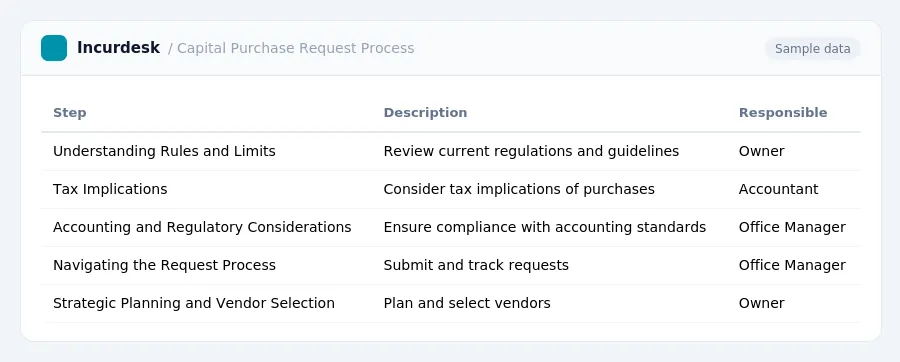
For small hospital businesses in the US with 5-50 staff, the process for requesting capital purchases involves understanding current rules, limits, and rates. To manage capital expenses effectively, owners and office managers should be aware of the tax implications, accounting standards, and regulatory considerations that come into play when acquiring significant assets. By following these guidelines, you can optimize expense management for hospitals and make informed decisions about capital purchases. For a complete overview, see our expense management guide.
Understanding Capital Purchase Request Rules and Limits
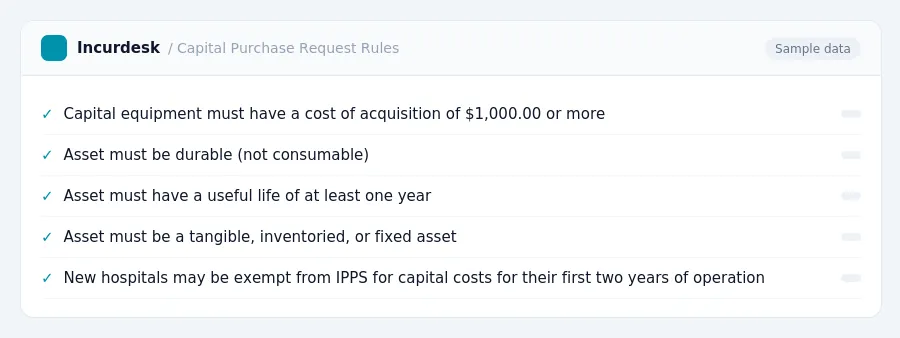
When requesting capital purchases for your small hospital business, it's essential to understand the rules and limits that apply. Here are the key guidelines to keep in mind:
Capital equipment is generally defined as any asset with a cost of acquisition of $1,000.00 or more, is durable (not consumable), has a useful life of at least one year, and is considered a tangible, inventoried, or fixed asset.
New hospitals may be exempt from the Inpatient Prospective Payment System (IPPS) for capital costs for their first two years of operation and paid on a cost reimbursement basis.
State regulatory mechanisms, such as Certificate of Need (CON) programs, may also apply to your capital purchase request. As of January 2025, 35 states and Washington, D.C. operate CON programs, which require approval for major capital expenditures and projects for certain healthcare facilities.
For cost reporting periods beginning on or after October 1, 2002, new hospitals are paid 85% of their allowable Medicare inpatient hospital capital-related costs for up to two years, unless they elect to be paid 100% of the Federal rate.
Before making a capital purchase, be sure to check with your state's CON program to determine if approval is required for your specific project. The rules and regulations for CON programs vary significantly by state, with 35 states and Washington D.C. having their own programs.
Tax Implications of Capital Purchases
The tax implications of capital purchases for small hospital businesses can be complex, so it's essential to understand the rules and regulations. When acquiring significant assets, you'll need to consider the depreciation rules, which can affect your tax liability.
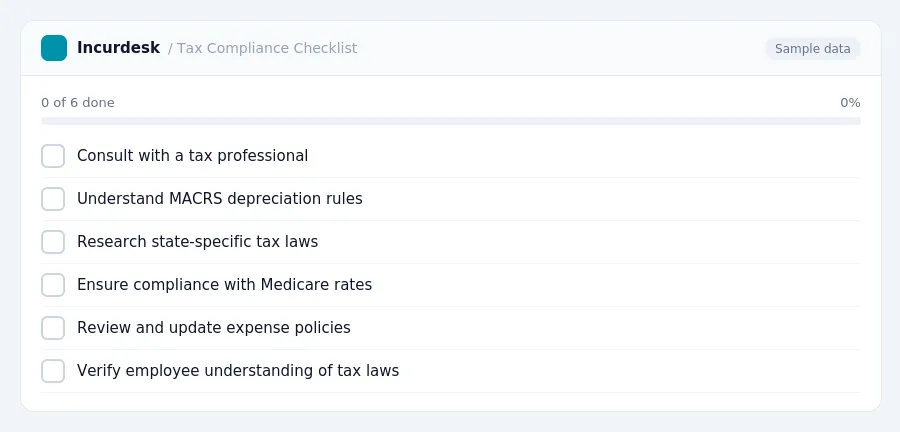
As of 2026, the Modified Accelerated Cost Recovery System (MACRS) is still in effect, allowing you to depreciate assets over time.
- Hospitals should also be aware of state-specific tax laws, as several states have enacted hospital price caps in 2025, tying commercial prices to Medicare rates.
It's crucial to consult with a tax professional to ensure you're meeting all tax requirements and taking advantage of available deductions. They can help you navigate the complex tax landscape and ensure compliance with all relevant regulations.
Accounting and Regulatory Considerations
When requesting capital purchases, small hospital businesses must consider accounting and regulatory requirements to ensure compliance. For private companies and non-profit organizations, ASC 842 (Lease Accounting) became effective for reporting periods beginning after December 15, 2021. This means that lease accounting must be reported on the balance sheet.
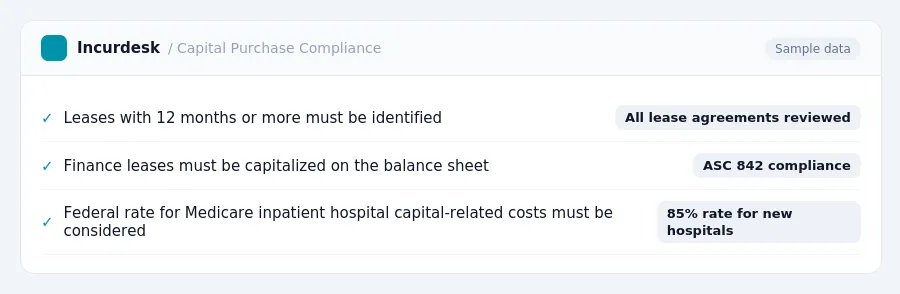
To comply with ASC 842, businesses must identify all leases with a term of 12 months or more, and classify them as either finance or operating leases. The classification will impact the accounting treatment, with finance leases typically requiring capitalization on the balance sheet.
Additionally, businesses must consider the 85% Federal rate for Medicare inpatient hospital capital-related costs for new hospitals.
To ensure compliance, businesses should:
- Review all lease agreements to identify those with a term of 12 months or more.
- Classify each lease as either finance or operating, and apply the corresponding accounting treatment.
By following these steps, businesses can ensure compliance with accounting and regulatory requirements for capital purchases.
Navigating the Capital Purchase Request Process
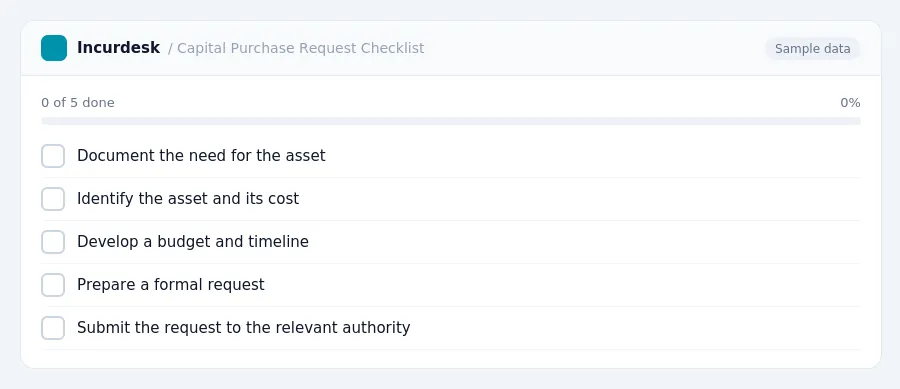
When preparing a capital purchase request, start by documenting the need for the asset. This should include a detailed justification, including the expected benefits, such as improved patient care or increased efficiency.
Next, identify the asset and its cost. Ensure that the asset is a legitimate business expense and that you have the necessary funds to cover the cost.
Develop a budget and a timeline for the purchase. Consider factors such as delivery, installation, and training.
Keep this in mind when planning your budget.
Prepare a formal request, including a detailed description of the asset, its cost, and the benefits it will bring to your hospital. Be sure to include any supporting documentation, such as quotes and invoices.
Submit the request to the relevant authority, such as the hospital administration or the finance department. Ensure that the request is complete and accurate, and that it meets all the necessary requirements.
Finally, follow up on the status of your request. Be prepared to provide additional information or clarification as needed.
For small hospital businesses, it's essential to keep track of all correspondence and communication related to the capital purchase request. This will help ensure that the process is smooth and efficient.
Strategic Planning and Vendor Selection
When it comes to capital purchase requests, strategic planning and vendor selection are crucial steps that require careful consideration. To begin, conduct a needs assessment to identify the necessary equipment and technology required to support your hospital's operations. Consider factors such as patient care, staff productivity, and budget constraints.
Determine your budget and financial plan, taking into account the total cost of ownership, including maintenance, repair, and replacement costs. Prioritize your needs based on urgency and importance, and allocate your budget accordingly.
For vendor selection, research and evaluate potential suppliers based on factors such as product quality, reliability, and customer support. Consider seeking recommendations from industry peers or professional associations. Create a shortlist of vendors and request quotes or proposals, ensuring that all vendors are aware of your budget and requirements.
Once you have selected a vendor, negotiate the terms of the sale, including the price, delivery timeline, and any warranties or guarantees. Ensure that all agreements are in writing and include clear payment terms and conditions.
Finally, ensure that all purchases are properly documented and recorded in your accounting system, including any relevant warranties, guarantees, or maintenance agreements.
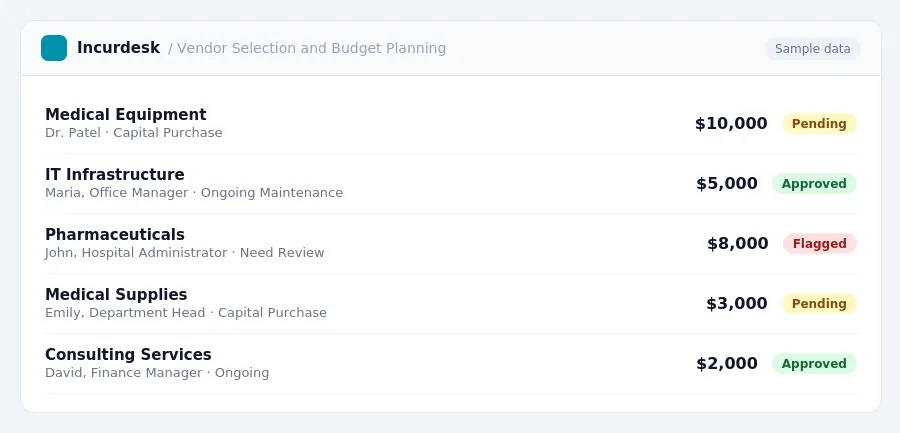
Keeping this simple: Incurdesk routes each expense to the right person for approval and keeps a record of who approved what. It is built for small hospital teams. Try it free.
Stop losing 4+ hours a week
30-day free trial · No credit card · Setup in 15 minutes