
Hospital Foundation Event Expense Tracking
A practical, data-backed guide to controlling costs and automating expense workflows.
Effective expense management for hospitals involves understanding deductible costs, limits, and documentation requirements.
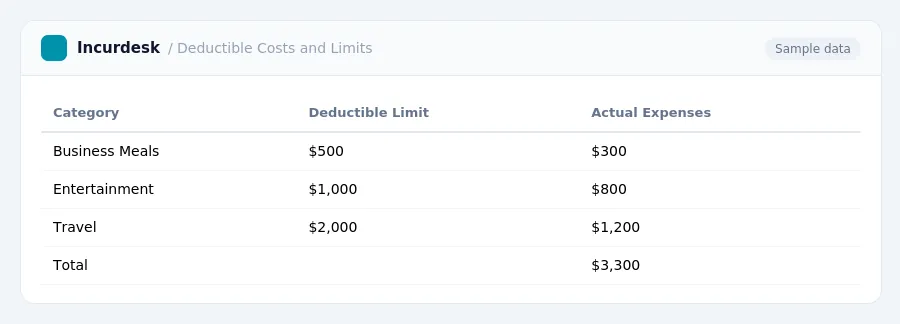
Track Business Meals and Entertainment Expenses
To ensure accurate tracking of expenses, start by understanding the IRS rules for deducting business meals and entertainment expenses. For tax year 2026, most business meals are 50% deductible when you or an employee are present and there's a clear business purpose.
- Keep a record of all business meals, including the date, time, location, and purpose of the meal.
- Document the names of employees or clients present at the meal, as well as any relevant business discussions or agreements.
- Keep receipts for all meals, including the amount spent and the type of meal.
Entertainment expenses, such as tickets to sporting events, concerts, or golf outings, are generally not deductible for tax year 2026. If you're unsure about a specific expense, it's always best to err on the side of caution and avoid deducting it.
Review your company's policies to ensure you're in compliance with these new rules.
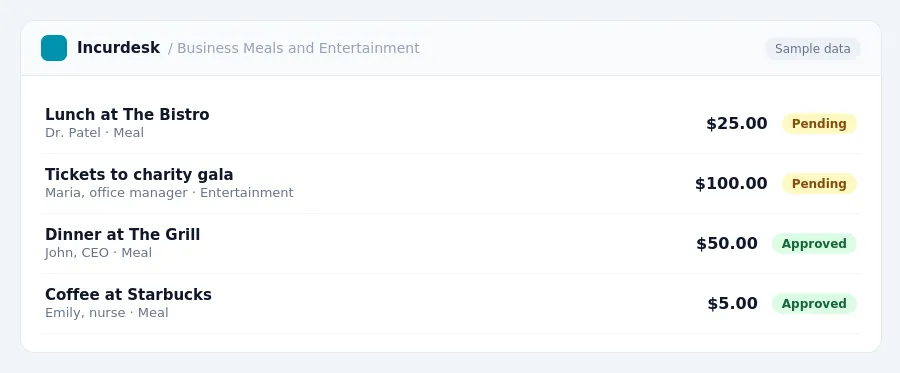
Calculate Deductible Costs and Limits
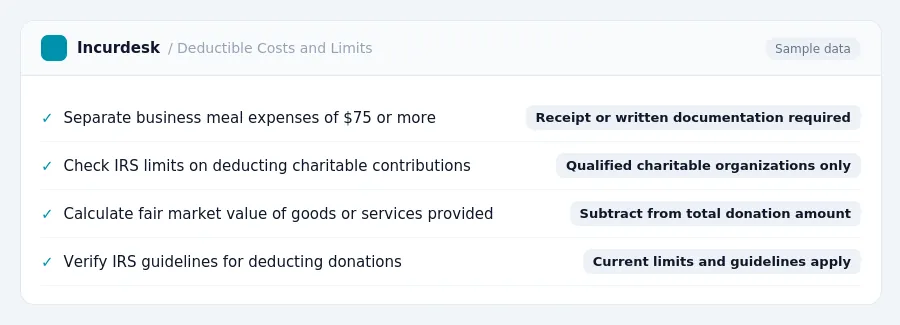
- Calculate the deductible costs of your fundraising event expenses. This means that if you spent $100 on a meal, you can deduct $50 as a business expense. To calculate the deductible costs, you'll need to track your expenses and separate them into different categories, such as food, beverages, venue rental, and other expenses. Make sure to keep receipts or written documentation for any business meal expense of $75 or more.
- Check the IRS limits on deducting charitable contributions. While there is no limit on deducting donations to qualified charitable organizations, there are limits on deducting the value of goods or services provided in exchange for a donation. You can check the IRS website for the current limits and guidelines.
- If you provide goods or services in exchange for a donation, you'll need to calculate the fair market value of those goods or services and subtract that amount from the total donation. For example, if you provide a gift basket worth $50 in exchange for a $100 donation, you can only deduct $50 as a charitable contribution.
Document Expenses and Benefits
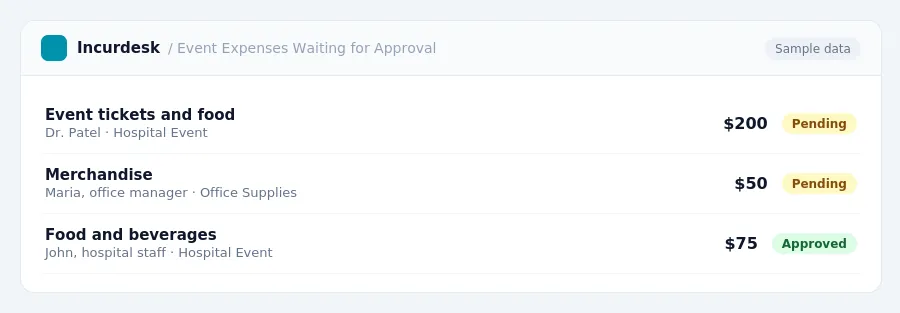
When a donor pays more than $75 for an event, you must disclose the fair market value (FMV) of benefits provided in writing. This applies to the tax year 2026. To comply, create a written statement that outlines the benefits received by the donor, such as:
- Event tickets
- Food and beverages
- Merchandise or other items
Keep a record of this written statement, along with the donor's name and contact information, in case of an audit. This documentation helps ensure transparency and accountability in your fundraising efforts.
For events with benefits valued at $75 or less, you're not required to provide a written statement. However, keep a record of the benefits provided to maintain accurate financial records.
Keep receipts and records of these expenses to support your deductions.
Remember to keep accurate and detailed records of all expenses and benefits provided during events. This documentation will help you maintain financial reporting and tax-exempt status.
Comply with IRS Reporting Requirements
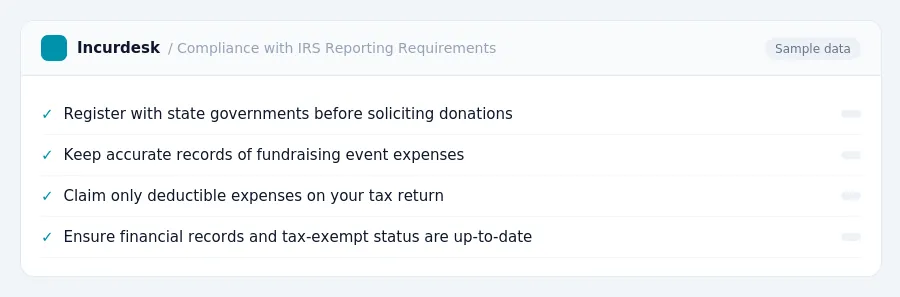
- Register with state governments before soliciting donations. Requirements vary by state, so check with your state government for specific regulations and deadlines. You can find information on state registration requirements on the National Association of State Charity Officials website.
- This form reports the organization's financial activities, including fundraising event expenses. The deadline for filing Form 990 is May 15th for most nonprofits.
- Keep accurate records of fundraising event expenses, including receipts, invoices, and bank statements. These records may be requested by the IRS during an audit.
- Claim only deductible expenses on your tax return.
- Keep your financial records and tax-exempt status up to date. This includes ensuring your organization is registered with the state and has filed all required tax forms.
Maintain Financial Records and Tax-Exempt Status
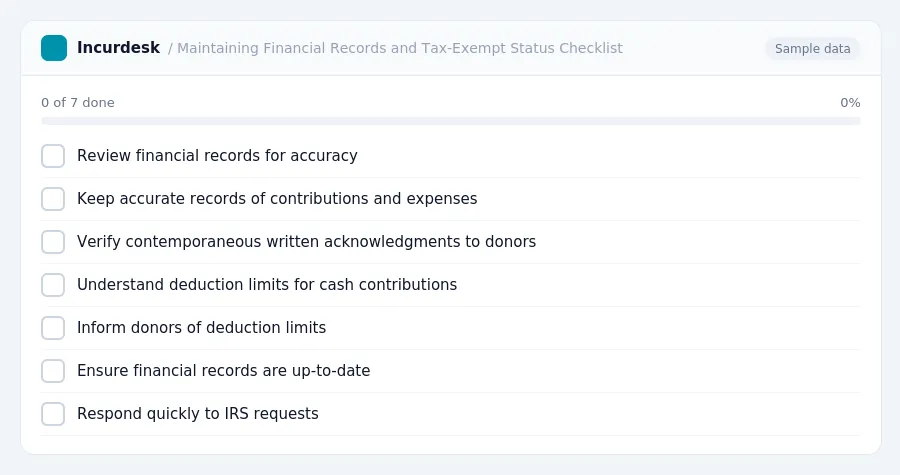
- Review your financial records to ensure you are accurately tracking fundraising event expenses and income. Keep accurate records of all contributions and expenses to facilitate this process.
- Verify that you are providing contemporaneous written acknowledgments to donors for contributions of $250 or more. Keep a record of these acknowledgments, as they may be requested by the IRS.
- Understand the deduction limits for cash contributions. Be sure to inform your donors of these limits and encourage them to consult with a tax professional for guidance.
- Ensure that your financial records are accurate and up-to-date to maintain your tax-exempt status. Keep detailed records of all financial transactions, including contributions, expenses, and fundraising event income. This will help you to respond quickly to any IRS requests and avoid potential penalties.
By maintaining accurate and detailed financial records, you can ensure compliance with IRS regulations and maintain your tax-exempt status.
Keeping this simple: Incurdesk turns submitted expenses into clean expense reports. It is built for small hospital teams. Try it free.
Stop losing 4+ hours a week
30-day free trial · No credit card · Setup in 15 minutes