
Hospital Purchase Card Program Controls Checklist
A practical, data-backed guide to controlling costs and automating expense workflows.
Effective expense management for hospitals requires robust controls to prevent misuse and ensure compliance. To establish and manage an effective purchase card program, consider the following key aspects. For a complete overview, see our expense management guide.
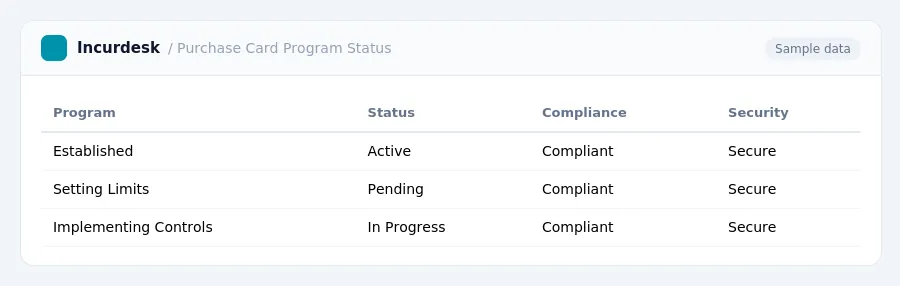
Establishing a Purchase Card Program
- Verify Federal Micropurchase Threshold: Confirm the single purchase limit for most cardholders is set at or below $15,000, as of the October 1, 2025 inflation adjustment.
- Set Standard Monthly Limit: Determine the standard monthly limit for purchase cards, which can be up to $1,000,000.
- Implement Documentation Requirements:
- Save receipts for all purchases.
- Obtain approvals from authorized officials.
- Keep justifications for all purchases.
- Ensure Cardholder Training:
- Complete purchase card training before receiving a card or assuming responsibilities.
- Retrain cardholders and approving officials every two years.
- Protect Card Information:
- Do not share your card number.
- Report loss or suspected fraud immediately.
Setting Limits and Rates
- Consult your organization's internal policies regarding prohibited items, spending limits, and approval processes.
- Determine the maximum credit limit for each cardholder, and consider setting limits based on job function or department.
- Establish a daily spending limit for each cardholder.
- Determine the interest rate and any applicable fees, such as late fees or foreign transaction fees.
- Consider setting a cap on the percentage of credit card purchases that can be made for certain categories, such as travel or entertainment.
- Review the GSA SmartPay program's master contracts with major card networks to ensure familiarity with the core program and any updated terms and conditions.
- Establish a clear policy outlining the use of purchase cards, including employee responsibilities and expectations.
- Determine and document the following controls:
- Cardholder verification process
- Transaction approval process
- Transaction limit amounts
- Card usage limits
- Set up a system to track and monitor card activity, including regular reports on transactions and card balances.
- Conduct regular audits and reconciliations to ensure compliance with program rules and detect potential misuse.
- Establish a process for addressing any discrepancies or issues found during audits and reconciliations.
- Ensure compliance with applicable federal regulations, including the Federal Acquisition Regulation (FAR) and the Uniform Guidance.
- Review and approve transactions in your agency's system on schedule. Late reconciliations are a common finding in audits. (Source: GSA, 2026)
- Reconcile transactions regularly. This should be done at least once a month, but the exact frequency may vary depending on your agency's needs and policies.
- Keep accurate records of all transactions, including receipts and invoices. This will help with reconciliations and ensure compliance with regulations.
- Ensure that all transactions are properly categorized and coded. This will help with tracking and reconciliation, and ensure that expenses are accurately reported.
- Monitor and address any discrepancies or errors in transactions. This should be done promptly to prevent delays in reconciliations and to ensure compliance with regulations.
- Keep track of credit card transaction fees. These fees may be recouped from the taxpayer, but the exact fee structure for taxpayers may evolve.
- Establish clear policies and procedures for handling purchase card transactions, including proper use, reporting, and documentation.
- Designate a primary and secondary cardholder for each purchase card, and ensure they understand their roles and responsibilities.
- Implement secure storage and handling procedures for purchase cards, including locking up cards when not in use and monitoring card activity.
- Regularly review and reconcile purchase card transactions to ensure accuracy and detect potential errors or irregularities.
- Conduct regular audits of the purchase card program to ensure compliance with policies, procedures, and regulations.
- Establish a process for reporting and addressing card loss, theft, or unauthorized use, including procedures for canceling cards and reissuing them.
- Monitor card activity and transaction reports regularly to identify potential security risks and take corrective action.
- Ensure all employees with access to purchase card information understand their responsibility to protect sensitive data and maintain confidentiality.
When establishing limits and rates for your purchase card program, consider the following:
Review your organization's internal policies and consult with your financial team to determine the best limits and rates for your purchase card program.
Implementing Controls and Compliance
Managing Transactions and Reconciliations
Maintaining Program Integrity and Security
Keeping this simple: Incurdesk routes each expense to the right person for approval and keeps a record of who approved what. It is built for small hospital teams. Try it free.
Stop losing 4+ hours a week
30-day free trial · No credit card · Setup in 15 minutes