
How Hospital Departments Track Budget vs Actual Spending
A practical, data-backed guide to controlling costs and automating expense workflows.
Small hospital businesses with 5-50 staff can effectively track departmental budgets against actual expenditures by following a structured approach to expense management for hospitals. This includes regularly reviewing financial statements, identifying areas of overspending, and implementing cost-saving measures to maintain a healthy margin. With the average hospital margin currently standing at 1.8% in August 2026, it's essential to stay on top of departmental spending to avoid contributing to the 43% of hospitals operating at a loss.
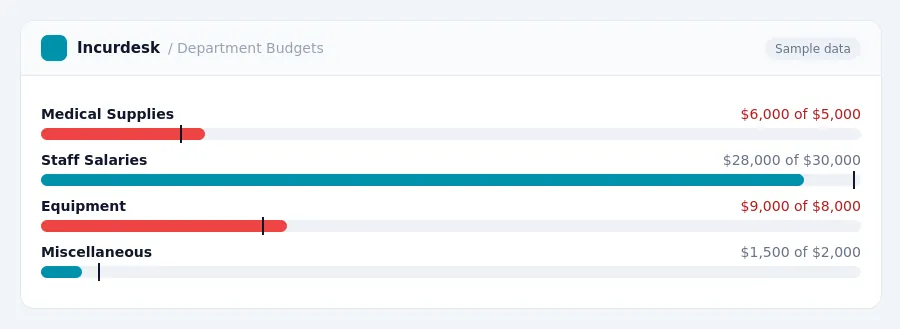
Track Departmental Budgets
- Establish a budgeting framework for each department, including a detailed breakdown of projected income and expenses. Consider factors such as the Inpatient Hospital per Diem Rate, which varies by state but is $5,707 in the Lower 48 States.
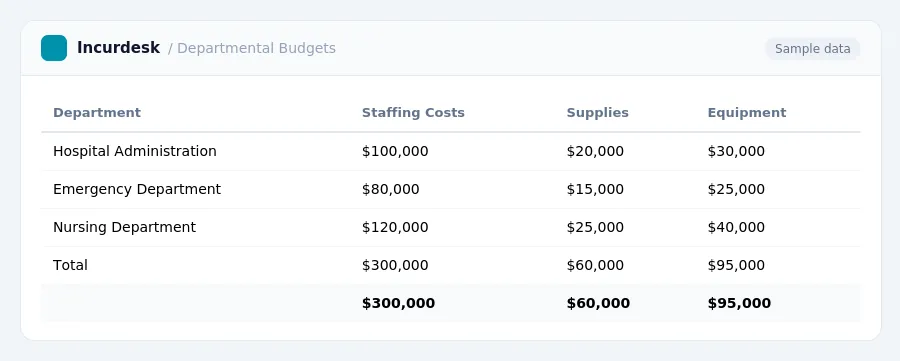
- Identify the key expenses for each department, such as staffing costs, supplies, and equipment. Allocate these expenses to specific budget categories to ensure accurate tracking.
- Set realistic budget targets for each department, taking into account industry benchmarks such as the average hospital margin, which was 1.8% in August 2026. Keep in mind that 43% of hospitals are operating at a loss, an increase from 33% pre-pandemic.
- Regularly review and update departmental budgets to reflect changes in income and expenses. This may involve revising budget categories, adjusting expense allocations, or revising budget targets.
- Use financial reports and statements to track actual spending against budgeted amounts. Identify areas where spending is exceeding budget targets and take corrective action to get back on track.
Identify Common Pitfalls
- Understand the financial landscape of small hospitals. The average hospital margin in August 2026 was 1.8%. This means that many small hospitals may be struggling to stay financially afloat, and it's essential to identify common pitfalls that can exacerbate this issue.
- Be aware of underestimating costs. When creating a departmental budget, it's easy to underestimate costs, especially if you're new to financial management. To avoid this, make sure to include a contingency fund to cover unexpected expenses, and regularly review your budget to ensure it's realistic.
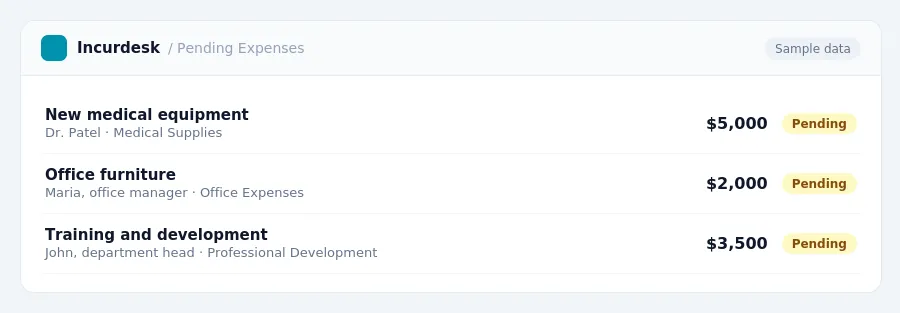
- Watch out for overspending on non-essential items. It's easy to get caught up in buying the latest technology or hiring unnecessary staff, but these expenses can quickly add up and put a strain on your budget. Make sure to prioritize essential expenses and cut back on non-essential items.
- Don't neglect to review and adjust your budget regularly. Many small hospitals fail to review and adjust their budgets regularly, which can lead to overspending and financial difficulties. Make sure to review your budget regularly and make adjustments as needed to stay on track.
Understand Current Financial Regulations
As a small hospital business, it's essential to stay up-to-date with current financial regulations to avoid penalties and ensure compliance. Start by reviewing your state's healthcare regulations and licensing requirements. Check with your state's department of health or medical board to ensure you're meeting all necessary standards. You can also consult with a healthcare attorney or accountant to review your financial policies and procedures.
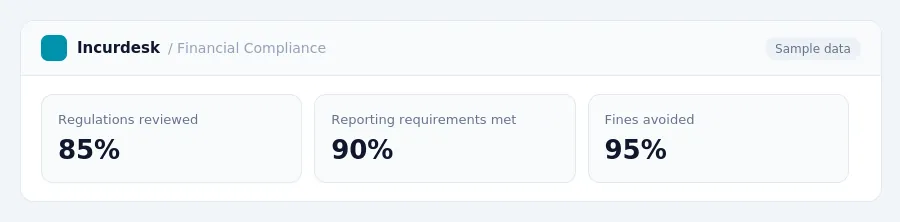
Under the Affordable Care Act (ACA), hospitals must report their financial information, including income statements, balance sheets, and cash flow statements. You'll need to file these reports annually with the Centers for Medicare and Medicaid Services (CMS). Make sure you understand the reporting requirements and deadlines to avoid fines.
Additionally, the Health Insurance Portability and Accountability Act (HIPAA) requires hospitals to maintain confidentiality and security of patient health information. Ensure you have policies and procedures in place to protect patient data and comply with HIPAA regulations.
Review your insurance coverage and contracts to ensure you're meeting all requirements. Check with your insurance provider to confirm your coverage and understand any changes to your policies.
It's also essential to review your financial statements regularly to ensure you're meeting your financial obligations. Review your income statements, balance sheets, and cash flow statements to identify any areas for improvement.
Implement Reliable Financial Management Systems
-
Establish a clear budgeting process that involves all department heads and key staff members. This will ensure everyone is aware of their financial responsibilities and can contribute to the budgeting process.
-
Implement a system for tracking actual expenditures throughout the year, such as regular financial reports and budget variance analyses. This will help identify areas where spending is exceeding budget and make adjustments as needed.
-
Set up a system for monitoring cash flow and ensuring timely payment of invoices. This will help prevent cash flow problems and maintain a positive financial position.
-
Regularly review and update financial policies and procedures to ensure compliance with current regulations and industry standards. This will help prevent costly mistakes and ensure financial health.
-
Consider implementing a financial management system that includes features such as automated budgeting, financial reporting, and compliance tracking. This can help streamline financial management and reduce the risk of errors.
-
Ensure that all financial data is accurate, complete, and up-to-date, and that all financial reports are presented in a clear and concise manner. This will help ensure that financial information is reliable and trustworthy.
-
Consider hiring a financial consultant or accountant to provide guidance and support with financial management and compliance. This can be especially helpful for small hospitals with limited financial expertise.
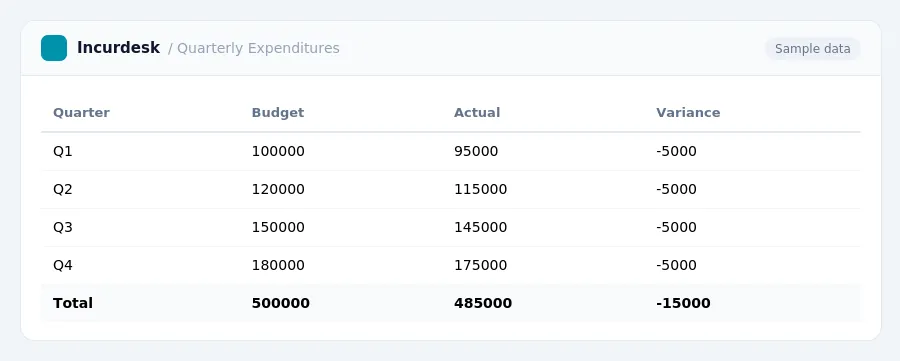
Monitor and Adjust Budgets
- Regularly Review Budget Reports
Set a specific time each month to review your budget reports, comparing actual spending to budgeted amounts. This will help you identify areas where spending is exceeding budget.
- Identify and Address Overspending
When you notice overspending, investigate the cause and make adjustments to prevent it from happening in the future. This may involve reassigning resources, renegotiating contracts, or implementing cost-saving measures.
- Make Adjustments to Future Budgets
Based on your analysis of actual spending, make adjustments to your future budgets to ensure they are more accurate and aligned with your department's needs. This may involve increasing or decreasing budgeted amounts for specific categories.
- Communicate with Staff and Stakeholders
Keep your staff and stakeholders informed about budget changes and adjustments. This will help ensure everyone is on the same page and working together to achieve financial goals.
- Continuously Monitor and Refine
Continuously monitor your budget and make adjustments as needed. This will help you stay on track and ensure your department is operating within its means, even in uncertain economic times.
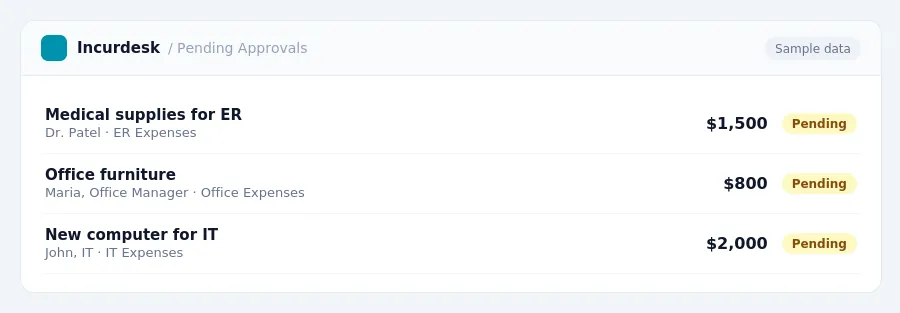
Keeping this simple: Incurdesk collects every receipt and expense report in one place, so spending is easy to review. It is built for small hospital teams. Try it free.
Stop losing 4+ hours a week
30-day free trial · No credit card · Setup in 15 minutes