
4.2h
Lost to approvals/wk
$10,900
Annual savings
96%
Compliance rate
How to Categorize Plumbing Business Expenses in QuickBooks
A practical, data-backed guide to controlling costs and automating expense workflows.
Start scanning receipts now
and easily manage employee travel and expenses
Categorizing your plumbing business expenses in QuickBooks is crucial for accurate tax benefits. plumbing service expense management software, you'll need to understand the different categories for your expenses. This guide will help you navigate the process and stay compliant with tax regulations. For a complete overview, see our expense management guide.
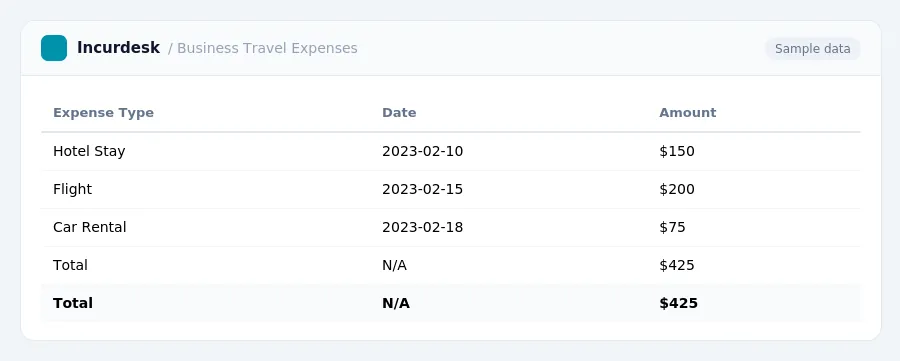
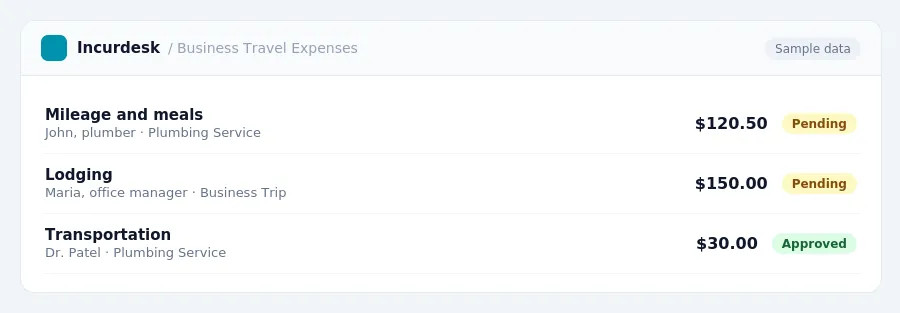
Categorize Business Travel Expenses in QuickBooks
- When categorizing business travel expenses in QuickBooks, start by tracking all travel-related expenses, including mileage, meals, lodging, and transportation.
- from October 1, 2026, through September 30, 2027. Keep receipts for meals and lodging to support your claim.
- When recording business licenses and permits, categorize them as ordinary and necessary business expenses.
- When tracking business travel expenses, be sure to keep accurate records of mileage, dates, and locations to support your claim. You can use a mileage log or a spreadsheet to track your expenses and make it easier to categorize them in QuickBooks.
Calculate Your Plumbing Business's Self-Employment Tax Rate
FREE CALCULATOR
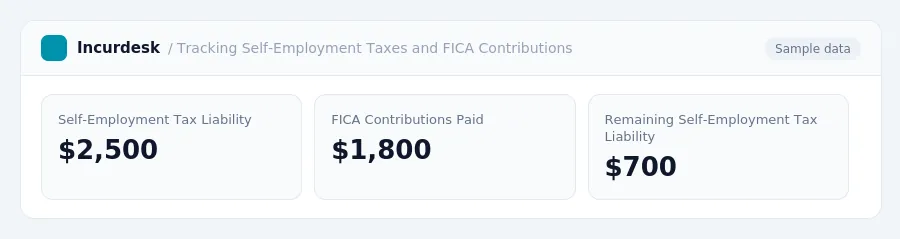
Track Self-Employment Taxes and FICA Contributions
- Track self-employment taxes and FICA contributions in QuickBooks. To do this, you'll need to set up a separate account for self-employment taxes. You can create a new account in QuickBooks under the "Accounts" menu, then choose "New" and select "Other Current Liabilities." Name this account "Self-Employment Taxes." This account will track the taxes you owe on your net earnings from self-employment.
- Calculate your self-employment taxes. The Medicare portion has no wage cap. You can then subtract the amount you paid in FICA taxes as an employee from this amount.
- Record your FICA contributions. You'll need to record your FICA contributions as a liability in QuickBooks. To do this, go to the "Liabilities" section of your chart of accounts and select the "FICA Contributions" account. Then, enter the amount of your FICA contributions and select the date you paid them.
- Make quarterly estimated tax payments. The due dates for these payments are April 15th, June 15th, September 15th, and January 15th of the following year. You can make these payments online, by phone, or by mail. Be sure to keep records of your payments, as you'll need to report them on your tax return.
Record Equipment Purchases and Depreciation in QuickBooks
- When recording equipment purchases in QuickBooks, make sure to categorize them under the correct expense account.
- You can also use the "Assets" tab to record the equipment purchase and then use the "Expenses" tab to claim the Section 179 deduction.
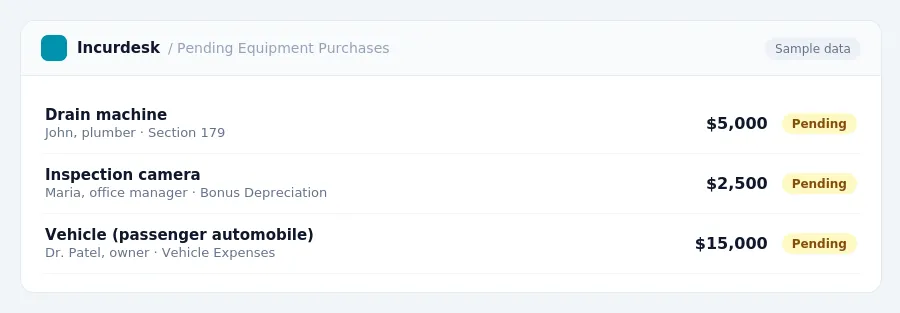
- For larger equipment, such as drain machines, press tools, and inspection cameras, you can often expense them under Section 179 or bonus depreciation in the year they are placed in service.
- For vehicles, the maximum first-year depreciation for passenger automobiles is $12,300 without bonus depreciation and $20,300 with bonus depreciation. To record the purchase of a vehicle, go to the "Expenses" tab and select "Vehicle Expenses." Then, enter the cost of the vehicle and the number of miles driven for business purposes.
- Make sure to keep accurate records of your equipment purchases and depreciation deductions, including receipts, invoices, and photos of the equipment. This will help you prove your deductions in case of an audit and ensure that you are taking advantage of all the tax benefits available to your plumbing business.
Keeping this simple: Incurdesk exports your expenses as a CSV your accountant can import into QuickBooks. It is built for small plumbing service teams. Try it free.
Frequently Asked Questions
Can I deduct the cost of my work van, including any shelving or tool organization systems I install?
You can deduct the cost of your work van as a business expense, but you need to follow the IRS rules for vehicle depreciation. The IRS allows you to deduct the full cost of the van in the year it was purchased, or you can depreciate it over a set period. Shelving and tool organization systems can also be deducted as business expenses.
How do I categorize fuel, maintenance, and insurance for my company vehicles in QuickBooks?
Categorize fuel, maintenance, and insurance expenses for company vehicles as "Vehicle Expenses" in QuickBooks. You can create a separate account for each type of expense or combine them into one account.
What's the difference between FICA tax and self-employment tax, and how do I account for them?
FICA tax is paid by employees and their employers, while self-employment tax is paid by self-employed individuals, including business owners. The self-employment tax rate is 15.3% (12.4% for Social Security and 2.9% for Medicare). You'll report self-employment tax on your business tax return and pay it quarterly. You can deduct half of your self-employment tax as a business expense.
Stop losing 4+ hours a week
30-day free trial · No credit card · Setup in 15 minutes