
How to Categorize Roofing Company Expenses in QuickBooks
A practical, data-backed guide to controlling costs and automating expense workflows.
As a small roofing contractor, setting up your QuickBooks chart of accounts and categorizing expenses correctly is crucial for optimal financial management and tax compliance. For the bigger picture, see our guide to roofing contractors expense management software.
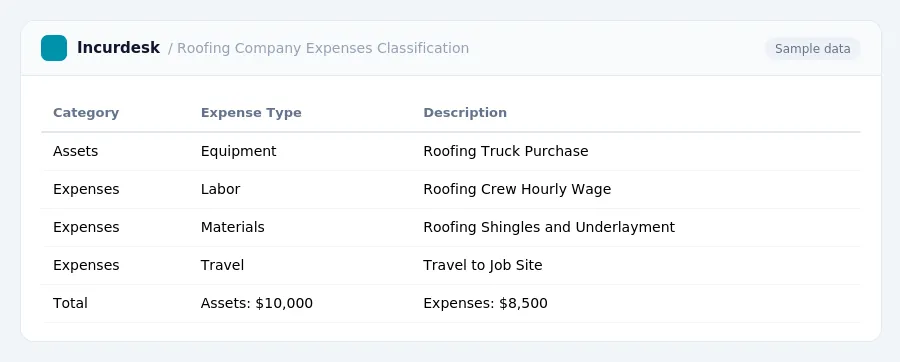
Set Up a Chart of Accounts in QuickBooks
- When setting up a chart of accounts in QuickBooks, start by creating a separate account for each type of asset, such as vehicles, equipment, and furniture. This will help you track the value of these assets over time and calculate depreciation correctly. You should also create an account for each type of liability, such as accounts payable and loans.
- Create a separate account for each type of expense, including labor, materials, and overhead. This will help you track your income and expenses accurately and calculate your profit and loss correctly.
- Use the "Projects" feature in QuickBooks Online Plus and Advanced to track your job-level costs, including labor, materials, and overhead. This will help you track your costs by project, making it easier to analyze your financial performance and calculate your profit and loss correctly.
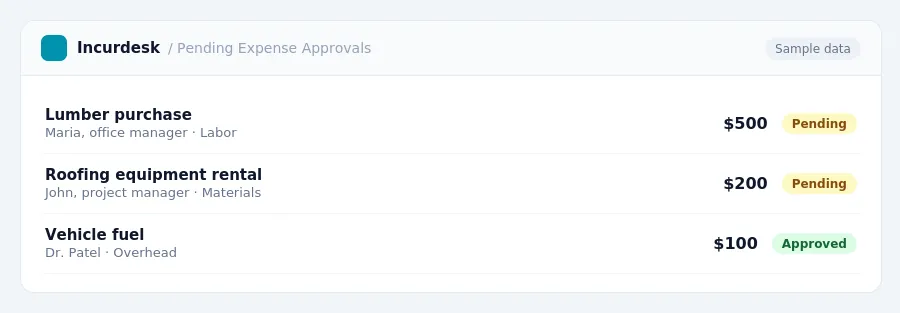
Categorize Roofing Company Expenses as Assets or Expenses
- Categorize your roofing company expenses as assets or expenses correctly. The type of expense determines the tax treatment and accounting method. Here's what you need to know:
- Assets: These are long-term items that provide a benefit for more than one year, such as equipment, vehicles, and tools.
- Expenses: These are short-term costs that provide a benefit for less than one year, such as materials, labor, and supplies.
- Incidental expenses: These are small, occasional expenses that are not related to the main business activity.
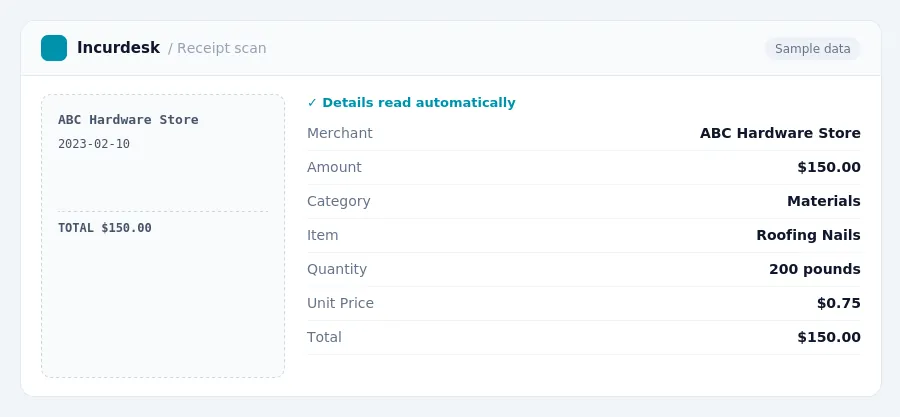
Determine the Correct Classification for Common Roofing Expenses
- When categorizing common roofing expenses in QuickBooks, start by identifying the type of expense. Is it a tangible asset, such as a vehicle or equipment, or is it a service, like labor or supplies? Tangible assets typically have a longer lifespan and are subject to depreciation rules. Services, on the other hand, are usually expensed in the year they're incurred.
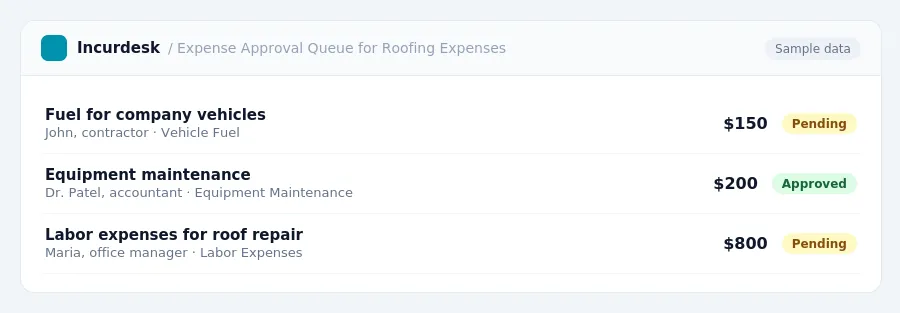
- Be aware that some common roofing expenses, like fuel and maintenance for vehicles, may have specific classification rules. For example, fuel for company vehicles may be considered a business expense, but fuel for personal vehicles may not be. Make sure to keep accurate records and receipts for these expenses.
- Consider the tax implications of your expenses.
-
Review your QuickBooks chart of accounts to ensure you have the correct expense categories set up. Common roofing expenses might include:
- Equipment and machinery
- Vehicles and fuel
- Labor and services
- Supplies and materials
- Insurance and liability
- They can help you review your expense classifications and provide guidance on any specific rules or regulations that apply to your business.
Apply Tax Rules and Depreciation Limits to Roofing Company Expenses
Here are the key steps to follow:
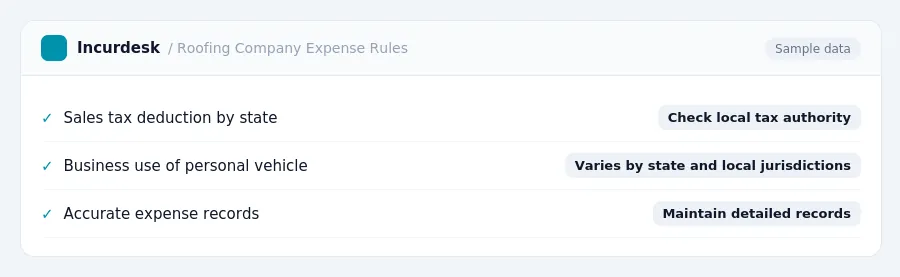
In these states, you'll pay sales tax at the time of purchase. However, in other states, you may be treated as retailers, collecting sales tax from the customer. Verify the rules in your state to ensure compliance.
Understand the rules for deducting business use of your personal vehicle: Varies by state and local jurisdictions, check with your local tax authority for more information.
Keep accurate records: Maintain detailed records of your expenses, including receipts, invoices, and bank statements.
Verify and Correctly Record Subcontractor and Independent Contractor Payments
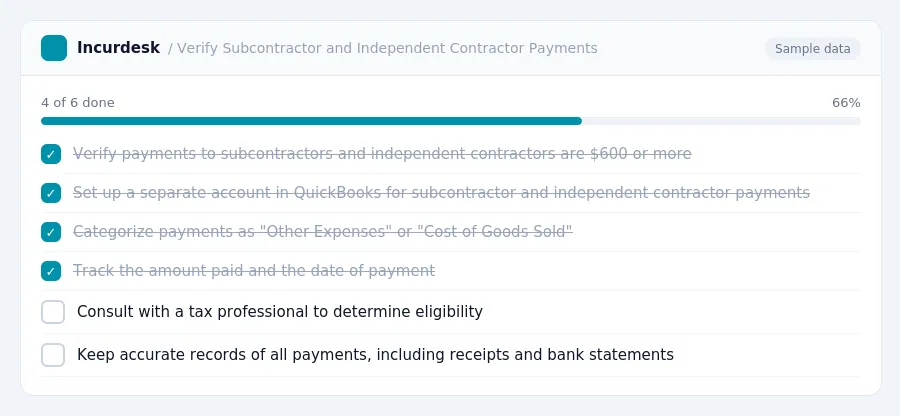
- Verify that payments to subcontractors and independent contractors for labor or services are $600 or more in a calendar year.
- Set up a separate account in QuickBooks specifically for subcontractor and independent contractor payments. This will help you track these expenses separately and ensure accurate reporting.
- When recording payments to subcontractors and independent contractors, ensure that you categorize them correctly as "Other Expenses" or "Cost of Goods Sold." You should also track the amount paid and the date of payment.
- Be sure to consult with a tax professional to determine the eligibility of these assets.
- Keep accurate records of all payments made to subcontractors and independent contractors, including receipts, invoices, and bank statements. These records may be required for tax purposes or in case of an audit.
Keeping this simple: Incurdesk exports your expenses as a CSV your accountant can import into QuickBooks. It is built for small roofing contractor teams. Try it free.
Stop losing 4+ hours a week
30-day free trial · No credit card · Setup in 15 minutes