
How to Handle Agent Expenses Once You Pass Five Agents
A practical, data-backed guide to controlling costs and automating expense workflows.
As a small real estate business owner or office manager with a team of five or more agents, understanding how to handle agent expenses is crucial for maximizing tax savings and ensuring compliance. You'll need to keep track of expenses accurately and know which ones are deductible, all while avoiding common pitfalls that can lead to costly mistakes. Fortunately, there are tools available, such as real estate expense management for under $10/user (2026), that can help streamline the process and make it more efficient.
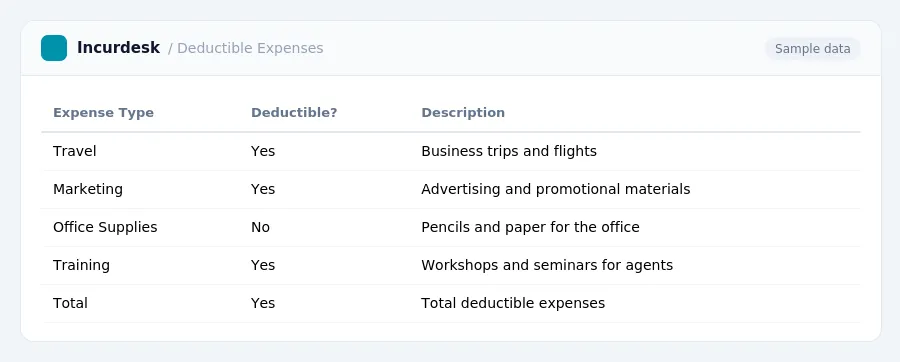
Deductible Agent Expenses: A Guide
As a small real estate business owner, it's essential to understand which expenses are deductible to maximize your tax savings. According to the IRS, ordinary and necessary business expenses are deductible, including costs directly related to earning income from selling homes.
Here are some specific expenses that are deductible:
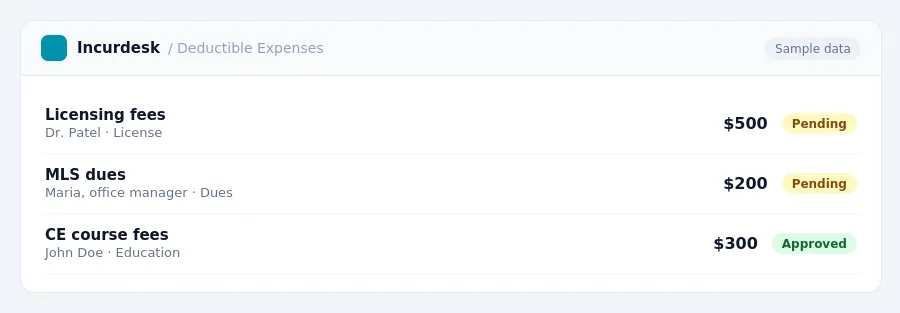
- Licensing fees: These costs are necessary to maintain your real estate license and are therefore deductible.
- MLS dues: Membership in a multiple listing service (MLS) is required for many real estate agents, and these dues are deductible.
- Association dues: Local, state, and national association dues, such as NAR membership, are also deductible.
- CE course fees: Costs for continuing education (CE) courses required to maintain your license are deductible.
Keeping this simple: Incurdesk turns submitted expenses into clean expense reports. It is built for small real estate teams. Try it free.
Avoiding Common Pitfalls and Ensuring Compliance
When managing agent expenses, small real estate businesses often encounter common pitfalls that can lead to costly errors and compliance issues.
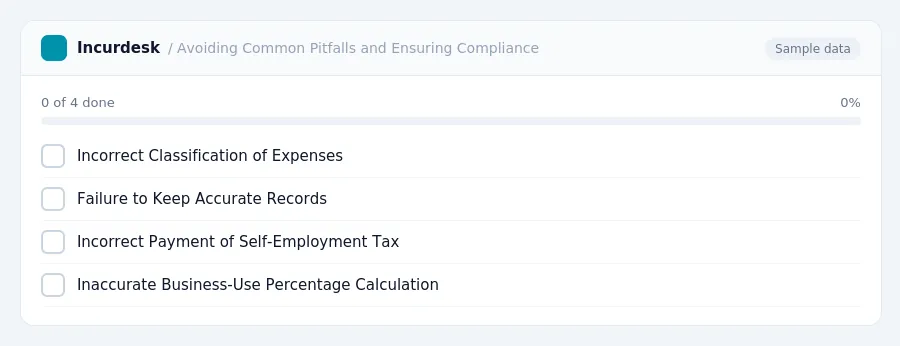
- Incorrect Classification of Expenses: Make sure to classify expenses accurately, as this can impact deductibility and compliance.
- For the Actual Expense Method, calculate the business-use percentage of indirect expenses (mortgage interest, property taxes, utilities, etc.) based on the home office's square footage.
- Failure to Keep Accurate Records: Keep accurate records of agent expenses, including receipts, invoices, and bank statements.
- Incorrect Payment of Self-Employment Tax:
It's also essential to review and update your expense tracking and classification methods regularly to ensure compliance with changing tax laws and regulations.
Classifying Agent Expenses and Tax Implications
When managing agent expenses, it's essential to understand the tax implications of classifying your agents as independent contractors. For federal tax purposes, licensed real estate agents are generally classified as statutory independent contractors if their pay is based on sales commissions and they have a written contract stating they are not employees.
As independent contractors, your agents must pay self-employment tax, which is 15.3% of their net self-employment income, covering Social Security and Medicare.
From January 1 to June 30, 2026, the rate is 72.5 cents per mile. From July 1 to December 31, 2026, the rate increases to 76 cents per mile.
To ensure compliance, it's crucial to maintain accurate records of your agents' expenses, including mileage, vehicle expenses, and other business-related costs.
Remember to have a written contract in place that clearly states your agents are independent contractors, not employees. This will help you avoid any potential tax implications or disputes.
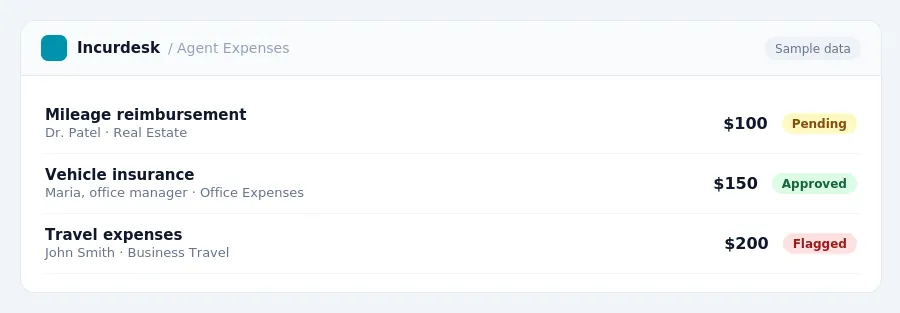
Tracking Agent Expenses Accurately
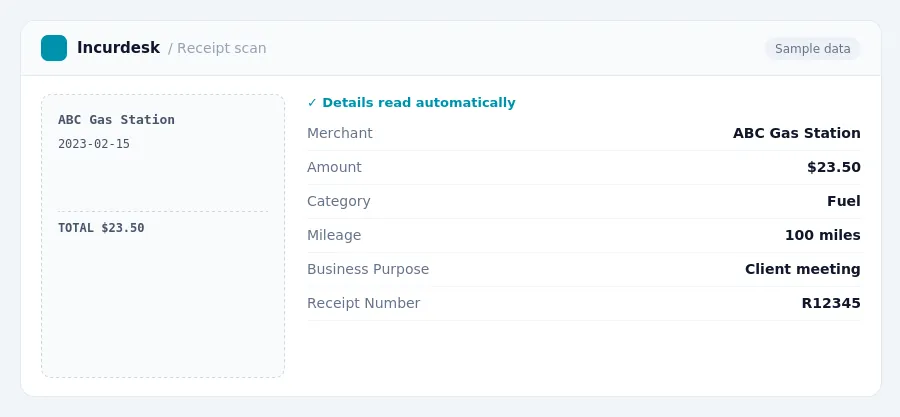
Tracking agent expenses accurately is crucial to ensure compliance and maximize tax savings. To start, agents need to keep detailed records of their business-related expenses, including receipts and invoices. This can be done using a logbook or spreadsheet to track mileage, fuel, and other expenses.
- For actual expenses, agents need to keep a contemporaneous mileage log, which includes the date, business purpose, and starting and ending odometer readings for each trip.
Regardless of the method, agents must be able to calculate the business portion of their vehicle expenses. This can be done by dividing the total business miles by the total miles driven and multiplying by the total expenses.
Maximizing Tax Savings and Business Efficiency
To maximize tax savings and business efficiency, consider the following strategies:
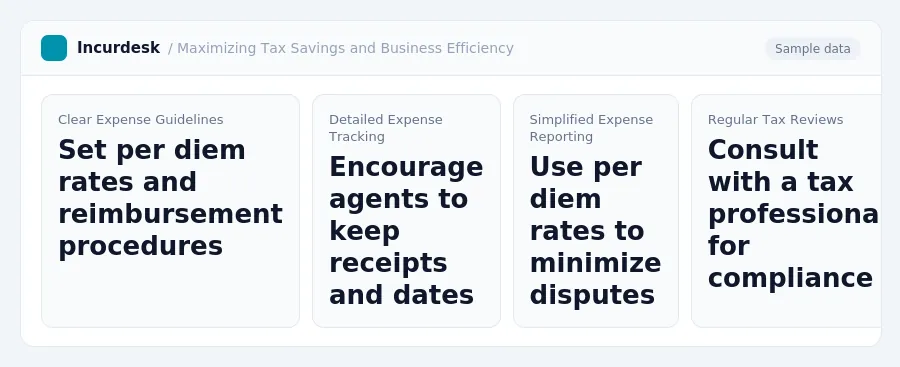
- Set clear guidelines for agent expenses, including per diem rates and reimbursement procedures.
- Encourage agents to keep detailed records of expenses, including receipts and dates.
- Use the per diem rates to simplify expense tracking and minimize disputes.
- Consider implementing a system for agents to submit expense reports and receiving timely reimbursements.
Remember to review your tax obligations regularly and consult with a tax professional to ensure compliance and maximize tax savings.
Stop losing 4+ hours a week
30-day free trial · No credit card · Setup in 15 minutes