Insurance Claim Job Cost Documentation for Roofers
A practical, data-backed guide to controlling costs and automating expense workflows.
To ensure a smooth claims process and fair compensation, it's essential to have the right evidence in place. For a complete overview, see our expense management guide.
To start, contractors should gather all relevant documents, including receipts for repairs and replacements, invoices for materials and labor, and any communication with clients or contractors. They should also note the date, time, and location of each incident, as well as any witness statements or other relevant testimony. Additionally, contractors should keep a record of all correspondence with insurance adjusters, including emails, phone calls, and letters. This documentation will be essential in presenting a clear and compelling case for the value of their clients' losses. For the bigger picture, see our guide to roofing contractors expense management software.
Insurance Claim Job Cost Documentation for Roofers
This documentation will help ensure that you receive fair compensation for the damages you've incurred.
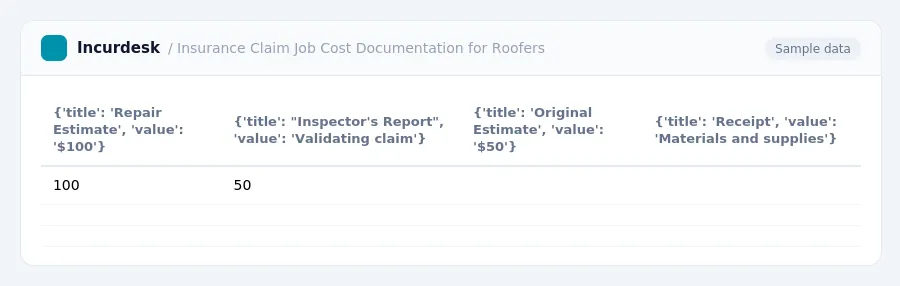
To gather the necessary documentation, start by collecting all repair estimates, inspection reports, and communications with the insurance company. A professional roof inspection report is critical for validating a claim. Save all these documents in a secure and organized manner.
When preparing your documentation, keep in mind that insurance companies base payouts on the evidence provided. Save all original estimates, receipts, and invoices. If you've used any materials or supplies for the repair, note the quantity and cost.
To maximize the settlement amount, consider submitting your documentation in Xactimate format with photo documentation. This can help recover an average of $7,000-$8,000 per claim above the initial estimate. Be sure to follow the specific guidelines provided by your insurance company and consult with their representatives if you're unsure.
Remember to keep a record of all correspondence with the insurance company, including emails, phone calls, and letters. This will help you stay organized and ensure that your claim is processed efficiently. By following these steps, you'll be well-prepared to support your clients' insurance claims and maximize the settlement amount.
The rules in this guide
| Amount | Required | In Incurdesk |
|---|---|---|
| Above $75 | Itemised receipt | Checked on every expense |
| Above $250 | Written business purpose | Checked on every expense |
| Above $500 | Names of attendees | Checked on every expense |
| Above $2,500 | Senior sign-off; never auto-approved | Checked on every expense |
Each rule is checked on every expense by Incurdesk’s approval agent.
Documenting Roof Damage and Estimates
When it comes to documenting roof damage and estimates, it's essential to provide clear and concise evidence to support your claims. Here are the steps to follow:
- Take photos and videos of the damage from multiple angles, including interior damage like water stains. These visual records can help insurance adjusters assess the extent of the damage.
- Note the date and time of the storm or damage event. This helps establish a clear timeline for the damage and can be important in determining the cause of the damage.
- Since sudden, accidental events are typically covered under insurance policies, note that the damage was not caused by wear and tear or neglect.
- Some states require full roof or full-slope replacement if damaged shingles cannot be matched, while others rely on different standards or case law. Familiarize yourself with the specific requirements in your state or region.
- Keep a record of all correspondence with your clients, including emails, phone calls, and letters. This can help establish a paper trail and provide evidence of the communication.
- Be transparent about the damage and the steps you're taking to repair it. If you're using a contractor, provide their contact information and a copy of their contract.
By following these steps, you can provide clear and convincing documentation that supports your roof damage claims. Remember to keep your records up-to-date and accurate, and don't hesitate to seek professional advice if you're unsure about any aspect of the process.
Key Evidence to Collect
Insurance Claim Job Cost Documentation for Roofers
To ensure fair compensation for your clients, it's essential to collect and present the right evidence.
When documenting job costs, keep in mind the following key evidence to collect:
- Invoices and payment receipts for materials and labor
- Photos and videos of the damage, including before-and-after comparisons
- Detailed estimates and breakdowns of costs, including materials, labor, and any additional services
- Records of communication with clients and other parties involved in the project
- Proof of any necessary permits, inspections, or approvals
In Texas, it is also illegal for roofers to waive or absorb deductibles. This means that roofers must pay their own deductibles and other expenses related to the claim.
Avoiding Common Pitfalls
One common pitfall to avoid is not having a clear understanding of the claim process and the necessary documentation. This can lead to delays and decreased settlement amounts.
Another pitfall is not properly documenting the job site and materials used. Insurers require detailed records of the damage, including photos and receipts for materials and equipment. Without proper documentation, it can be challenging to establish the scope of work and justify the settlement amount.
Additionally, failing to provide timely and accurate information to the insurance adjuster can also lead to issues. In Illinois, insurers must respond to claim communications within 15 working days, and it's essential to ensure that all necessary parties are informed in a timely manner.
To avoid these pitfalls, it's crucial to:
- Keep detailed records of the job site and materials used
- Take clear, high-quality photos and videos of the damage
- Provide receipts and documentation for all materials and equipment
- Be prepared to provide regular updates on the claim process
- Ensure that all necessary parties, including clients and insurance adjusters, are informed in a timely manner.
Maximizing Settlement Amounts
In Arizona, for example, it's essential to check the policy's claim deadlines to ensure that the contractor files the claim in a timely manner. This can vary depending on the policy, but it's crucial to adhere to the deadline to avoid any potential delays.
To maximize settlement amounts, it's essential to accurately document the job cost. This includes collecting and maintaining detailed records of all expenses related to the job, including receipts, invoices, and labor costs. Roofers should also ensure that they have all necessary permits and licenses, and that they comply with local building codes and regulations.
When presenting the documentation to insurance adjusters, contractors should be prepared to provide clear and concise explanations of their costs and the circumstances surrounding the claim. This may include documenting the scope of work, materials used, and any necessary repairs or replacements.
Additionally, contractors should be aware of the potential for underreporting costs or exaggerating expenses. This can result in a lower settlement amount, and may be scrutinized by the insurance company. By being transparent and accurate in their documentation, contractors can help ensure that they receive the maximum settlement amount possible.
Keeping this simple: Incurdesk turns submitted expenses into clean expense reports. It is built for small roofing contractor teams. Try it free.
AI expense management for finance teams and whoever keeps the books. It checks every expense against your rules, approves the routine ones and chases missing receipts for you.
Try it free for 30 days →Stop losing 4+ hours a week
30-day free trial · No credit card · Setup in 15 minutes