
Intraoral Scanners and 3D Printers: Expense or Asset?
A practical, data-backed guide to controlling costs and automating expense workflows.
For small orthodontic practices in the US, determining whether intraoral scanners and 3D printers are considered an expense or an asset for tax purposes is crucial for maximizing tax benefits and managing cash flow effectively. The decision hinges on IRS rules, primarily Section 179 of the Internal Revenue Code and bonus depreciation. To ensure optimal orthodontic practices expense management, understanding these provisions is essential to take advantage of available tax incentives and deductions. For the bigger picture, see our guide to orthodontic practices expense management software. For a complete overview, see our expense management guide.
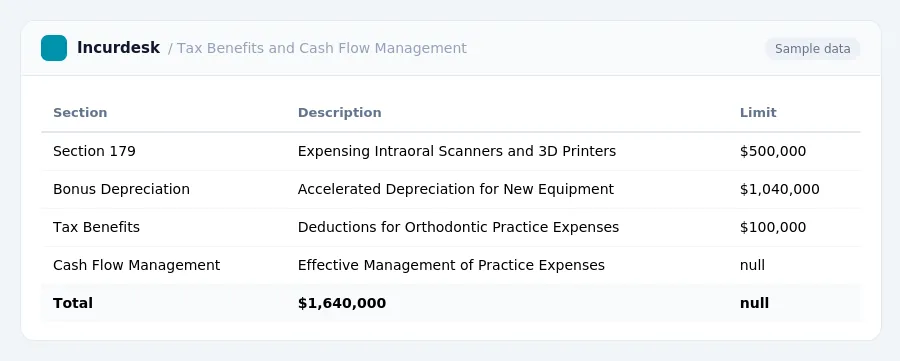
Understanding Section 179 and Bonus Depreciation
Section 179 of the Internal Revenue Code allows businesses to deduct the full cost of qualifying equipment and software in the year of purchase, up to a certain limit.
Businesses typically apply Section 179 first, then use bonus depreciation for any remaining eligible costs. Both new and used equipment can qualify for Section 179 deductions and bonus depreciation, provided it is the business's 'first use.'
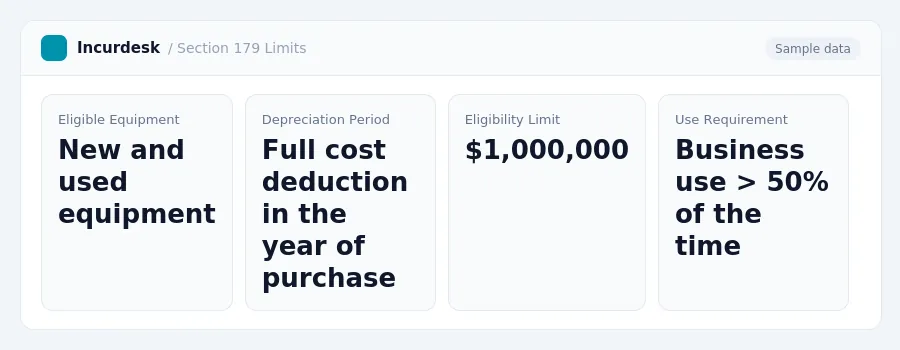
To qualify for Section 179, the equipment must be used for business purposes more than 50% of the time.
Eligibility Limits:
Eligible Equipment:
- New and used equipment
- First-use equipment
Depreciation Periods:
- Section 179: full cost deduction in the year of purchase
| Eligibility | Section 179 Limit | Section 179 Phase-Out | Bonus Depreciation Period | ||||||||||||||||||
|---|---|---|---|---|---|---|---|---|---|---|---|---|---|---|---|---|---|---|---|---|---|
 Tax Benefits of Intraoral Scanners and 3D Printers FREE CALCULATOR Qualifying Intraoral Scanners and 3D Printers for Section 179Intraoral scanners and 3D printers used in an orthodontic practice are generally considered tangible personal property used in a trade or business, making them eligible for Section 179. The cost of qualifying intraoral scanners and 3D printers can be expensed up to a certain limit, but this limit varies and can be found in the IRS's Frequently Asked Questions section.
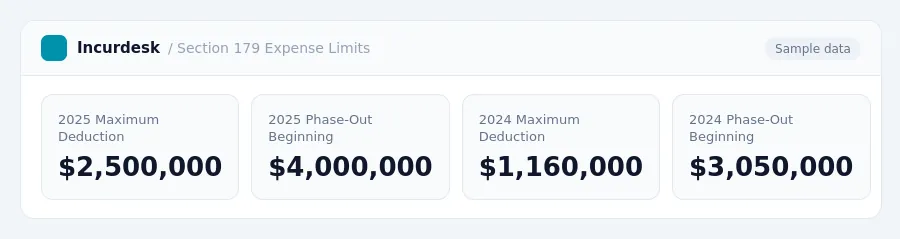
When purchasing intraoral scanners and 3D printers, ensure that the equipment meets the Section 179 requirements to qualify for expensing under this section. 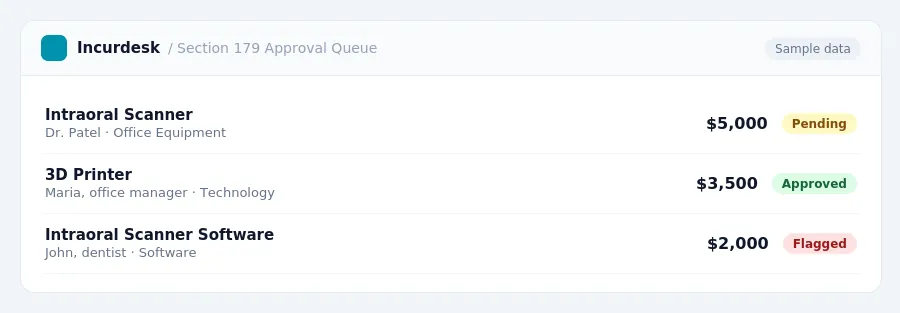 Section 179 Expense Limits and Phase-OutsThe maximum Section 179 expense deduction varies depending on the tax year. In 2025, the maximum is $2,500,000, with a phase-out beginning at $4,000,000. In 2024 and 2023, the maximum is $1,160,000 and $1,160,000, respectively, with phase-outs at $3,050,000 and $2,890,000. In 2022, the maximum is $1,080,000, with a phase-out at $2,700,000. Here are the maximum Section 179 expense limits and phase-outs for recent tax years:
 Bonus Depreciation: A Permanent SolutionBonus depreciation is a permanent solution for small orthodontic practices to maximize tax benefits. Here's how to take advantage of bonus depreciation:
For bonus depreciation to be permanent, you must continue to use the equipment for business purposes and claim the depreciation in the year it's placed in service. This will ensure that you're taking advantage of the tax benefits and managing your cash flow effectively. 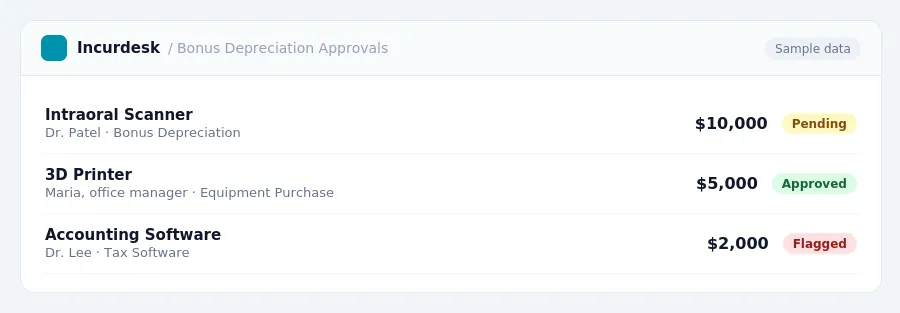 Tax Benefits and Cash Flow Management for Small Orthodontic PracticesWhen considering the tax implications of intraoral scanners and 3D printers, small orthodontic practices can benefit from understanding the tax code's rules and regulations. To maximize tax benefits and manage cash flow effectively, it's essential to grasp how these provisions apply to your business. For tax years beginning in 2021, the maximum Section 179 expense deduction is $1,050,000, with a phase-out beginning at $2,620,000. Here are some key considerations:
By understanding these provisions, you can make informed decisions about how to manage your business's cash flow and optimize your tax benefits. 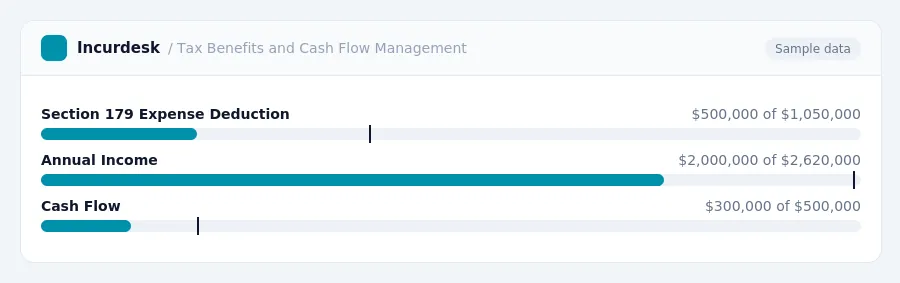 Keeping this simple: Incurdesk lets your team snap a photo of a receipt and fills in the details for you. It is built for small orthodontic practice teams. Try it free. Frequently Asked Questions
Can intraoral scanners and 3D printers be expensed under Section 179? Yes, intraoral scanners and 3D printers qualify for Section 179 expensing. This means that if you use the equipment for both business and personal purposes, you must prorate the deduction based on business use. Does the equipment have to be new to qualify? For Section 179, the equipment does not have to be new to qualify. However, used equipment may have limitations on the amount of deduction you can claim. It's essential to check the equipment's original purchase price to determine the maximum deduction allowed. You can also consider purchasing new equipment to take advantage of the full deduction. Stop losing 4+ hours a week30-day free trial · No credit card · Setup in 15 minutes |