
Job Site Petty Cash Receipt Checklist
A practical, data-backed guide to controlling costs and automating expense workflows.
Managing job site petty cash is a crucial aspect of construction expense management for under $10/user (2026). By following these guidelines, you can avoid common pitfalls and maintain a smooth operation, allowing your business to focus on what matters most - delivering quality projects on time and within budget. For a complete overview, see our expense management guide.
Defining Petty Cash and Establishing Fund Amounts
Petty cash is a small amount of physical currency kept on hand by businesses to cover minor, day-to-day expenses where using a check or credit card would be inefficient or impractical.
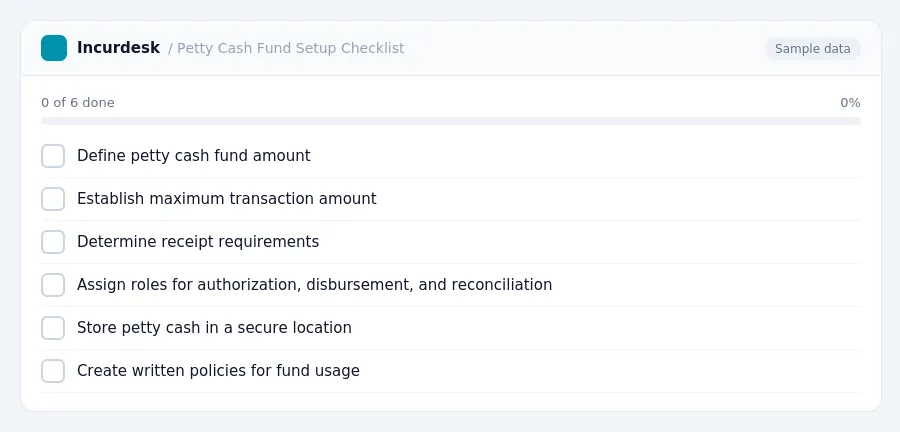
- Typically, small businesses maintain $50 to $100 in a petty cash box, though some may start with $100 to $500, depending on the frequency of minor purchases.
- Establish written policies defining what the fund can and cannot be used for, including a maximum amount per transaction and receipt requirements.
- Store the petty cash in a locked box, drawer, or small safe, with only the custodian having access to the key or combination.
- Consider separating the roles of the person authorizing petty cash spending, the person disbursing funds, and the person handling reconciliation to prevent fraud.
Custodian Responsibilities and Spending Policies
As the custodian of the job site petty cash, it's essential to establish clear spending policies and procedures to ensure accountability and compliance. Here's what you need to consider:
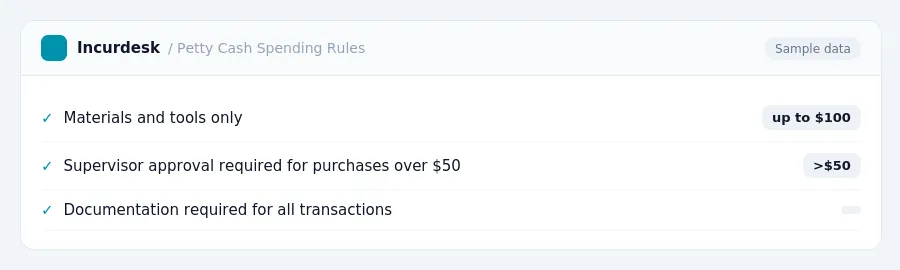
- Define spending limits: Establish clear guidelines on what expenses are eligible for reimbursement from the petty cash fund. This may include materials, tools, and other job-related expenses.
- Designate authorized expenses: Identify specific expenses that require approval from a supervisor or manager before being reimbursed from the petty cash fund.
- Set transaction limits: Determine the maximum amount that can be spent on a single transaction without requiring additional approval.
- Establish documentation requirements: Specify the types of receipts and documentation required for each transaction, including dates, amounts, and descriptions of the items purchased.
- Review and update policies regularly: Regularly review and update spending policies to ensure they remain relevant and effective.
It's also essential to ensure that the custodian of the petty cash fund is aware of their responsibilities and duties, including:
- Counting and verifying cash: Regularly count and verify the cash in the fund to ensure accuracy and prevent theft.
- Managing receipts and documentation: Maintain accurate and detailed records of all transactions, including receipts and documentation.
- Reconciling the fund: Regularly reconcile the petty cash fund to ensure that all transactions are accounted for and that the fund balance is accurate.
Petty Cash Transactions, Receipts, and Record-Keeping
- Assigning a Petty Cash Custodian: Designate a trustworthy individual to manage the petty cash fund, ensuring they are responsible for disbursing cash, collecting receipts, and updating records.
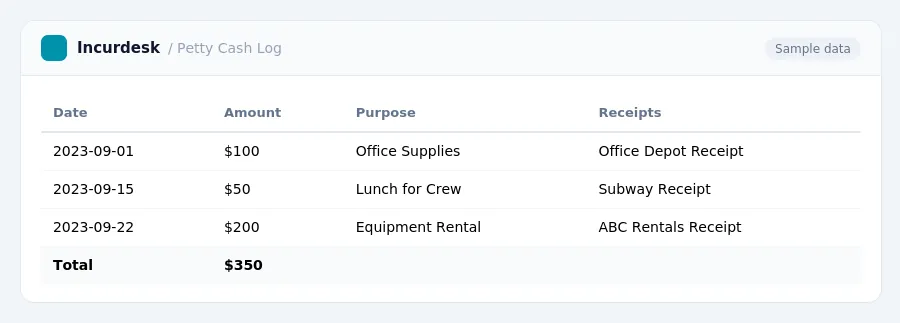
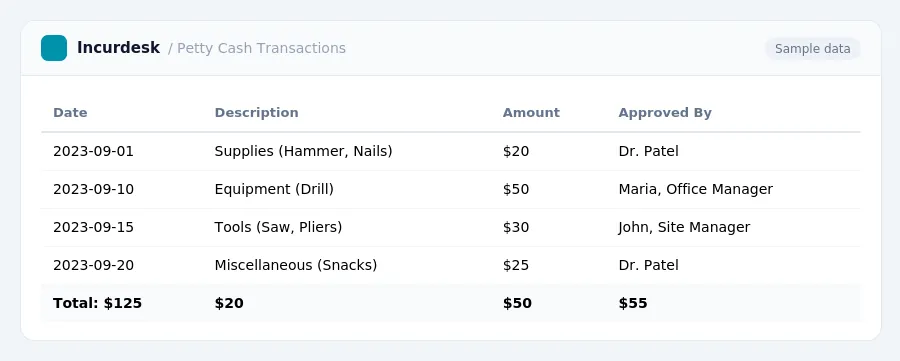
- Recording Transactions: Use a petty cash log or spreadsheet to record every withdrawal, including the date, amount, and purpose of the disbursement.
- Receipts for Every Transaction:
- Regular Reconciliation: Reconcile the petty cash fund regularly (weekly or monthly) to catch errors early and maintain accountability by comparing the physical cash and receipts to the recorded log.
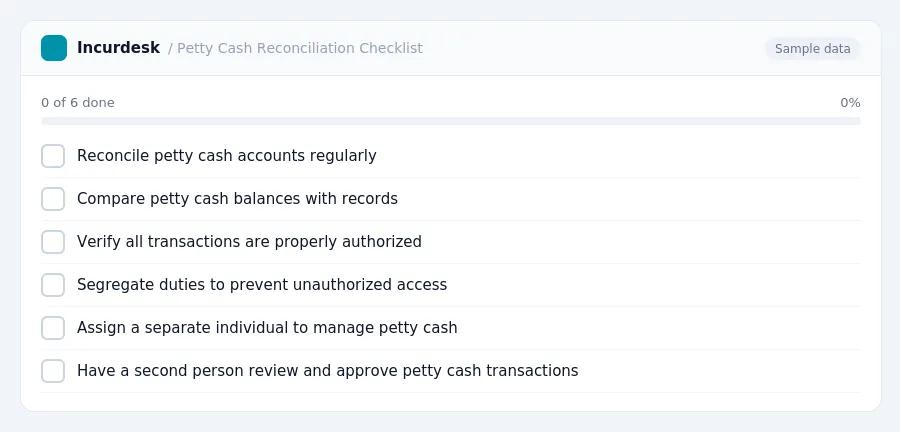
Reconciling petty cash accounts and maintaining segregation of duties are crucial to ensuring accurate record-keeping and compliance.
- Reconcile petty cash accounts regularly, ideally on a monthly basis:
- Compare petty cash balances with records of cash disbursements and receipts.
- Verify that all transactions are properly authorized and documented.
- Segregate duties to prevent unauthorized access to petty cash:
- Assign a separate individual to manage petty cash.
- Have a second person review and approve petty cash transactions.
- Use 72.5 cents per mile for the period January 1, 2026 - June 30, 2026.
- Use 76 cents per mile for the period July 1, 2026 - December 31, 2026.
- Use $329 per day for high-cost localities (October 1, 2026 - September 30, 2027).
- Document all reimbursements and maintain accurate records:
- Keep records of all petty cash transactions, including receipts and invoices.
- Store records securely and make them available for audit purposes.
Common Mistakes and Best Practices for Petty Cash Management
- Set a clear spending policy: Establish a written policy outlining the types of expenses that can be paid from petty cash, such as supplies, tools, and equipment.
- Limit transaction amounts: Ensure that each petty cash transaction does not exceed $25 to $50.
- Maintain accurate records: Keep detailed records of all petty cash transactions, including receipts, invoices, and bank statements.
- Reconcile regularly: Reconcile the petty cash fund with the bank statement on a regular basis, ideally monthly.
- Segregate duties: Ensure that more than one person is involved in handling petty cash, including the custodian and another authorized person for reconciliation.
- Document everything: Keep a record of all petty cash transactions, including the date, amount, and purpose of each expenditure.
- Monitor and adjust: Regularly review petty cash transactions to ensure that they are in line with company policies and procedures.
Keeping this simple: Incurdesk lets your team snap a photo of a receipt and fills in the details for you. It is built for small construction teams. Try it free.
Stop losing 4+ hours a week
30-day free trial · No credit card · Setup in 15 minutes