Keeping Refrigerant Purchase Records and Receipts
A practical, data-backed guide to controlling costs and automating expense workflows.
As small HVAC contractors in the US, you must maintain meticulous records for refrigerant purchases and usage to comply with federal EPA regulations. This includes tracking specific equipment, documenting technician certifications, and retaining records for a minimum of three years to avoid fines and demonstrate compliance during EPA inspections. To ensure you're meeting these requirements, consider investing in HVAC contractor expense management software that can help you accurately record and track refrigerant purchases and usage.
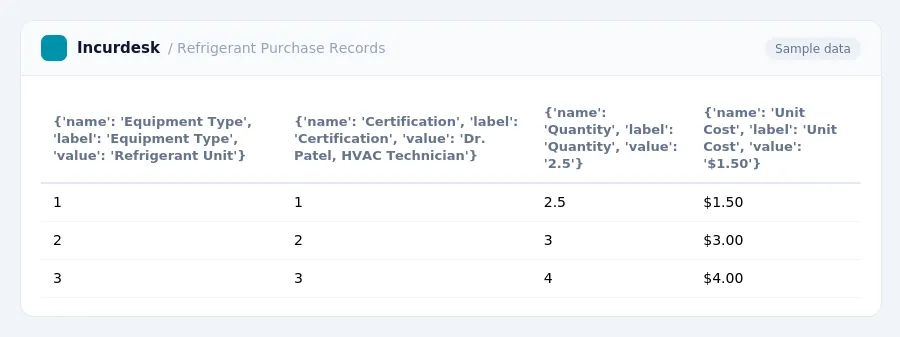
Refrigerant Purchase Records
Keeping Refrigerant Purchase Records and Receipts
As a small HVAC contractor, it's essential to maintain accurate and detailed records of refrigerant purchases and usage.
To keep records, follow these steps:
Remember, the EPA requires that you maintain detailed records of refrigerant purchases and usage to demonstrate compliance and avoid fines. By following these steps, you can ensure that your records are accurate and up-to-date, and that you're meeting the requirements of federal EPA regulations.
Regulated Refrigerant Requirements
This includes purchases of refrigerants such as R-22, R-410A, and HFCs.
To comply with these regulations, HVAC contractors and office managers must maintain detailed records for the following:
- The purchaser's name and date of sale
- The quantity of refrigerant purchased
Refrigerant sellers must also verify the buyer's certification and ensure that the records are kept for at least three years.
This includes maintenance records for refrigerant systems, as well as documentation of technician certifications and training.
Record-Keeping Requirements
This means that even small mistakes can have significant consequences.
When a certified technician buys refrigerant, the seller must keep records of the purchaser's name, date of sale, and quantity purchased, along with verification of their certification. This information is crucial for tracking the sale and ensuring compliance with regulations.
The seller must also keep records of the purchase price, quantity, and weight of the refrigerant, as well as the date and time of the sale. Additionally, the seller must keep records of the quantity of refrigerant used or stored, including the type and quantity of the refrigerant.
It is essential to note that the seller must maintain records for a minimum of three years. This means that even after the sale is complete, the seller must keep records of the purchase and usage of the refrigerant for at least three years.
To ensure compliance, it is recommended that the seller and technician keep accurate and detailed records throughout the entire process. This includes documenting any issues or concerns that arise during the sale or usage of the refrigerant.
Compliance and Record-Keeping
Keeping Refrigerant Purchase Records and Receipts
To comply with federal EPA regulations, small HVAC contractors must maintain detailed refrigerant purchase records and receipts. This is especially important for technicians disposing of appliances containing between 5 and 50 pounds of refrigerant.
For technicians, the regulations require personal records to be kept for the recovery date, type of refrigerant, monthly totals recovered, and transfer details for reclamation or destruction. These records must be accurate and complete, and must be retained for a minimum of three years.
For contractors, maintaining records is crucial for several reasons. Firstly, the EPA requires contractors to verify the amount of refrigerant recovered and reclamation or destruction, which helps to ensure compliance. Secondly, contractors must demonstrate compliance during EPA inspections, which can be stressful and costly. Finally, maintaining accurate records helps to identify potential issues and prevent fines.
This information is critical for accurate record-keeping and compliance.
In summary, contractors must keep detailed records of refrigerant purchases, including recovery dates, types of refrigerant, monthly totals recovered, and transfer details.
Record-Keeping Best Practices
The American Innovation and Manufacturing (AIM) Act, effective January 1, 2026, significantly impacts record-keeping for small HVAC contractors in the US.
For refrigerant purchases and usage, the following best practices are recommended:
- For HFC refrigerants, purchase records must include the date, quantity, and type of refrigerant purchased, as well as the location and storage information.
- Record-keeping requirements for 15 lbs or more of regulated refrigerant must be maintained for a minimum of three years.
- Calculate and record leak rates for refrigerant systems, using a leak rate calculator provided by the EPA or an approved method.
- Maintain detailed records of technician certifications, including training dates, certification levels, and expiration dates.
- Retain records for a minimum of three years, as required by the AIM Act.
- Use a standardized format for recording refrigerant purchases and usage, including labeling and dating records.
- Keep records in a secure, accessible location, such as a fireproof cabinet or digital storage.
- Ensure that records are not altered or destroyed, and that only authorized personnel have access to them.
Tax rules, limits and rates change. Confirm current figures with the IRS or your accountant before you file.
Keeping this simple: Incurdesk lets your team snap a photo of a receipt and fills in the details for you. It is built for small hvac contractor teams. Try it free.
AI expense management for finance teams and whoever keeps the books. It checks every expense against your rules, approves the routine ones and chases missing receipts for you.
Try it free for 30 days →Stop losing 4+ hours a week
30-day free trial · No credit card · Setup in 15 minutes