Landscaping and Snow Removal Cost Tracking
A practical, data-backed guide to controlling costs and automating expense workflows.
expense management for property management. For a complete overview, see our expense management guide.
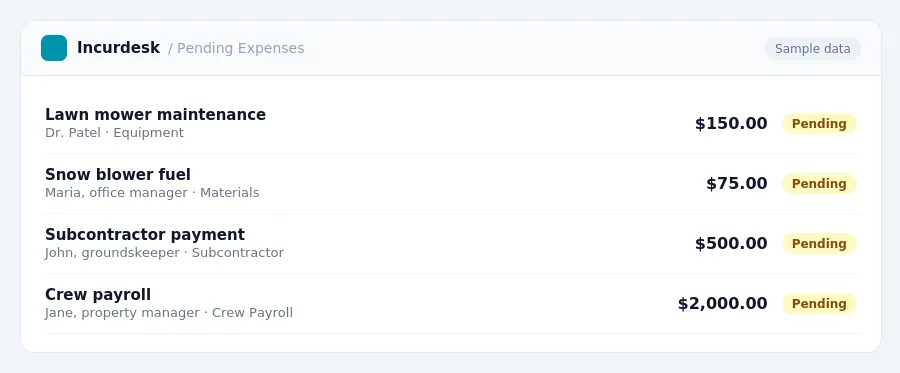
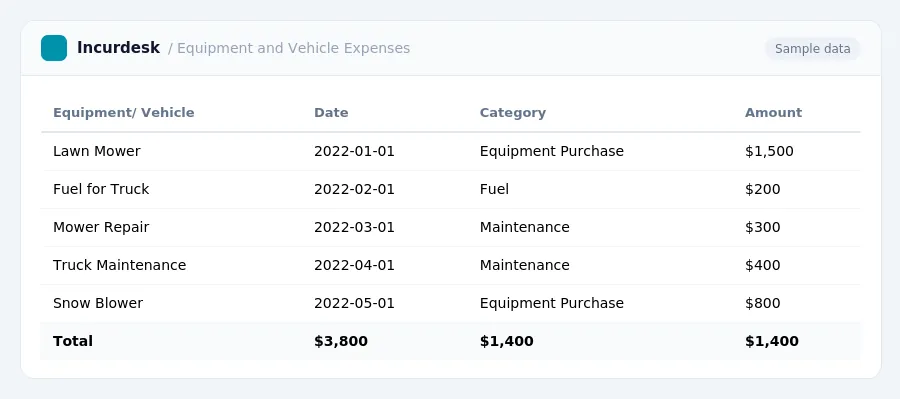
Track Equipment and Vehicle Expenses
- Keep detailed records of all equipment purchases, including receipts, invoices, and serial numbers. This will help you track the cost and useful life of each item.
- Track vehicle expenses, including fuel, maintenance, and repairs.
- Keep a log of mileage, including business and personal use.
- Be sure to separate personal and business expenses, as only business expenses can be deducted.
The rules in this guide
| Amount | Required | In Incurdesk |
|---|---|---|
| Above $75 | Itemised receipt | Checked on every expense |
| Above $250 | Written business purpose | Checked on every expense |
| Above $500 | Names of attendees | Checked on every expense |
| Above $5,000 | Senior sign-off; never auto-approved | Checked on every expense |
Each rule is checked on every expense by Incurdesk’s approval agent.
Calculate Crew Payroll and Benefits
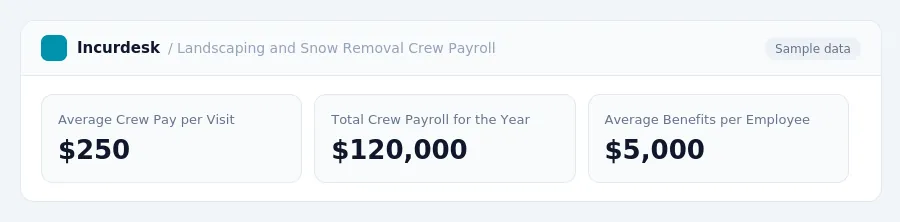
- Calculate the payroll costs for your landscaping and snow removal crew. This includes wages, salaries, and benefits. Keep in mind that the average costs for commercial snow removal can range from $100 to $500 per visit, depending on property size, snow depth, and service scope. Consider the crew's hours, including overtime, and calculate their total compensation for the year.
- Include benefits in your calculations, such as health insurance, retirement plans, and paid time off. These costs can add up quickly, so be sure to factor them into your totals.
- Keep accurate records of your crew's payroll costs, including payment dates, amounts, and benefits provided.
Be sure to review your payroll costs regularly to ensure you're accurately tracking your expenses. This will help you stay on top of your finances and avoid any potential pitfalls when it comes to tax time.
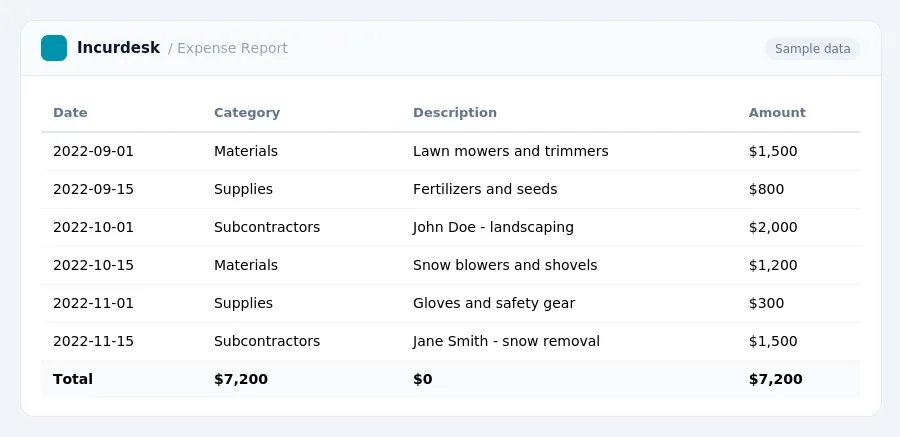
Record Materials, Supplies, and Subcontractor Payments
- Record all payments for materials, supplies, and subcontractors. Keep accurate and detailed records of every purchase, including receipts, invoices, and bank statements.
- Keep records of all materials and supplies purchased, including their cost and any applicable sales tax. This will help you calculate your total expense for materials and supplies.
- For subcontractor payments, be sure to keep records of the payment amount, the subcontractor's name and address, and the date of payment.
- Be sure to check the IRS website for any updates on tax credit and deduction deadlines.
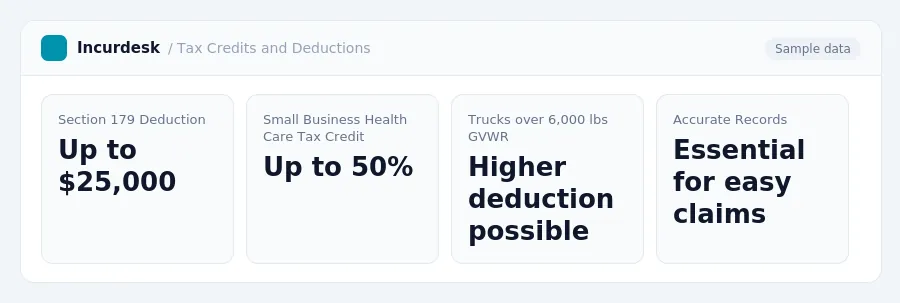
- If you're eligible for a Section 179 deduction, be sure to calculate it carefully. Trucks over 6,000 lbs GVWR may qualify for higher Section 179 deductions, but the exact amount varies and should be determined through consultation with a tax professional.
- If you're a small property management business with a small number of employees, you may be eligible for the Small Business Health Care Tax Credit.
- Make sure to keep accurate records of your tax credits and deductions, including receipts, invoices, and bank statements. This will help you to easily claim your credits and deductions on your tax return.
Keeping this simple: Incurdesk turns submitted expenses into clean expense reports. It is built for small property management teams. Try it free.
AI expense management for finance teams and whoever keeps the books. It checks every expense against your rules, approves the routine ones and chases missing receipts for you.
Try it free for 30 days →Stop losing 4+ hours a week
30-day free trial · No credit card · Setup in 15 minutes