Lead-Safe Work Supplies and Certification Expenses
A practical, data-backed guide to controlling costs and automating expense workflows.
To manage lead-safe work practices and certification expenses, small US painting contractors can start by identifying their individual needs and obligations. This certification expense can vary, but it's generally a one-time fee that can be deducted from taxes, such as the self-employment tax return. For the bigger picture, see our guide to painting contractors expense management software. For a complete overview, see our expense management guide.
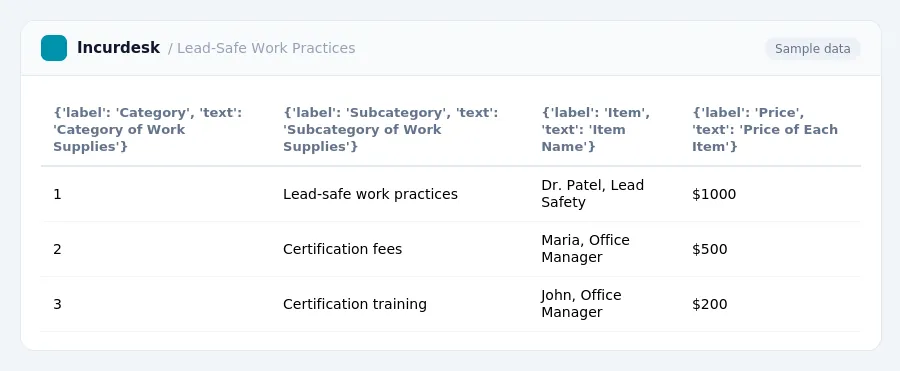
Lead-Safe Work Practices
Before starting work in target housing or child-occupied facilities, contractors must distribute the EPA pamphlet "Renovate Right: Important Lead Hazard Information for Families, Child Care Providers and Schools" to owners and occupants. This pamphlet provides important information on lead hazards and how to minimize exposure.
Contractors must also complete a lead hazard assessment to identify any potential lead hazards on the job site. This assessment should include identifying lead sources, such as old paint, lead-based paint abatement materials, and contaminated soil.
Before starting work, contractors must determine whether the renovation work will be considered incidental or primary. If it is incidental, the contractor may be exempt from lead certification requirements. However, if the renovation work is primary, the contractor must obtain lead abatement certification.
The EPA administers lead certification directly in some states, while others have EPA-authorized state programs. For example, California runs its own lead RRP program through the CDPH. Contractors should check with their state's program to determine which requirements apply to their work.
It is essential to note that contractors must comply with all applicable federal, state, and local regulations regarding lead-safe work practices.
The rules in this guide
| Amount | Required | In Incurdesk |
|---|---|---|
| Above $75 | Itemised receipt | Checked on every expense |
| Above $250 | Written business purpose | Checked on every expense |
| Above $500 | Names of attendees | Checked on every expense |
| Above $2,500 | Senior sign-off; never auto-approved | Checked on every expense |
Each rule is checked on every expense by Incurdesk’s approval agent.
Certification Requirements and Costs
Lead-Safe Work Practices
As a small US painting contractor, it's essential to follow lead-safe work practices to ensure a safe working environment for everyone involved. Here are some key points to keep in mind:
- Lead-contaminated materials are classified as hazardous waste and require special handling, adding $200 to $800 to most projects.
- When using lead-based paints, you must follow the EPA's guidelines for handling and disposing of these materials.
- The EPA recommends that contractors store lead-based paints in a well-ventilated area, away from children and pets.
- You must also follow the EPA's guidelines for labeling and marking containers with the type of paint and its hazard class.
- When cleaning up lead-based paint, wear personal protective equipment (PPE) such as gloves, a mask, and safety glasses.
- Make sure to dispose of lead-based paint and materials in accordance with local regulations and guidelines.
It's also important to note that the EPA recommends that contractors who use lead-based paints have them tested for lead content and that the results are reported to the EPA.
Here are some key points to consider:
- You can deduct the cost of lead-safe work practice training, such as the EPA's Lead-Safe Training Program.
- The cost of lead-safe work practice materials, such as labels and containers, can be deducted as an asset.
Common Pitfalls to Avoid
When implementing lead-safe work practices, there are several common pitfalls to avoid:
- Don't assume that a paint product is lead-free just because it says it is.
- Don't use lead-based paint on surfaces that are not intended for painting.
Certification Expenses and Tax Deductions
Lead-Safe Work Practices
These practices are designed to ensure the safety of your employees, customers, and the environment.
When hiring contractors or subcontractors, ensure they are certified by the Environmental Protection Agency (EPA) as lead-safe work contractors. This certification typically requires passing a professional lead inspection, which can cost between $300 and $700.
To verify a contractor's certification, you can check the EPA's website or contact your local EPA office. You can also ask potential contractors to provide proof of certification, such as a certificate of completion from the EPA.
In addition to EPA certification, always supervise workers when they are using lead-based paints or materials. Make sure they wear personal protective equipment (PPE), including gloves, masks, and eye protection.
When purchasing lead-safe equipment, consider the following:
- Look for products specifically labeled as "lead-safe" or "lead-free."
- Check the manufacturer's certification or compliance with EPA regulations.
- Verify the product's lead content and ensure it meets the EPA's standards.
If you're unsure about any aspect of lead-safe work practices or certification, consult with a qualified professional, such as an EPA-certified lead inspector or a qualified contractor.
Common Pitfalls to Avoid
- Not documenting lead-based paint hazards Keep a log of all lead-based paint repairs, replacements, and removals.
- Not providing lead-safe training: Not providing employees with lead-safe training can lead to accidents and fines. Ensure all employees are trained on proper use of lead-safe equipment and procedures.
- Not using lead-safe materials Always check the product label for lead content and use lead-safe alternatives when possible.
- Not maintaining records of lead-safe work Keep detailed records of all lead-safe work performed, including permits, inspections, and employee training.
- Not reporting lead-based paint abatement Ensure you report all lead-based paint abatement work, including the type of abatement and the amount of lead removed.
- Not using a lead-safe abatement plan Work with a qualified professional to develop a lead-safe abatement plan for each project.
- Not obtaining necessary permits Ensure you obtain all required permits for lead-based paint abatement and other hazardous activities.
- Not following EPA regulations Familiarize yourself with EPA regulations and guidelines for lead-safe work practices.
EPA Regulations and Updates
The United States Environmental Protection Agency (EPA) has implemented regulations to protect the health and safety of workers, clients, and the general public from lead exposure. As a small painting contractor, it is essential to understand and comply with these regulations to ensure a safe working environment.
In California, the California Department of Pesticide Regulation (CDPR) manages the Lead-Based Paint Renovation, Repair, and Painting (RRP) program. To participate in the program, workers and firms must be certified. The certification process involves training, a background check, and a lead-safe work practice (LSWP) training course.
To obtain certification, workers must complete a LSWP training course approved by the California Department of Pesticide Regulation (CDPR). The training covers topics such as lead hazards, LSWP procedures, and risk assessment. Workers must also complete a background check and provide proof of completion of the training course.
The EPA requires that firms be certified to participate in the RRP program. Firms must obtain a Lead-Safe Certification (LSC) from the California Department of Pesticide Regulation (CDPR). To obtain an LSC, firms must complete a lead-safe work practice (LSWP) training course approved by the CDPR.
The EPA sets a deadline of January 1, 2025, for firms to obtain an LSC. Firms must provide proof of certification to clients who require lead-safe work practices.
Firms must also comply with other regulations, including those related to lead-safe storage and disposal of lead-containing materials. It is essential to consult with the California Department of Pesticide Regulation (CDPR) and the EPA to ensure compliance with all regulations.
Tax rules, limits and rates change. Confirm current figures with the IRS or your accountant before you file.
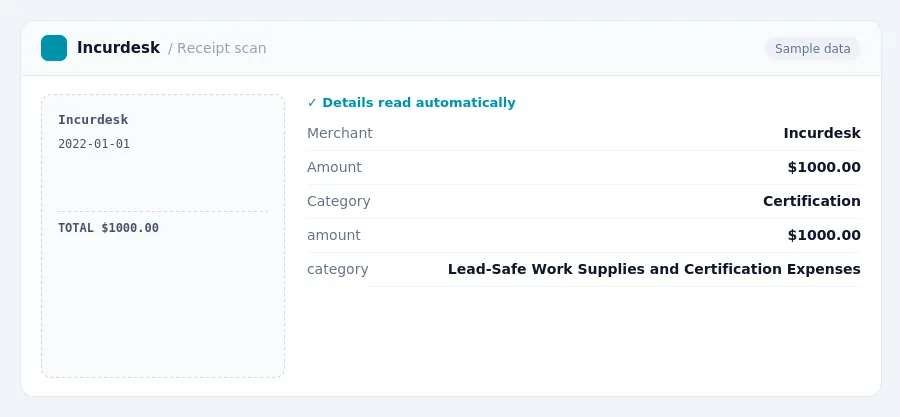
Keeping this simple: Incurdesk keeps receipts and approvals together, so you know exactly what to reimburse. It is built for small painting contractor teams. Try it free.
AI expense management for finance teams and whoever keeps the books. It checks every expense against your rules, approves the routine ones and chases missing receipts for you.
Try it free for 30 days →Stop losing 4+ hours a week
30-day free trial · No credit card · Setup in 15 minutes