Linen, Uniform and Laundry Costs: What to Expect
A practical, data-backed guide to controlling costs and automating expense workflows.
Linen, uniform, and laundry costs for small restaurant businesses can vary depending on factors such as location, number of employees, and type of establishment. The cost of outsourcing linen and uniform services can range from $5 to $15 per employee per week, while in-house laundry services can be more expensive, with a typical cost per employee per week ranging from $10 to $25. For the bigger picture, see our guide to restaurants expense management for under $10/user (2026).
Regulations and Tax Implications
As a small restaurant business, it's essential to understand the regulations and tax implications related to maintaining linens, uniforms, and laundry services. Here are some key points to consider:
- The Fair Labor Standards Act (FLSA) sets minimum wage and overtime requirements, which may apply to laundry and uniform expenses.
- The Uniform Commercial Code (UCC) governs the sale and rental of linens and uniforms, and provides rules for pricing and payment.
- Restaurants are subject to local and state regulations regarding the use of uniforms, linens, and laundry services.
It's essential to consult with a tax professional or accountant to ensure compliance with all relevant regulations and tax laws. Additionally, restaurants should regularly review and update their policies and procedures to ensure they are in compliance with all applicable regulations.
Keeping this simple: Incurdesk lets your team snap a photo of a receipt and fills in the details for you. It is built for small restaurants teams. Try it free.
Cost Savings through Outsourcing
When it comes to managing linens, uniforms, and laundry services, small restaurant businesses can benefit from outsourcing these tasks to save time, money, and effort. By outsourcing, you can reduce your costs and focus on running your restaurant.
The cost of maintaining linens, uniforms, and laundry can vary depending on the size of your business. Small businesses often need to invest in commercial-grade washers and dryers, which can cost between $3,000 and $8,000 per unit, with a minimum of two units required. Installation, plumbing, electrical work, and venting can add an additional $2,000 to $5,000. This can be a significant upfront cost, but it can pay off in the long run.
Another important consideration is the cost of laundry services. (CONUS). These rates vary by location, so it's essential to check the rates for your area.
When outsourcing laundry services, you can save money by having a reliable and efficient service provider handle these tasks. Simply compare rates from different providers and choose the best option for your business.
Costs of Maintaining Linens, Uniforms, and Laundry
Linen, Uniform and Laundry Costs: What to Expect
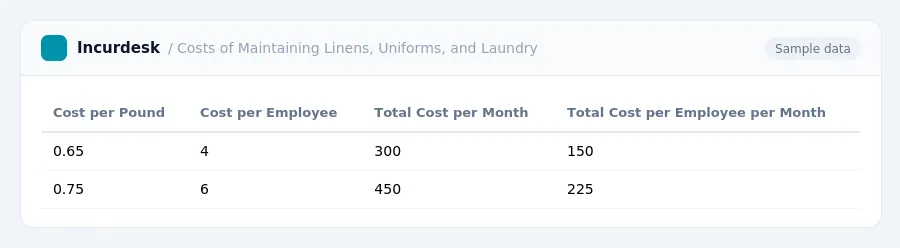
Commercial laundry services typically charge between $0.65 to $1.50 per pound, with most businesses falling in the $0.75 to $1.10 range when pickup and delivery are included. This rate covers labor, sorting, washing, drying, folding, packaging, utilities, and professional supplies.
Uniform programs can cost $4–$15 per employee per week. Table linens and kitchen towels for a mid-size restaurant might cost $200–$600 per week.
Flat monthly rates for laundry services can range from $300 to $1,500, often including pickup and delivery.
Monthly utility costs (water, gas, electricity) for in-house laundry can range from $150–$400.
Labor for running laundry in-house, estimated at $18/hour for 20 hours weekly, can exceed $18,000 annually.
Hidden Costs of In-House Operations
A three-par linen rotation can roughly double the life of each cloth, significantly reducing replacement costs. By rotating linens every three to four weeks, you can extend their lifespan and minimize the need for frequent replacements. This approach can also help to reduce the overall cost of maintaining linens.
In addition to the cost savings of linen rotation, other hidden costs of in-house operations include:
- Cleaning and maintenance costs for equipment, such as dryers and irons
- Supplies, such as fabric softener and bleach
- Chemicals, such as detergents and sanitizers
- Labor costs for staff to perform tasks such as laundry and cleaning
- Energy costs for powering equipment and supplies
These costs can add up quickly, making it essential to carefully manage your in-house operations to ensure that they are aligned with your business goals and budget.
Additional Considerations for Small Restaurants
When it comes to maintaining clean linens, uniforms, and managing laundry services, it's essential to consider the hidden costs of in-house operations. While outsourcing may seem like a cost-effective option, it's crucial to understand the potential drawbacks.
One significant hidden cost is the loss of labor flexibility. When you outsource linen and laundry services, you may not have control over the workforce, which can lead to higher labor costs. For example, if you need to replace a staff member, you may need to pay for training, recruitment, and benefits, which can add up quickly.
Additionally, in-house operations may require significant upfront investments in equipment, training, and technology. These costs can be a significant burden, especially for small restaurants with limited budgets.
It's also worth considering the potential risks associated with outsourcing. If you don't have a reliable laundry service in place, you may be left with unsanitary linens and uniforms, which can harm your business and reputation.
Finally, it's essential to ensure compliance with regulations and tax implications. Some states and localities have laws requiring restaurants to maintain certain standards for laundry and linen services, which can be costly and time-consuming to meet.
Ultimately, it's essential to weigh the pros and cons of in-house operations and consider the potential costs and benefits of outsourcing linen and laundry services. By doing so, you can make informed decisions that balance cost-effectiveness with maintaining a professional appearance and operational efficiency.
Tax rules, limits and rates change. Confirm current figures with the IRS or your accountant before you file.
AI expense management for finance teams and whoever keeps the books. It checks every expense against your rules, approves the routine ones and chases missing receipts for you.
Try it free for 30 days →Stop losing 4+ hours a week
30-day free trial · No credit card · Setup in 15 minutes