
4.2h
Lost to approvals/wk
$10,900
Annual savings
96%
Compliance rate
Managing Contractor Receipts and Invoices as a Property Manager
A practical, data-backed guide to controlling costs and automating expense workflows.
Start scanning receipts now
and easily manage employee travel and expenses
Effective real estate expense management for under $10/user (2026) can help streamline your contractor payment process, ensuring you're meeting your reporting obligations and minimizing errors. For a complete overview, see our expense management guide.
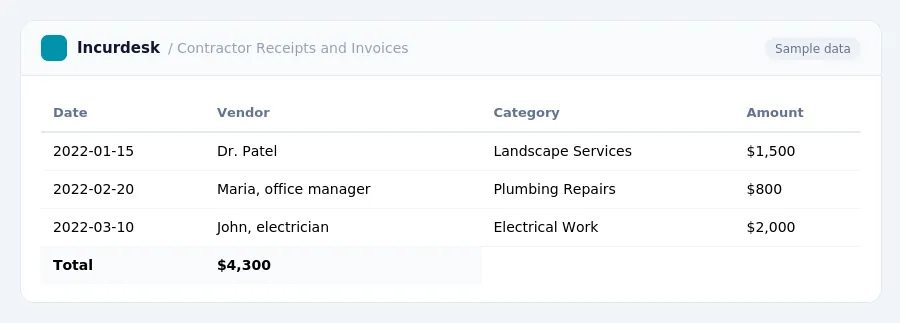
- The reporting threshold for these forms has increased to $2,000 per recipient per calendar year for payments made in 2026. This means you'll need to report payments of $2,000 or more made to contractors during the year.
- Starting in 2027, the $2,000 reporting threshold will be indexed for inflation in $100 increments, so be sure to check for updates on this threshold in future years.
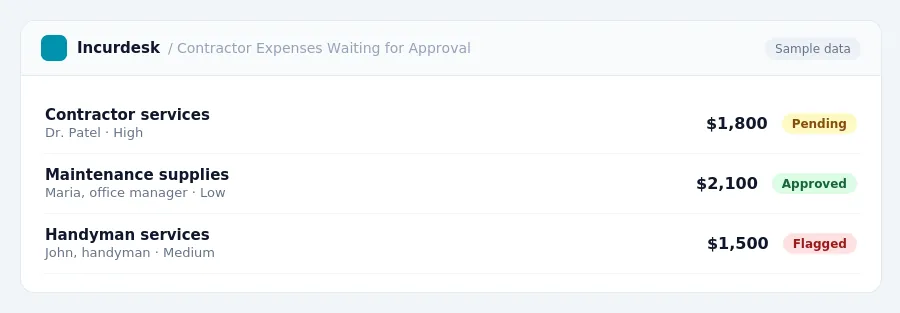
Contractor Receipts as a Percentage of Revenue
FREE CALCULATOR
Benchmark: IRS Form 1099-NEC and 1099-MISC reporting threshold
Classify Workers as Independent Contractors or Employees
- Classify workers as independent contractors or employees based on their level of control and responsibility. Generally, an independent contractor runs their own business, controls their work methods, and handles their own taxes.
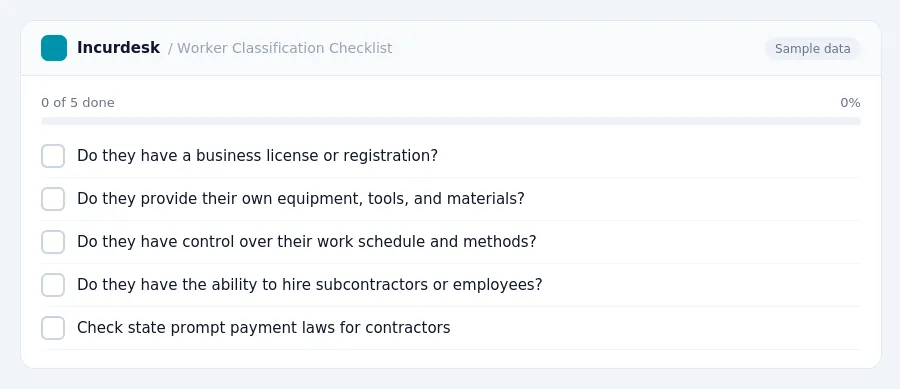
- Consider the following factors when determining worker classification:
- Do they have a business license or registration?
- Do they provide their own equipment, tools, and materials?
- Do they have control over their work schedule and methods?
- Do they have the ability to hire subcontractors or employees?
- Check state prompt payment laws for contractors, which vary significantly and may require payment within a certain timeframe (e.g. 30 days) for independent contractors.
-
- Behavioral control: does the worker have control over how the work is done?
- Financial control: does the worker have control over the business aspects of the work?
- Relationship: is the worker an employee or independent contractor?
- Keep accurate records of worker classification decisions, including documentation and evidence supporting the classification.
Collect and Verify Form W-9 from Contractors
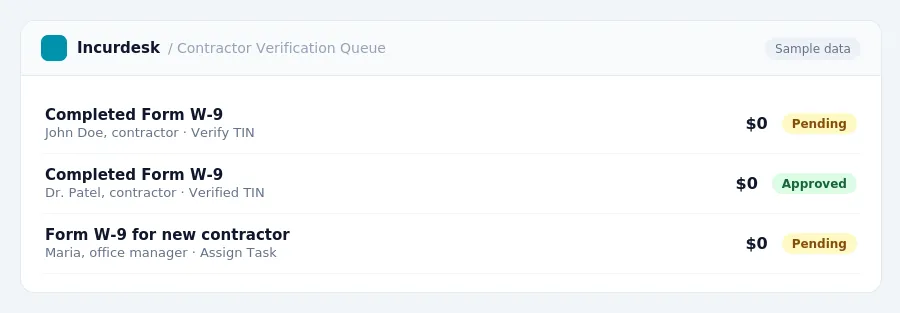
- Collect a completed Form W-9 from each contractor before the first payment. This form is required to obtain the contractor's taxpayer identification number (TIN) and verify their name and address.
- Verify the contractor's TIN on the Form W-9 to ensure it is accurate. A TIN is a 9-digit number, typically an Employer Identification Number (EIN) or a Social Security Number (SSN).
- Retain a copy of the completed Form W-9 and any supporting documentation, such as the contractor's contract or agreement, in the contractor's file.
- Update your contractor files to reflect the verified TIN and any other required information.
Make sure to keep all contractor files, including Form W-9, in a secure and easily accessible location, such as a digital storage system or a locked filing cabinet.
- Note that this deadline does not allow for extensions.
- This is a mandatory requirement.
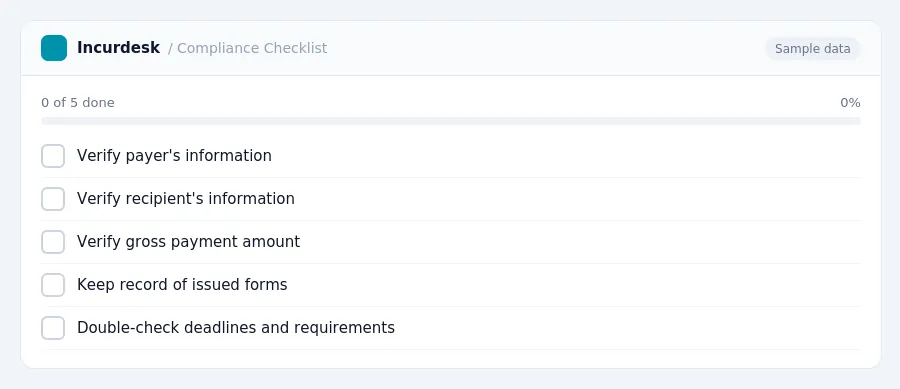
- Double-check the deadlines and requirements for your specific business.
- Verify that all required information is accurate and complete before submitting the forms.
- Keep a record of all issued forms, including the date and method of delivery, as proof of compliance.
- Businesses must use the following information to complete the forms:
- Payer's name, address, and taxpayer identification number
- Recipient's name, address, and taxpayer identification number
- Gross payment amount
Maintain Accurate Records and Comply with State Regulations
- Keep all Form W-9 documents, contractor licenses, and other relevant documents in a secure and easily accessible location.
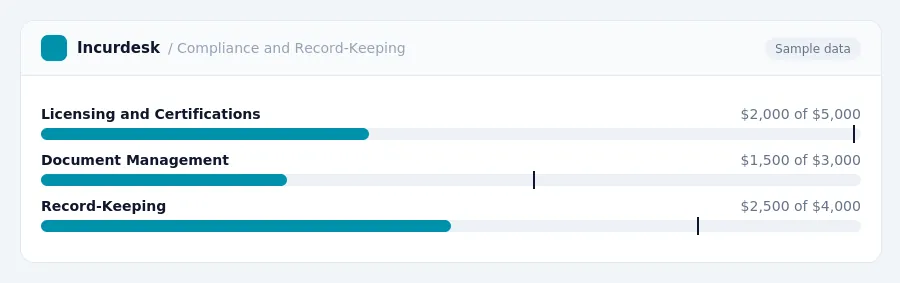
- Verify that all contractors have the necessary licenses and certifications to work in your state and local jurisdiction. Requirements vary by state and local jurisdiction, so check with your state's licensing board or local government to confirm the necessary licenses and certifications.
- Maintain accurate records of all payments made to contractors, including the date, amount, and purpose of each payment.
- Consider implementing a centralized document management system to keep all records organized and easily accessible. This can help you stay on top of retention periods, licensing requirements, and other regulatory obligations.
Keeping this simple: Incurdesk lets your team snap a photo of a receipt and fills in the details for you. It is built for small real estate teams. Try it free.
Frequently Asked Questions
This includes payments to contractors, freelancers, and other independent workers.
Factors include control over work, payment method, and benefits provided.
How long should I keep contractor invoices and receipts?
You should keep contractor invoices and receipts for at least three years from the date of the payment. Keep these documents organized and easily accessible in case of an audit or other tax-related inquiry.
Stop losing 4+ hours a week
30-day free trial · No credit card · Setup in 15 minutes