
Managing Permit and Inspection Fee Receipts
A practical, data-backed guide to controlling costs and automating expense workflows.
Managing electrical permit and inspection fees is a crucial aspect of electrical contractor expense management. To effectively manage these costs, electrical contractors should use electrical contractor expense management software to track and record permit and inspection fees, ensuring accurate billing and timely compliance with local regulations.
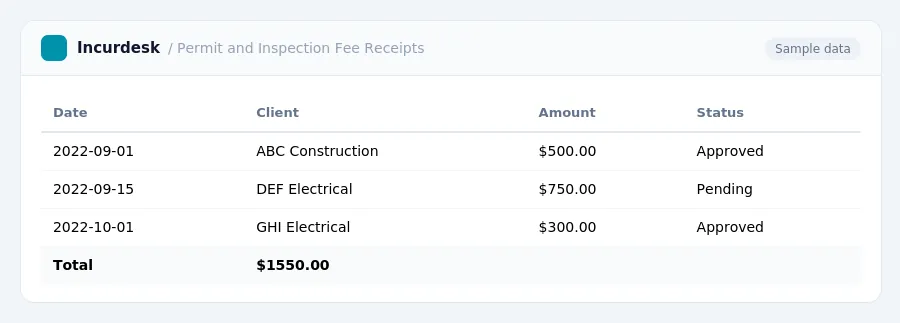
Determine When Permits Are Required
- Check with local authorities to determine when permits are required for your electrical work. This can vary by state, city, or county, so be sure to research the specific regulations in your area. In some states, such as Minnesota, Washington, Colorado, and Tennessee, a state agency handles permits where no local program exists.
- Understand the types of permits required for your work. For example, you may need a building permit, electrical permit, or other specialized permits.
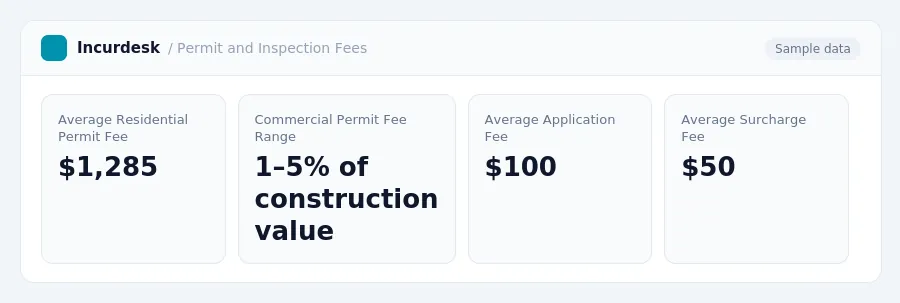
- Know the fees associated with permits. For most building permits across the U.S. for typical residential work, costs range from $530 to $3,040. Residential electrical permits typically range from $50 to $350. Commercial permits can cost 1–5% of the total construction value, making them more expensive than residential permits.
- Check for any additional fees, such as application fees or surcharge fees. For example, in Minnesota, a $25 permit application fee is required on each electrical permit, along with a $1 surcharge fee.
- Verify the minimum inspection fee for your area. In Minnesota, the minimum inspection fee is $55 per trip.
- Keep records of permits issued, including the permit number, fee paid, and inspection dates. This will help you stay organized and ensure compliance with regulations.
Consult local authorities or your state's permitting agency for specific information on permits required for your work. You can also check with your local government's website for information on permit fees and requirements.
Calculate Permit Fees Accurately
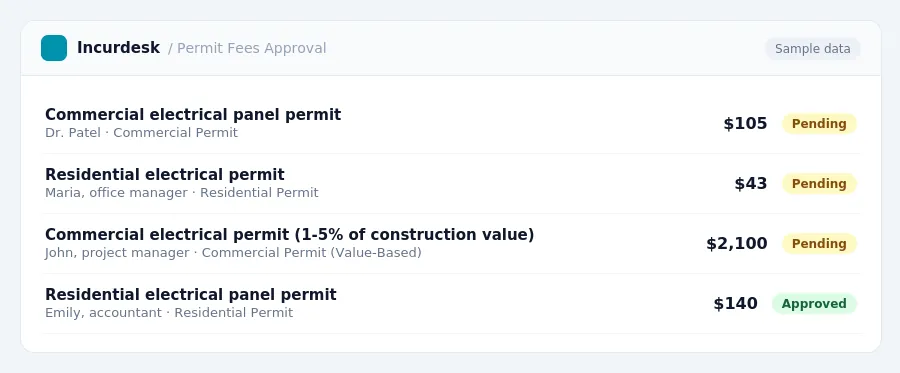
- Understand how permit fees are calculated in your jurisdiction. Fees can be flat, a percentage of the job's assessed valuation, a rate per square foot, or based on the number of outlets, circuits, or devices. For example, the average electrical panel permit fee is $140, with a median of $105, across 44 U.S. cities in 26 states. Fees can range from $43 in Denver, CO, to $450 in San Francisco, CA.
- When calculating permit fees, consider the specific requirements of your job. If you're working on a commercial project, commercial permits are generally more expensive than residential permits, often costing 1–5% of the total construction value due to increased complexity and review requirements.
- Keep track of permit fees as a separate line item in your quotes and invoices. Permit fees are considered a cost of the job, not a favor, and should be accounted for accordingly. You can bill permit fees as a pass-through at cost, with a markup similar to materials, or build them into a flat rate.
- Be aware of any local regulations that may affect your permit fees. For example, municipalities in Texas cannot collect fees from licensed electricians for work performed there, but they can collect building permit fees.
- Consider listing permits as a separate line item on your invoices to ensure accurate tracking and billing. This will also help you to identify and address any discrepancies or overcharges.
Quote Permits to Clients Effectively
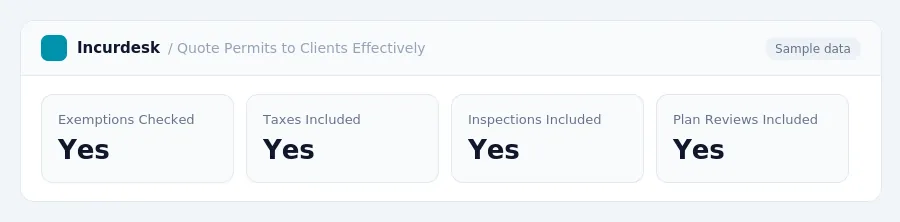
When quoting permits to clients, it's essential to ensure you're including all necessary fees accurately. Start by checking if your project qualifies for any permit exemptions, such as certain residential projects under $7,500 in your area. In Florida, inspection fees may no longer be assessed based on project valuation, so be sure to check with local authorities for the most up-to-date information.
Provide clients with a clear breakdown of permit fees, including any applicable taxes or fees. Be sure to specify what's included in the permit fee, such as inspections, plan reviews, and permits themselves. You may also want to provide clients with an estimate of the total cost, including any additional fees that may be incurred during the project.
When quoting permit fees, it's a good idea to provide clients with a few different options, such as a flat fee or a percentage-based fee. This will give clients a better understanding of what they can expect to pay and help you avoid any misunderstandings down the line.
Here are some steps to follow when quoting permit fees:
- Check for permit exemptions
- Verify fee structures: Check with local authorities to see if inspection fees are still assessed based on project valuation, and what other fees may be applicable.
- Provide a clear breakdown
- Estimate total cost
Obtain and Track Permits Efficiently
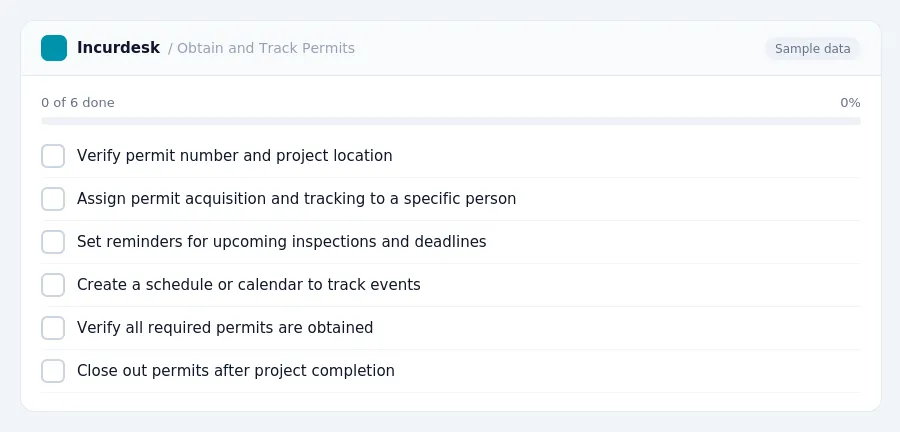
- Keep accurate records of all permits issued for your projects. This includes the permit number, project location, and the date the permit was issued. Create a centralized system, such as a spreadsheet or a database, to track this information.
- Establish a process for obtaining and tracking permits in a timely manner. This may involve designating a specific person within your company to handle permit acquisition and tracking.
- Set reminders for upcoming inspections and deadlines to ensure compliance. Create a schedule or calendar to track these events.
- Use a checklist to ensure all required permits are obtained before starting work on a project. This includes electrical permits, as well as any necessary building or zoning permits.
- Verify that all permits are properly closed out after a project is complete. This may involve obtaining a final inspection report or certificate of occupancy.
Panel replacements and service upgrades almost universally require an electrical permit. If you're unsure whether a permit is required, check with your local electrical authority or building department.
Manage Permit Fees for Profitability
- Review your business's historical data to identify trends and patterns in permit fees. Analyze the fees charged for different types of permits, such as residential and commercial, and the costs associated with obtaining and processing them. This will help you understand your business's permit fee expenses and identify areas for cost reduction.
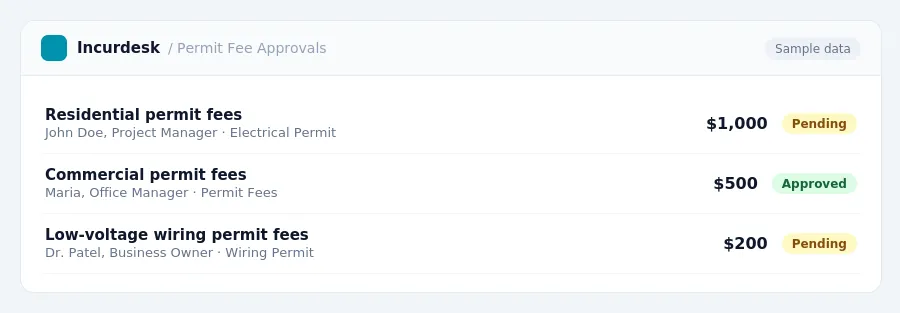
- Consider implementing a permit fee tracking system to monitor and record all permit-related expenses. This can include creating a spreadsheet or using a software solution to track permit fees, payment deadlines, and compliance requirements.
- Set aside a portion of your business's budget to cover permit fees, and prioritize high-priority projects that require permits. This will help you manage your cash flow and ensure that you have sufficient funds to cover permit fees.
- Take advantage of exemptions and waivers for low-voltage wiring under 30V and like-for-like replacements. These projects are typically exempt from electrical permit requirements, which can save you money on permit fees.
- Consider bundling permit fees into the overall project cost and passing them on to clients.
Keeping this simple: Incurdesk lets your team snap a photo of a receipt and fills in the details for you. It is built for small electrical contractor teams. Try it free.
Stop losing 4+ hours a week
30-day free trial · No credit card · Setup in 15 minutes