
Managing Receipts from Orthodontic Supply Vendors
A practical, data-backed guide to controlling costs and automating expense workflows.
As an owner or office manager at a small orthodontic practice, managing receipts from orthodontic supply vendors is crucial for tax purposes. To ensure you're taking advantage of deductible expenses, it's essential to keep accurate records and avoid common mistakes such as neglecting receipts and misclassifying expenses. Utilizing orthodontic practices expense management software can also help streamline your record-keeping process.
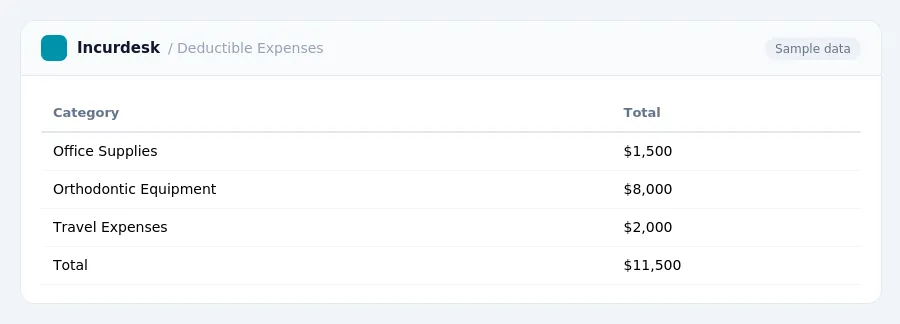
Categorize Receipts for Deductible Expenses
- Keep track of receipts for all purchases made from orthodontic supply vendors, including routine clinical and office supplies, equipment, and other business expenses. These expenses are generally fully deductible as ordinary and necessary business expenses in the year they are paid or incurred for the 2026 tax year. Be sure to obtain itemized receipts that list individual products or services, as these are preferred for substantiation over payment slips alone.
- Separate business and personal expenses by categorizing receipts into different groups, such as supplies, equipment, and other expenses. This will make it easier to identify and claim deductible expenses on your tax return.
- For equipment purchases, ensure that the equipment will be used for business more than 50% of the time and is placed in service by December 31, 2026, to qualify for the Section 179 deduction in the current tax year.
- Store receipts and invoices in a secure location, both physically and digitally, to ensure they are easily accessible for tax purposes and to meet 1099-NEC reporting requirements.
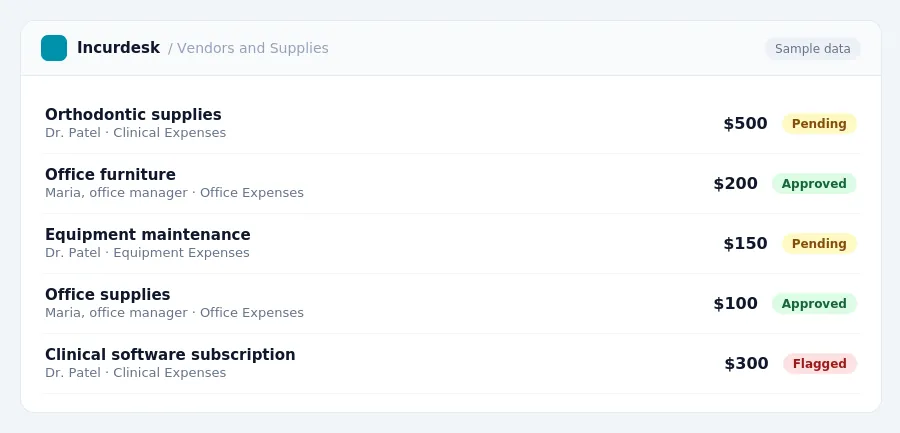
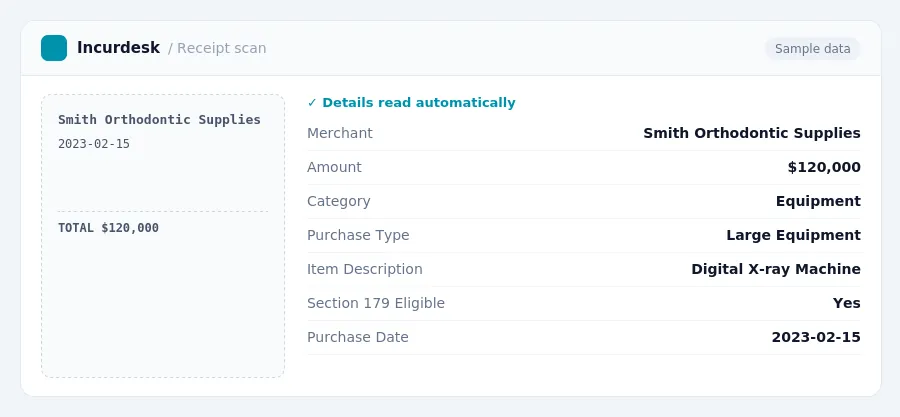
Track Large Equipment Purchases for Section 179 and Bonus Depreciation
- Identify large equipment purchases that qualify for Section 179 and bonus depreciation. Larger items that provide long-term value are typically treated as equipment and deducted through these provisions.
- Determine if the equipment meets the qualifying criteria.
- Calculate the Section 179 deduction amount. If the equipment purchase qualifies, you can deduct the full purchase price in the year it's bought, up to the Section 179 limit of $2,560,000 for 2026.
- Consider bonus depreciation for the remaining equipment cost. If the equipment purchase exceeds the Section 179 limit, you may be able to claim bonus depreciation for the remaining cost. However, the bonus depreciation rate and rules may vary, so check with the IRS for specific guidance.
- Document the equipment purchase and Section 179/bonus depreciation claim. Keep accurate records of the purchase, including receipts, invoices, and any relevant documentation, to support your tax claim.
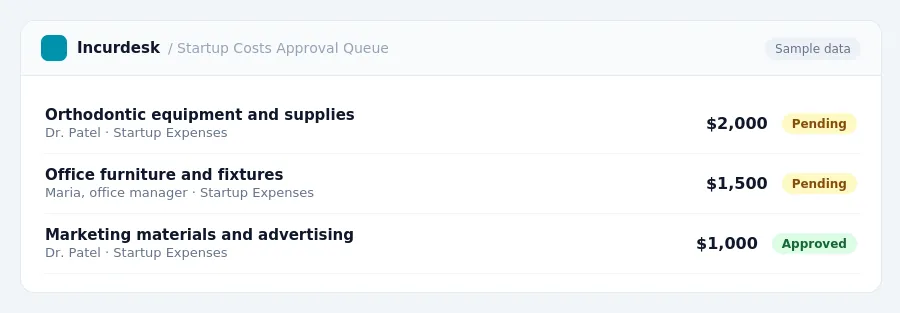
Claim Startup Costs and Organizational Expenses
- Review the startup costs for your orthodontic practice to determine if you can claim an immediate deduction. If your business launched in 2026, you may be eligible for an immediate deduction of up to $5,000 in startup costs, in addition to $5,000 in organizational costs, for a total potential write-off of $10,000.
- Keep in mind that the immediate deduction for startup costs phases out dollar-for-dollar once total startup costs exceed $50,000. If you have startup costs above this amount, you can still claim an immediate deduction for the first $5,000, but the excess will need to be amortized over 180 months (15 years).
- Make sure to keep accurate records of your startup costs, including receipts, invoices, and bank statements. This will help you to support your claim for the immediate deduction and ensure that you are in compliance with IRS regulations.
- Check if any equipment you purchased for your practice qualifies for the Section 179 deduction.
- Calculate the amount of startup costs that you can claim as an immediate deduction.
Record Vehicle Expenses and Business Meals
- Record vehicle expenses accurately by keeping a log or spreadsheet to track business miles driven, including the date, mileage, and business purpose of each trip. This will help you calculate the total business miles driven for the year.
- You can use a mileage log or spreadsheet to track your business miles and calculate the total.
- Keep receipts for gas, maintenance, insurance, and repairs, as these are all deductible expenses. Make sure to include the date, amount, and business purpose of each expense.
- Keep records of all vehicle expenses, including gas, maintenance, insurance, repairs, and meals, for at least three years in case of an audit.
For example, if you drive 20,000 business miles in 2026, using the standard mileage rate of 72.5 cents per mile for January 1–June 30, 2026, and 76 cents per mile from July 1, 2026, your total business mileage deduction would be:
Remember to keep accurate records of your vehicle expenses and business meals, as these can be complex and time-consuming to track. Consult the IRS website or a tax professional for more information on vehicle expenses and business meals.
Maintain Accurate Receipts and Invoices for 1099-NEC Reporting
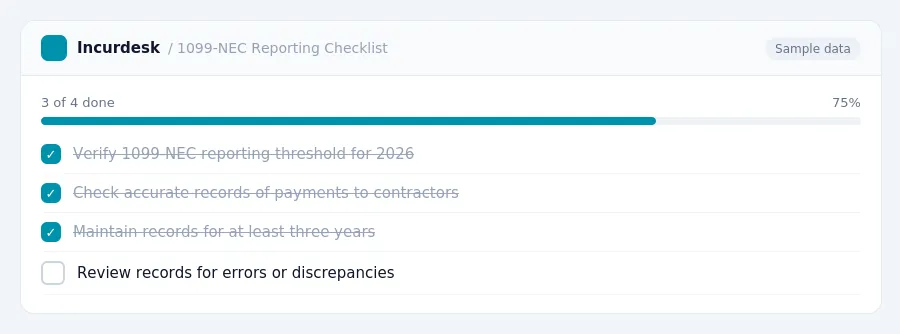
- Verify the 1099-NEC reporting threshold for contractors paid in 2026. The threshold was $2,000 or more during 2026, so any contractor paid less than this amount does not require a 1099-NEC form. Note that the threshold was $600 or more for 2025 payments, but it may vary, so check for the current year's requirements.
- Keep accurate records of payments to contractors, including receipts, invoices, canceled checks, and credit card statements. Maintain these records for at least three years, in case of an audit or dispute.
- Review your records to ensure that you have issued a 1099-NEC form to any contractor who was paid $2,000 or more during 2026. You must report these payments to the IRS and provide a copy to the contractor by January 31, 2027.
- Check your records for any payments made to contractors that may be subject to backup withholding.
- Review your records for any errors or discrepancies in 1099-NEC forms issued in previous years.
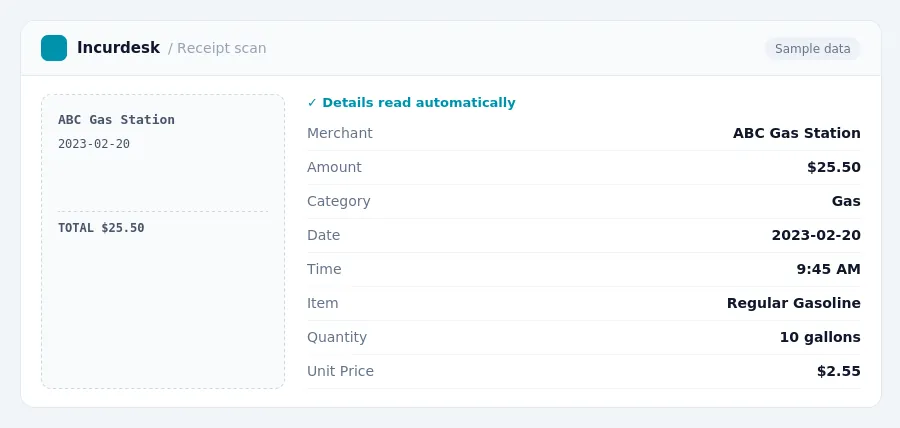
Keeping this simple: Incurdesk lets your team snap a photo of a receipt and fills in the details for you. It is built for small orthodontic practice teams. Try it free.
Stop losing 4+ hours a week
30-day free trial · No credit card · Setup in 15 minutes