
Museum Store and Café Expense Tracking
A practical, data-backed guide to controlling costs and automating expense workflows.
Accurately tracking expenses for your museum store and café is essential to understand profitability, manage inventory, ensure compliance with tax regulations, and make informed business decisions. To achieve this, consider utilizing small museums or historical societies expense management software to streamline your record-keeping process. By doing so, you can ensure that all costs associated with these operations, from inventory purchases to operational overhead, are meticulously recorded and easily accessible for analysis.
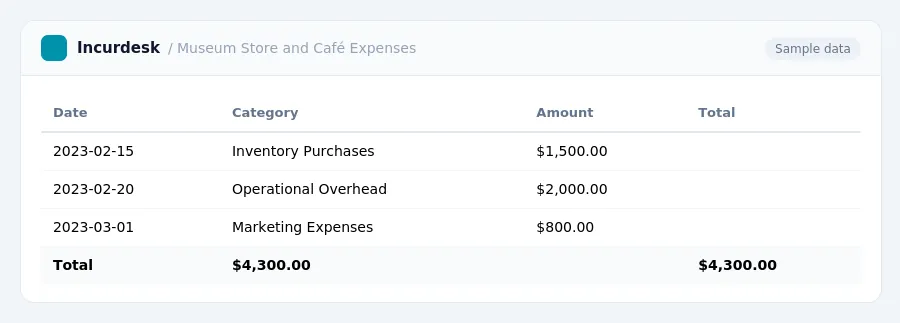
Tracking Expenses for Museum Store Inventory
Accurately tracking expenses for your museum store inventory is crucial to understanding profitability and managing stock levels.
When tracking expenses, consider the types of items you're selling. Profits from sales of items not substantially related to your museum's mission, such as jewelry, may be subject to Unrelated Business Income Tax (UBIT). To comply with tax regulations, use the accrual basis of accounting, which recognizes revenue when earned and expenses when incurred, regardless of cash flow. This is the only Generally Accepted Accounting Principles (GAAP)-compliant approach.
To get started, set up a system for tracking inventory purchases, including the date, item description, quantity, and cost. Consider using a spreadsheet or other tool to make it easier to manage and analyze your data.
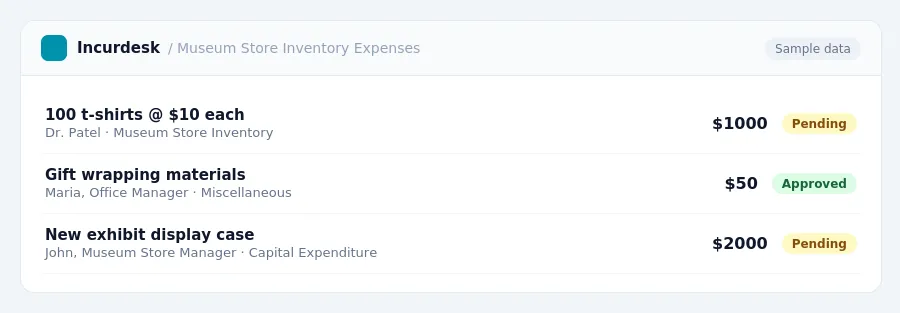
For example, if you purchase 100 t-shirts for $10 each, you would record the following information:
By accurately tracking your expenses and maintaining good records, you can ensure compliance with tax regulations and make informed business decisions about your museum store inventory.
Managing Operational Overhead Costs
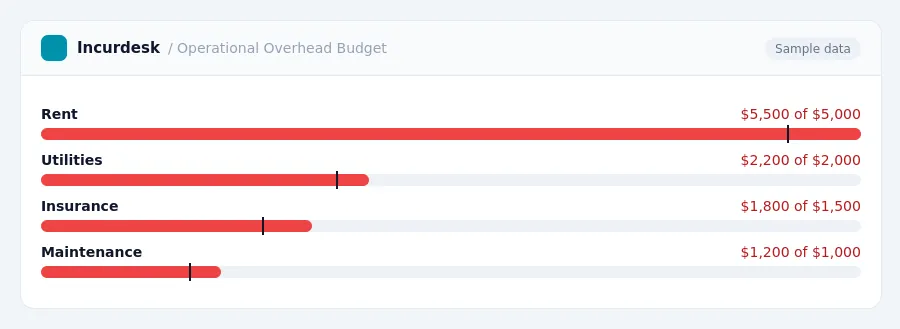
Operational overhead costs, such as rent, utilities, and insurance, can significantly impact the profitability of your museum store and café. To effectively manage these costs, it's essential to keep accurate records of your expenses and regularly review your financial statements.
- Establish a system to track and categorize all operational overhead costs, including rent, utilities, insurance, and maintenance expenses.
- Consider implementing a budgeting process to forecast and manage these costs throughout the year.
- Regularly review your financial statements to identify areas where costs can be reduced or optimized.
When managing operational overhead costs, it's also essential to consider the impact on your pricing strategy. For example, if your average transaction in the museum gift shop is typically $15-25, with 30-40% of visitors making a purchase, you may need to adjust your pricing strategy to ensure profitability.
Consider the following steps to optimize your pricing strategy:
- Calculate your cost of goods sold and overhead costs per item.
- Set a target profit margin for each item.
- Adjust your pricing strategy to ensure you're meeting your target profit margin.
Compliance with Tax Regulations and Record-Keeping
However, employment tax records must be kept for at least four years, and records for depreciating assets must be kept for the asset's useful life plus three years.
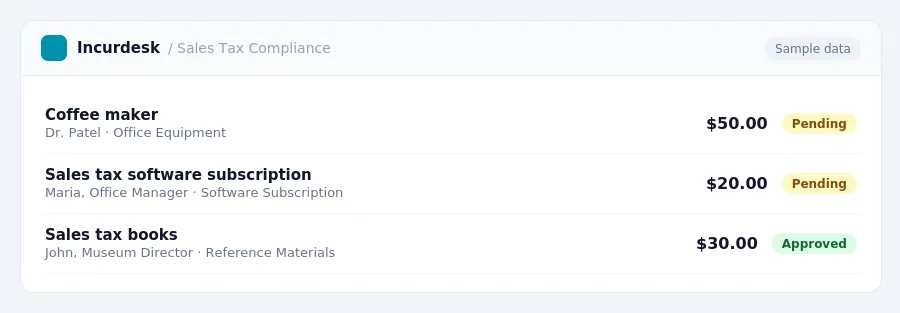
When it comes to sales tax, museums must stay informed on state and local requirements to ensure compliance. This means keeping accurate records of all sales, including the amount of sales tax collected and remitted.
When tracking sales tax, consider the following steps:
- Keep a record of all sales, including the date, time, and amount of each transaction.
- Calculate the sales tax owed on each transaction, based on the state and local tax rates.
- Remit the sales tax collected to the state and local authorities on a regular basis, as required.
Accurate Financial Reporting for Informed Business Decisions
Accurate financial reporting is crucial for informed business decisions. To start, calculate your Gross Profit Margin by comparing sales revenue to the Cost of Goods Sold (COGS). This metric will help you understand the health of your gift shop.
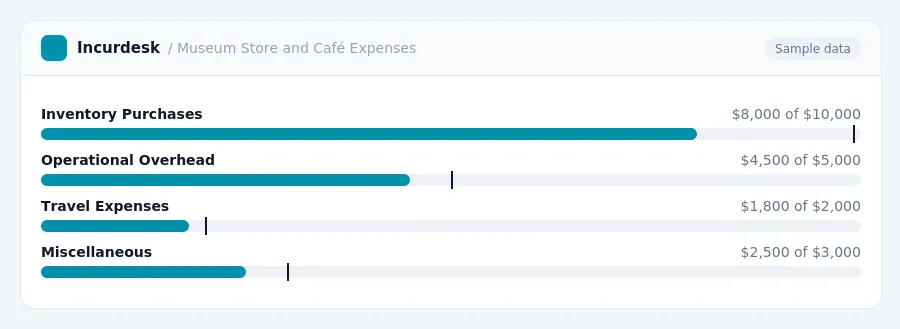
When tracking expenses, be sure to include all costs associated with your museum store and café, including inventory purchases, operational overhead, and travel expenses. For instance, if you use your personal vehicle for business, you can deduct the business use percentage of your mileage expenses.
To ensure accurate financial reporting, maintain detailed records of all transactions, including cash sales, credit card sales, and returns. This will help you reconcile your sales and identify any discrepancies. Additionally, consider implementing a point-of-sale system to streamline transactions and reduce errors.
When analyzing your financial data, consider the average transaction size in your museum gift shop. Typically, 30-40% of visitors make a purchase, with an average transaction of $15-25. This information can help you adjust your pricing strategy and inventory levels to optimize sales and profitability.
Best Practices for Museum Store and Café Expense Management
Maintaining accurate and organized records is crucial for effective expense management. To streamline your process, consider implementing a centralized system for tracking and categorizing expenses. This can be done by assigning specific accounts or categories for each type of expense, such as inventory purchases, operational overhead, and employee salaries.
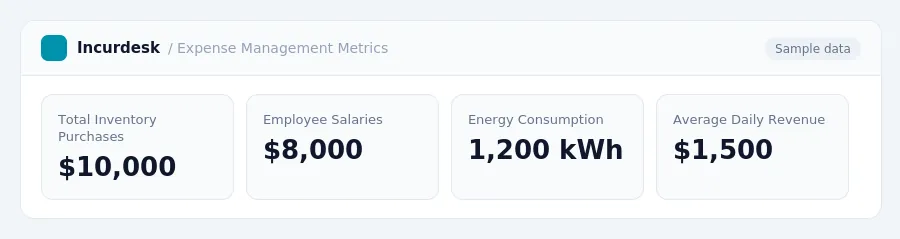
Regularly review your expense records to identify areas for improvement and optimize your operations. For example, you may find that certain items are consistently selling out quickly, indicating that you should adjust your inventory levels accordingly. Similarly, you may discover that certain operational costs, such as energy consumption or maintenance, can be reduced by implementing energy-efficient practices or scheduling regular maintenance.
Set clear goals and benchmarks for your museum store and café, such as tracking the average transaction value and the percentage of visitors making a purchase.
- Establish a routine for reviewing and reconciling financial statements to ensure accuracy and completeness.
- Consider implementing a system for tracking inventory levels and monitoring sales trends to inform purchasing decisions.
- Develop a plan for managing cash flow and ensuring sufficient funds are available to meet operational expenses.
- Regularly review and adjust your budget to reflect changes in revenue and expenses.
By following these best practices, you can maintain accurate and organized records, optimize your operations, and make informed business decisions to drive the success of your museum store and café.
Keeping this simple: Incurdesk turns submitted expenses into clean expense reports. It is built for small small museum historical society teams. Try it free.
Stop losing 4+ hours a week
30-day free trial · No credit card · Setup in 15 minutes