
On-Call Meal Expense Rules for Hospital Staff
A practical, data-backed guide to controlling costs and automating expense workflows.
For small hospital businesses with 5-50 staff, navigating on-call meal expense rules can be complex. To ensure accurate expense management for hospitals
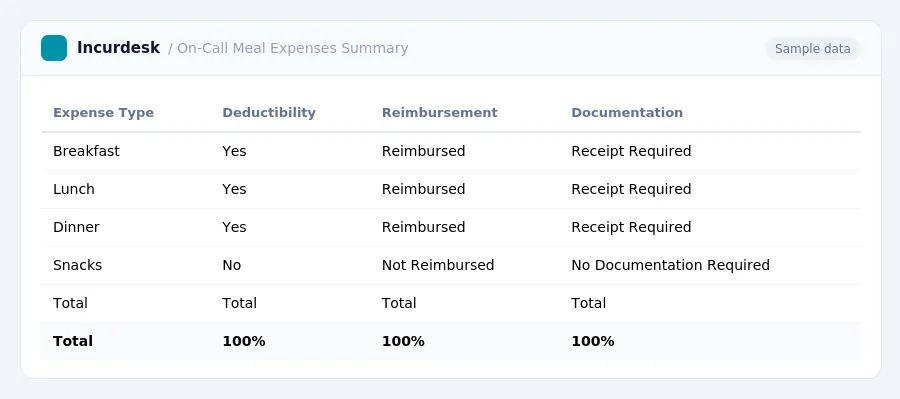
Deductibility of On-Call Meal Expenses for Hospital Staff
When it comes to deductibility of on-call meal expenses for hospital staff, there are specific rules to follow. Here are some key points to keep in mind:
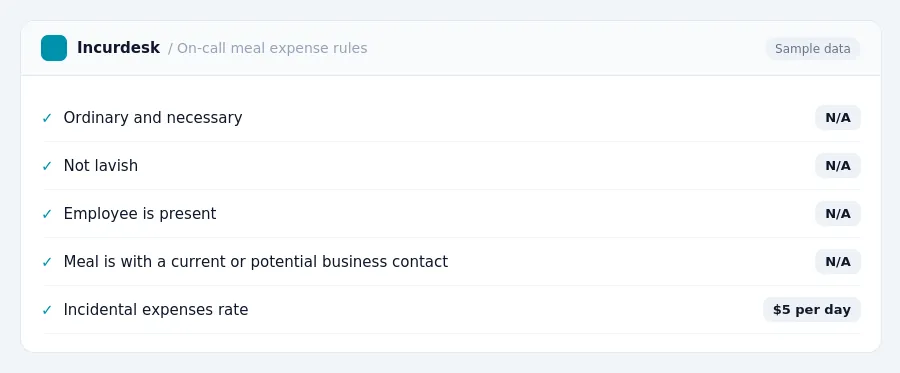
- Ordinary and necessary
- Not lavish
- The employee is present
- The meal is with a current or potential business contact
It's also worth noting that the rate for incidental expenses only is $5 per day for any CONUS or OCONUS locality.
These rates apply to travel on or after October 1, 2026, and through September 30, 2027.
- For the transportation industry, the M&IE rate is $80 for CONUS.
These rates are used to calculate the maximum amount that can be reimbursed or deducted for on-call meal expenses.
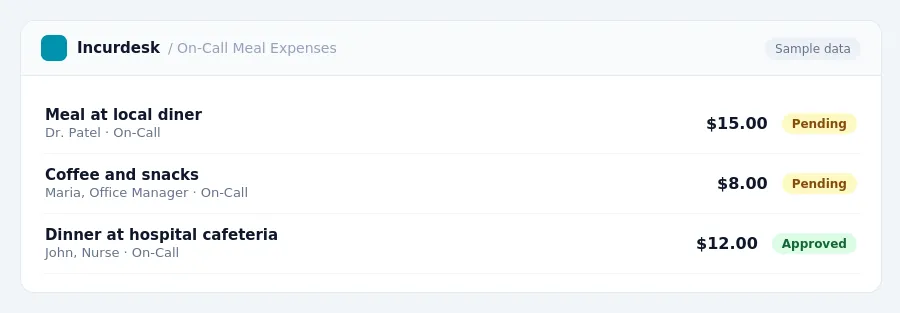
Reimbursement Options for On-Call Meal Expenses
When it comes to reimbursing hospital staff for on-call meal expenses, you have several options. At the federal level, companies must report meal or food-related expenses over $13.82 per instance or $138.13 annually per physician under the Sunshine Act (2026). This includes any reimbursements made to employees for on-call meals.
Here are some reimbursement options to consider:
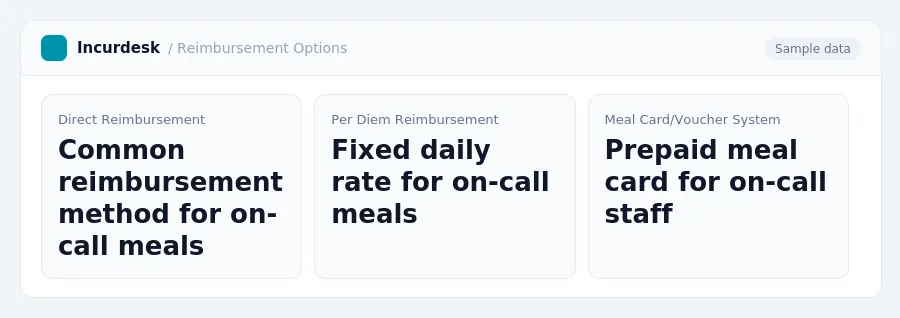
- Direct reimbursement: Reimburse employees directly for on-call meal expenses, providing them with receipts or documentation to support the claim.
- Per diem reimbursement: Pay a fixed daily rate for on-call meals, which is typically based on the standard meal allowance for the area where the employee is working.
- Meal card or voucher system: Provide employees with a meal card or voucher that can be used to purchase meals while on call.
When choosing a reimbursement option, be sure to consider the following:
- Ensure that all reimbursements are reasonable and necessary.
- Keep accurate records of all reimbursements, including receipts and documentation.
Documentation Requirements for On-Call Meal Expenses
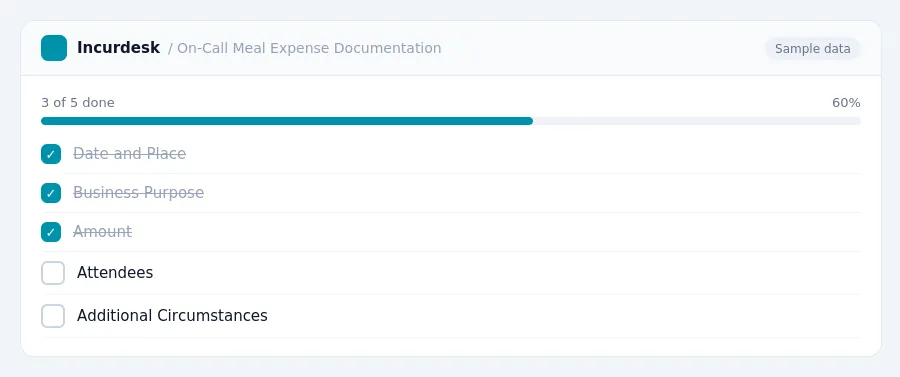
For example, a hospital staff member's on-call meal receipt should include the date, location, and amount of the meal, as well as a note explaining the business purpose of the meal and the names of any attendees.
- Amount: Keep a record of the actual cost of the meal, including receipts or invoices.
- Date and Place: Note the date and location of the meal to ensure it aligns with the business purpose.
- Business Purpose: Explain the reason for the meal, such as being on-call or working late.
- Attendees: List the names of any colleagues or business contacts who attended the meal.
For employees required to remain on-site during meal periods to respond to emergencies, documentation may vary depending on the nature of the business and the unpredictability of the occurrences. In these cases, it's essential to keep detailed records of the circumstances surrounding the meal, including any relevant dates, times, and events.
Remember to keep all documentation, including receipts and records, for at least three years in case of an audit.
Common Mistakes to Avoid in On-Call Meal Expense Reporting
- Failure to keep accurate records: Keep detailed records of all on-call meal expenses, including receipts, dates, times, and purposes of the meals. This will help ensure that expenses are properly documented and can be easily verified if needed.
- Incorrect categorization of expenses: Ensure that on-call meal expenses are properly categorized as business expenses and not as personal expenses. This may involve creating separate expense accounts or categories for on-call meals.
- Lack of documentation for business purpose: Keep records of the business purpose of each on-call meal, including any business discussions or meetings that took place during the meal. This will help demonstrate that the meal was a legitimate business expense.
- Keep records of how you calculated these rates to ensure compliance.
- Not separating personal and business expenses: Keep personal and business expenses separate to avoid commingling them and to ensure that on-call meal expenses are properly documented as business expenses.
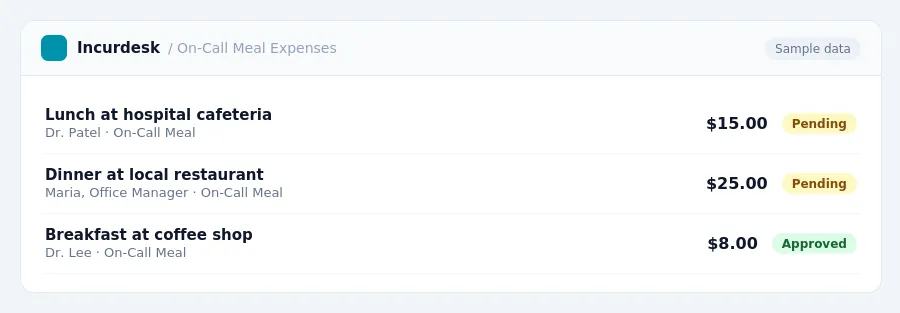
Keeping this simple: Incurdesk keeps receipts and approvals together, so you know exactly what to reimburse. It is built for small hospital teams. Try it free.
Stop losing 4+ hours a week
30-day free trial · No credit card · Setup in 15 minutes