
Orthodontic Practice Expense Tracking: Aligners, Brackets and Lab Work
A practical, data-backed guide to controlling costs and automating expense workflows.
Tracking orthodontic expenses effectively is crucial for the financial health and compliance of small to medium-sized US dental practices. To manage expenses for dental practice and ensure accurate record-keeping, it's essential to understand the current rules and rates for aligners, brackets, and lab work. For the bigger picture, see our guide to expense management for dental practice. For a complete overview, see our expense management guide.
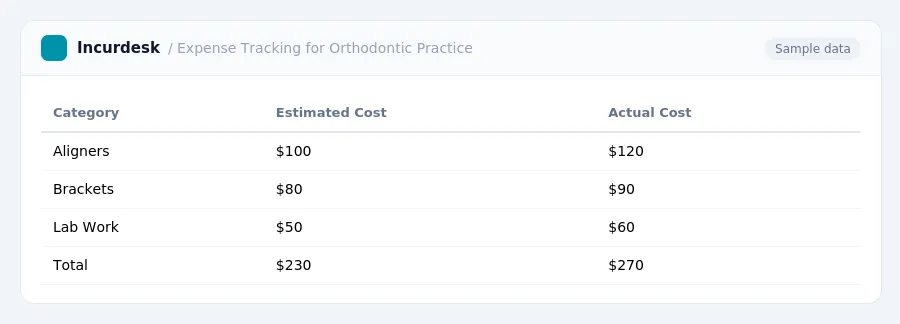
Orthodontic Expense Tracking: Understanding Current Rules and Regulations
The average cost for a full course of orthodontic treatment in the US in 2026 ranges from $3,000 to $7,500, with more complex cases potentially reaching $10,000 or more.
- Regulations governing dental practice, including scope of practice and licensing, vary significantly by state.
- Orthodontic expenses must be accurately recorded and documented to ensure compliance with state and federal regulations.
Here are some key steps to follow:
- Check with your state's dental board for specific regulations and requirements.
- Keep accurate and detailed records of all orthodontic expenses, including invoices, receipts, and treatment plans.
- Ensure that all expenses are properly categorized and coded for tax purposes.
By understanding and following these rules and regulations, you can ensure that your orthodontic practice is in compliance with state and federal regulations, and that you are accurately tracking and managing your expenses.
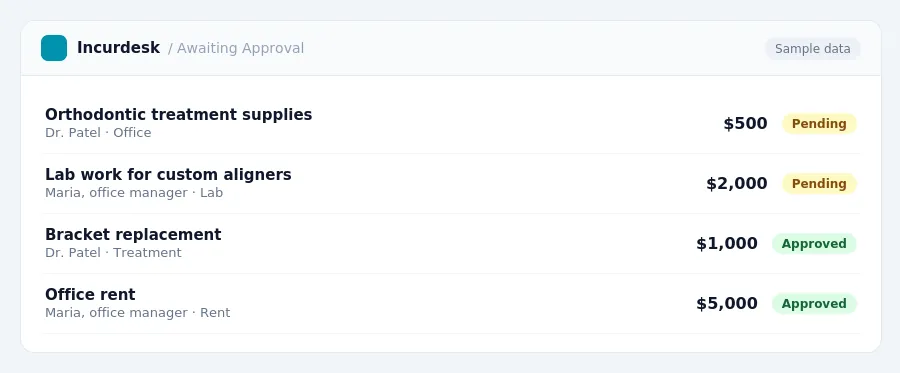
Calculating Orthodontic Expenses: Aligners, Brackets, and Lab Work
Calculating orthodontic expenses for aligners, brackets, and lab work requires attention to detail and an understanding of current costs.
Aligners, such as Invisalign, generally range from $3,500 to $8,500. When tracking expenses, consider the following:
- Record the cost of each aligner set, including any necessary impressions or scans.
- Track the number of aligner sets used per patient.
- Calculate the total cost of aligners per patient, including any adjustments or replacements.
For brackets, costs can vary depending on the type and material used. Record the cost of brackets, including any necessary impressions or scans, and track the number of brackets used per patient.
Lab work expenses, such as impressions and models, can range from $100 to $500 per case. Record the cost of lab work and track the number of cases completed per month.
When calculating orthodontic expenses, consider the following:
- Keep accurate records of all expenses, including receipts and invoices.
- Track expenses by category, including aligners, brackets, and lab work.
- Calculate the total cost of orthodontic services provided per patient.
By tracking expenses accurately, you can ensure compliance with current rules and regulations and make informed decisions about your orthodontic practice.
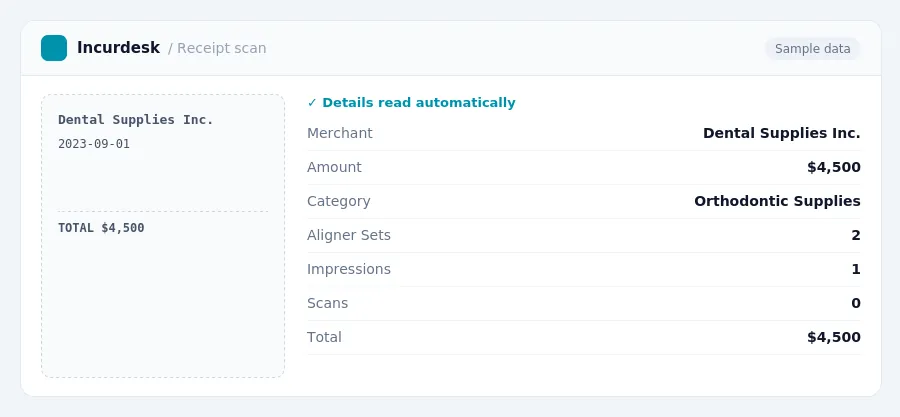
Managing Orthodontic Expenses: Tips for Small to Medium-Sized Practices
Managing orthodontic expenses effectively is crucial for small to medium-sized dental practices to maintain profitability and ensure compliance. Here are some practical tips to help you manage orthodontic expenses:
- Implement a clear expense tracking system: Set up a system to track all orthodontic expenses, including aligners, brackets, and lab work. This will help you stay organized and ensure that all expenses are accounted for.
- Monitor and adjust as needed: Regularly review your orthodontic expenses to identify areas where costs can be reduced. Adjust your treatment plans and supplier contracts as needed to minimize expenses.
- Consider bulk purchasing and discounts: Negotiate with suppliers to secure bulk purchasing discounts on orthodontic materials and appliances.
- Keep accurate records
- Consult with a tax professional
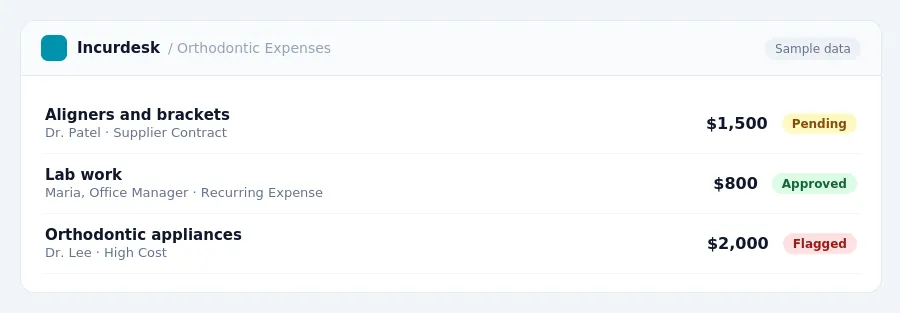
Common Pitfalls in Orthodontic Expense Tracking and Compliance
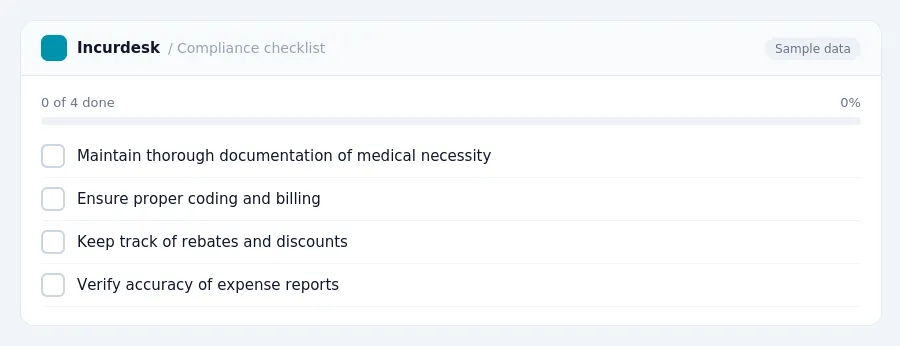
When tracking orthodontic expenses, it's easy to overlook crucial details that can lead to costly mistakes. To avoid common pitfalls in orthodontic expense tracking and compliance, be mindful of the following:
- Inadequate record keeping
- Lack of proper coding and billing: Ensure that all orthodontic services are properly coded and billed to the correct payer. This includes using the correct CPT codes, ICD-10 codes, and HCPCS codes.
- Insufficient documentation of medical necessity: Maintain thorough documentation of medical necessity for all orthodontic treatments, including patient records, clinical notes, and treatment plans.
- Failure to report and track rebates and discounts: Keep track of rebates and discounts received from suppliers, and report them accurately on your tax returns.
Keeping this simple: Incurdesk turns submitted expenses into clean expense reports. It is built for small dental practice teams. Try it free.
Stop losing 4+ hours a week
30-day free trial · No credit card · Setup in 15 minutes