
Owner Statement Expense Reporting for Property Managers
A practical, data-backed guide to controlling costs and automating expense workflows.
As a property manager at a small real estate business, you need to understand the current IRS Form 1099 reporting rules for owner expenses, including new thresholds and reportable payment types. The federal reporting threshold for 2026 is $2,000, with annual inflation adjustments starting in 2027. By staying on top of these rules, you can ensure compliance and maintain good relationships with your owners, all while keeping costs low with effective real estate expense management for under $10/user (2026). For a complete overview, see our expense management guide.
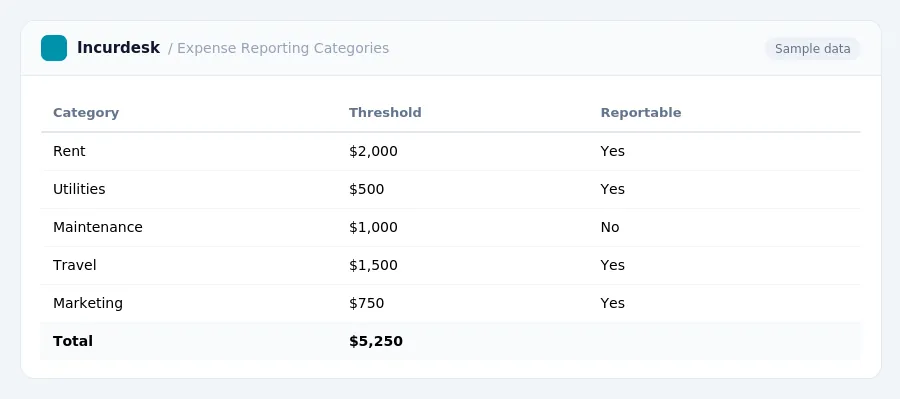
Understanding the New 1099 Reporting Thresholds
These new boxes break out amounts already included in box 1a (nonemployee compensation).
It's also essential to note that the federal 1099 reporting thresholds are subject to inflation adjustments annually, starting in 2027. This means that the threshold may change over time.
Utah's new licensing requirement for residential rental property management is effective January 1, 2027. While this is a state-specific regulation, it's essential to be aware of the changes in your state's requirements.
When determining whether you need to file a Form 1099, consider the following:
- Check if the payment is $2,000 or more per payee per calendar year.
- Verify if the payment type is reportable (e.g., nonemployee compensation).
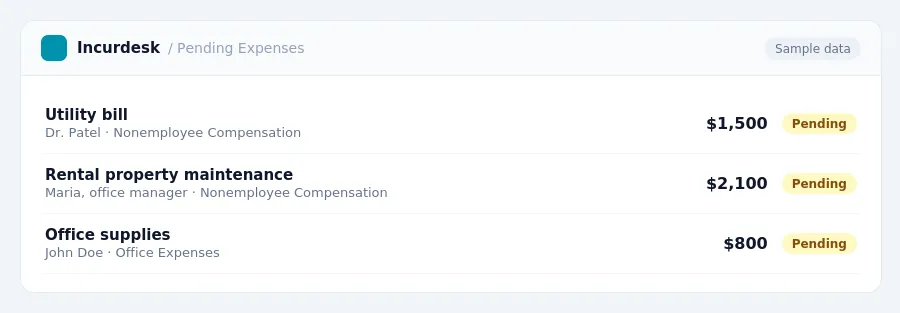
Reporting Owner Expenses: Types and Thresholds
When reporting owner expenses, it's essential to understand the different types of payments and the associated thresholds. Form 1099-MISC is used for payments other than wages, such as rents, royalties, and legal settlements.
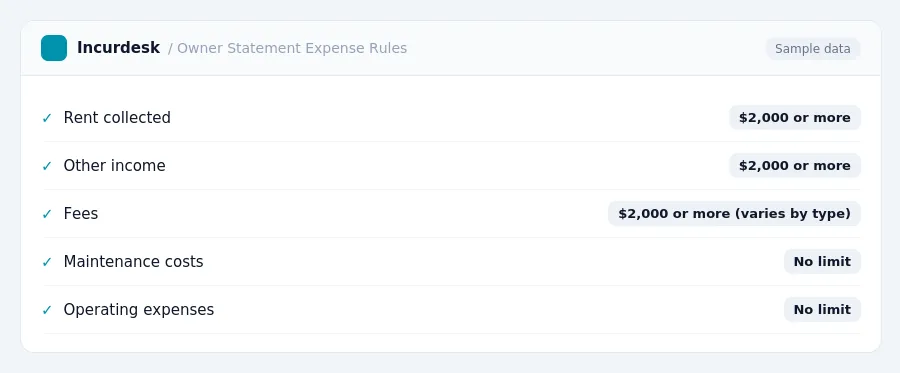
A typical owner statement includes various categories of income and expenses. Here are some common types of owner expenses and their reporting requirements:
- Rent collected: Must be reported if $2,000 or more.
- Other income (e.g. prizes, awards): Must be reported if $2,000 or more.
- Fees: May be reportable if $2,000 or more, depending on the type of fee.
When preparing an owner statement, be sure to include the following information:
- Beginning balance
- Rent collected
- Other income
- Fees
- Maintenance costs
- Operating expenses
- Final payout
Expense Categorization and Capital Improvements
Proper expense categorization is crucial for tax optimization and performance analysis. Common categories include:
- Property management fees
- Maintenance and repairs
- Utilities
- Insurance
- Property taxes
- Legal/professional fees
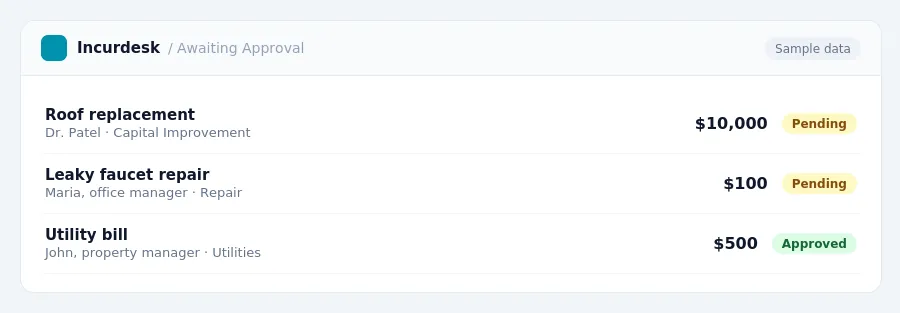
When it comes to expenses, it's essential to distinguish between repairs and capital improvements. Repairs are generally deductible in the year incurred, while capital improvements must be depreciated over time.
For example, if you replace a roof on a rental property, that's a capital improvement and should be depreciated over 27.5 years. However, if you fix a leaky faucet, that's a repair and can be deducted in the year it's incurred.
It's also essential to keep accurate records of your expenses, including receipts and invoices. This will help you categorize your expenses correctly and ensure you're taking advantage of all the deductions available to you.
Trust Account Reconciliation and State-Specific Regulations
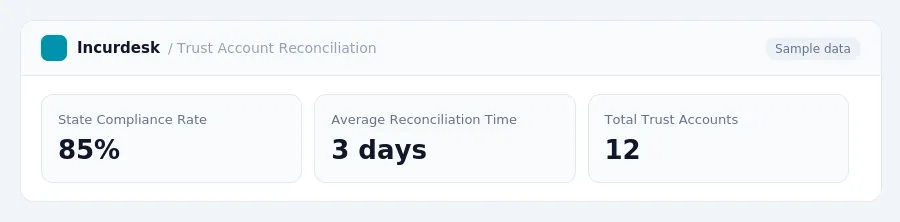
When it comes to managing client funds, property managers must maintain separate trust accounts for security deposits and owner reserves. These accounts must be reconciled monthly, as required by state regulations. This process ensures that all client funds are accounted for and that the property manager is providing accurate financial statements to clients.
It's essential to note that C corporations and S corporations are generally exempt from receiving 1099s, with specific exceptions for attorneys and medical providers. However, it's crucial to review state-specific regulations, as some states may have different rules for 1099 reporting.
Here are some key state-specific regulations to consider:
- Security deposits: Each state has its own rules regarding security deposits, including the amount that can be collected and how it must be handled.
- Licensing: Property managers must be licensed in the state where they operate, and must comply with state-specific regulations regarding trust accounting.
- 1099 thresholds: Some states have different 1099 reporting thresholds than the federal government.
By understanding and complying with state-specific regulations, property managers can ensure that they are handling client funds accurately and providing accurate financial statements to clients.
Avoiding Common Errors and Staying Compliant
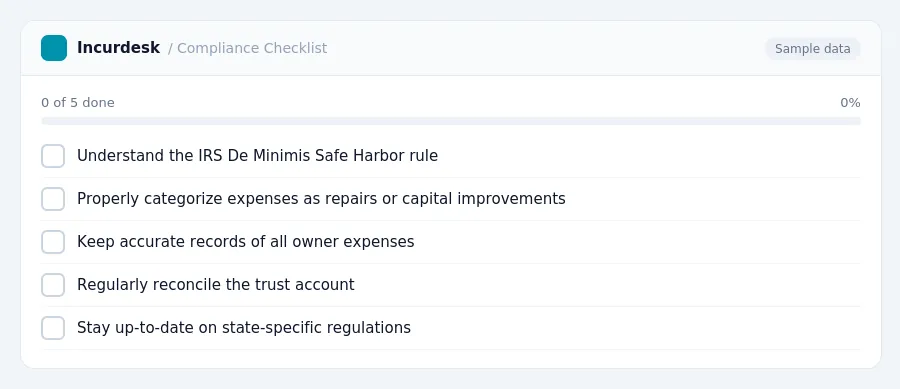
To avoid common errors and stay compliant with owner expense reporting, it's essential to understand the IRS De Minimis Safe Harbor rule. For 2026, this rule allows expensing items up to $2,500 per invoice/item without an Applicable Financial Statement (AFS), or $5,000 with an AFS.
- When categorizing expenses, ensure that each item is properly classified as a repair or capital improvement. Keep in mind that repairs are considered deductible expenses, while capital improvements are not.
- Keep accurate records of all owner expenses, including receipts, invoices, and payment information. This will help you identify and report reportable payments to the IRS.
- Regularly reconcile your trust account to ensure that all deposits and disbursements are accurately accounted for.
- Stay up-to-date on state-specific regulations regarding licensing, security deposits, and 1099 thresholds. These regulations can vary by state, so it's essential to check the specific laws in your area.
When preparing your owner expense reports, make sure to:
- Verify the accuracy of all reportable payments and ensure that they meet the $2,000 threshold for 2026.
- Use the correct Form 1099-MISC to report owner expenses to the IRS.
- File Form 1099-MISC by January 31st of each year, or by March 31st if filing electronically.
By following these guidelines and staying informed about changes to the IRS rules and regulations, you can avoid common errors and ensure compliance with owner expense reporting requirements.
Keeping this simple: Incurdesk turns submitted expenses into clean expense reports. It is built for small real estate teams. Try it free.
Stop losing 4+ hours a week
30-day free trial · No credit card · Setup in 15 minutes