
Per Diem for Travelling Crews: Setting Rates
A practical, data-backed guide to controlling costs and automating expense workflows.
Per diem rates vary widely depending on location, industry, and other factors. For the bigger picture, see our guide to construction expense management for under $10/user (2026).
GSA Standard CONUS Rates and Lodging Rates
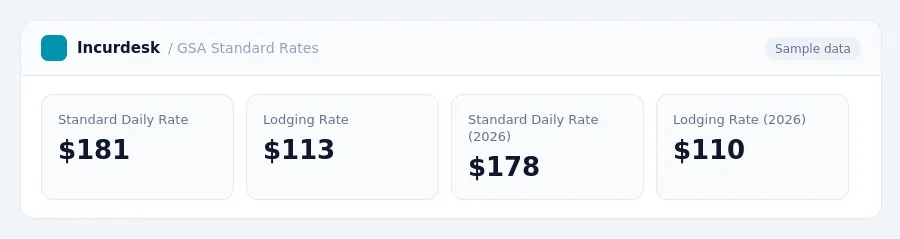
The General Services Administration (GSA) sets standardized rates for federal agencies, which are also used by private contractors. As of Fiscal Year 2027 (October 1, 2026 - September 30, 2027), the rates are as follows:
- Standard daily rate: $181 per day
- Lodging rate: $113 per day
- Standard daily rate for 2026: $178 per day
- Lodging rate for 2026: $110 per day
- GSA Rate Application: GSA rates are benchmarks for federal agencies, and most private contractors reference them.
It is essential to note that these rates are subject to change annually, and it is recommended to check the GSA website for the most up-to-date information. Additionally, these rates vary depending on the location, with higher rates typically associated with locations closer to Washington, D.C. and other major federal offices.
Keeping this simple: Incurdesk turns submitted expenses into clean expense reports. It is built for small construction teams. Try it free.
GSA Standard CONUS Rates and Meals and Incidental Expenses (M&IE) Rates
- Meals and Incidentals (M&IE): $68 per day
- Per Diem Covers: Lodging, meals, and incidental expenses (such as tips, laundry, and minor fees)
These rates apply to employees working in CONUS, including the 50 states and the District of Columbia. The rates are subject to change, and the GSA updates them annually. For the most up-to-date information, please check the GSA website or contact your local GSA office.
It's also worth noting that the GSA rate does not include:
- Lodging expenses (such as hotel rooms or meals at company facilities)
- Tips and minor fees
- Travel expenses (such as gas or parking)
- Any other expenses not specifically covered by the GSA rate
To ensure accurate employee reimbursement, it's essential to understand these rates and how they apply to your specific situation.
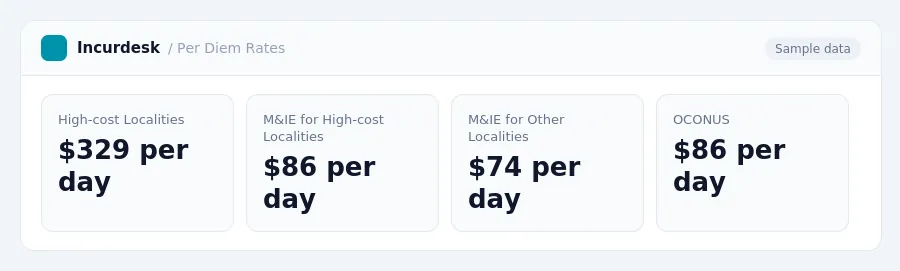
The IRS sets per diem rates for employees to ensure accurate reimbursement and compliance. The rates vary depending on the location and type of accommodation. Here's a breakdown of the rates:
- High-cost localities: $329 per day (from October 1, 2026, to September 30, 2027)
- Meals and Incidental Expenses (M&IE) portion for high-cost localities: $86 per day
- Meals and Incidental Expenses (M&IE) portion for other localities: $74 per day
- Outside the continental United States (OCONUS): $86 per day
- Other rates for different types of accommodations and locations are available, but these are the general rates.
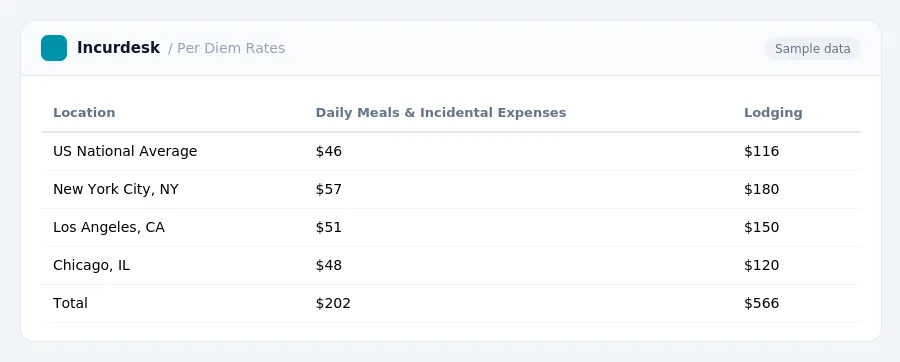
Location-Specific Rates: US, CONUS, and Non-Standard Areas
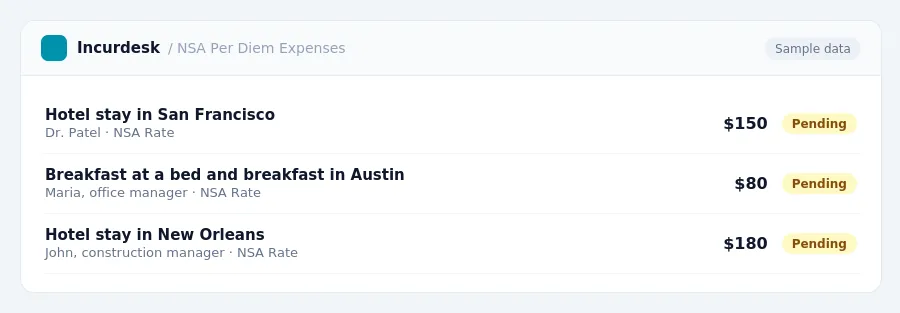
For non-standard areas (NSAs), which include approximately 300 locations, the rates are often higher due to local lodging costs.
The rates for NSAs can vary annually, so it's essential to check the official government website or contact the relevant authorities for the most up-to-date information. Additionally, these rates may not apply to all types of lodging, such as hotels or motels, but rather those that offer more amenities, like bed and breakfasts or resorts.
It's also worth noting that some states have their own per diem rates, which may be higher or lower than the standard rates. For example, California has a higher rate of $120 per day, while other states like Texas and Louisiana have rates that are lower than the standard CONUS rate.
State and Country Variations: Per Diem Policies and Rates
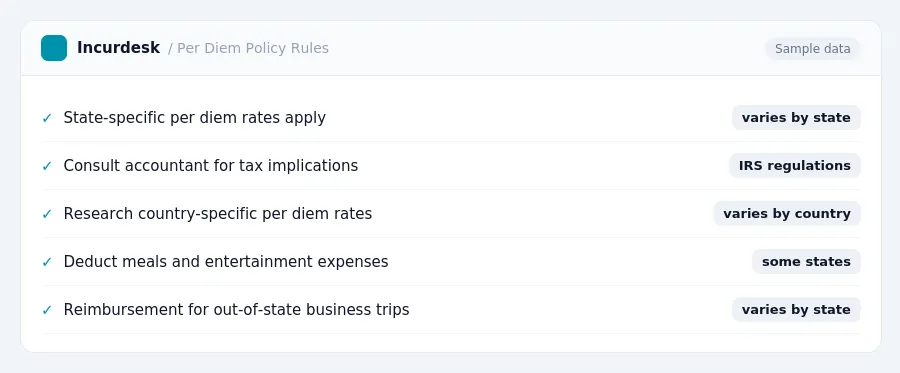
While most states and Washington D.C. follow federal GSA standards, some may have unique per diem policies or tax implications that differ from federal rules. For example, some states may deduct meals and entertainment expenses, while others may not. Additionally, some states may have specific rules for reimbursement for out-of-state business trips.
As a result, it's essential to consult with an accountant or tax professional to ensure compliance with IRS regulations.
Some states, such as New York and California, have been known to have higher per diem rates compared to federal standards.
It's also worth noting that country-specific per diem rates vary significantly. For example, some countries may have different rules for reimbursement for meals and lodging expenses. It's essential to research the specific regulations in your state and country to ensure compliance.
For example, the US Department of Defense's Travel, Meals, and Other Expenses (TMOE) policy has different rates for meals and lodging in different countries. To ensure compliance, it's essential to familiarize yourself with the specific regulations in your state and country.
Stop losing 4+ hours a week
30-day free trial · No credit card · Setup in 15 minutes