
Pest Control and Inspection Expense Records
A practical, data-backed guide to controlling costs and automating expense workflows.
As a small property management business owner or office manager, it's essential to understand which pest control and inspection expenses are tax-deductible for your rental properties to adhere to IRS rules for ordinary and necessary business expenses. Proper documentation and correct categorization of costs are crucial for maintaining accurate expense management for property management, avoiding audits, and maximizing tax benefits. To ensure you're meeting these requirements, you'll need to carefully review your records and categorize costs as either business or personal expenses. For a complete overview, see our expense management guide.
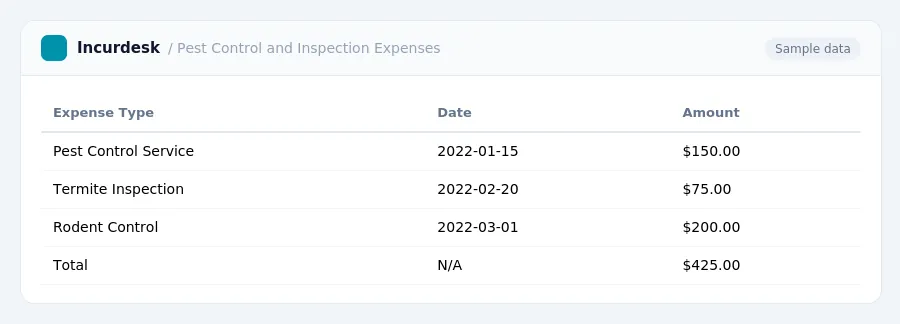
Pest Control Expenses and Tax-Deductibility
Pest control expenses can be a significant cost for property management businesses. To ensure accurate record-keeping and maximize tax benefits, it's essential to understand which expenses are tax-deductible.
- Routine pest control services are generally considered ordinary and necessary operating expenses and are tax-deductible in the year they are paid or incurred.
- Only major structural repairs necessitated by pest damage, such as termites destroying wood framing, would typically be capitalized and depreciated.
- Prepayments for annual pest control service contracts should generally be allocated over the contract period.
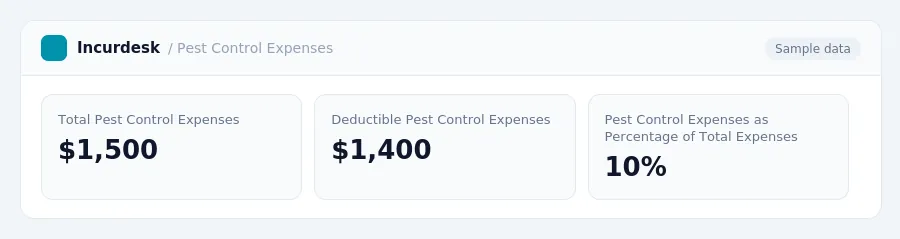
- The business-use percentage of pest control costs for the entire property can be deducted if a portion of the property is used as a home office. For example, if the home office is 10% of the total space, 10% of the pest control cost is deductible.
- Landlords are generally responsible for pest problems that existed before a tenant moved in or that stem from a structural or maintenance issue.
Maintaining Proper Documentation and Record-Keeping
- Keep all pest control and inspection expense records in a centralized location for easy access and retrieval.
- Store receipts, invoices, and contracts in a secure and organized manner, such as in a locked file cabinet or a password-protected digital storage system.
- Make sure to include the following details with each record:
- Date and description of the expense
- Amount paid and payment method
- Service provider name and contact information
- Property address and any relevant identification numbers
- Take clear and dated photos of any pest control treatments or inspections, including before-and-after photos if applicable.
- Keep records of all communication with service providers, including emails, phone calls, and text messages.
- Review and update records regularly to ensure accuracy and completeness.
- Consider implementing a system for tracking and categorizing expenses, such as a spreadsheet or a digital tool.
- Consult with a tax professional to ensure you are meeting all necessary documentation and record-keeping requirements.
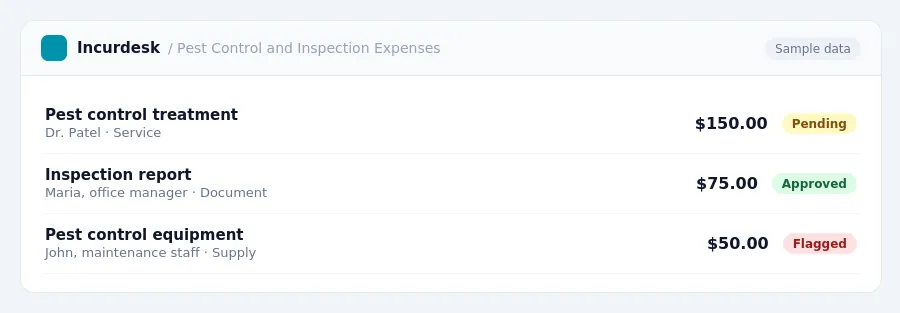
Categorizing Pest Control Costs and Expenses
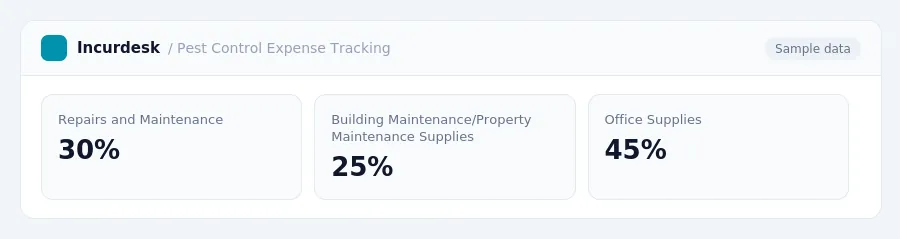
- Pest control costs are typically categorized under the following expense categories:
- Repairs and Maintenance Expense or Building Maintenance/Property Maintenance
- Supplies Expense or Office Supplies for DIY pest control costs, such as traps, baits, and sprays
- Determine the percentage of the property used for the home office
- Apply the same percentage to the total pest control cost
- Keep detailed invoices for pest control costs, including:
- Date of service
- Vendor name and contact information
- Amount paid
- Property address
- Short description of the work performed
Managing Pest Control Responsibilities and Liability
-
- Understand that pest control for property management is considered an ordinary and necessary expense for managing, conserving, or maintaining rental property.
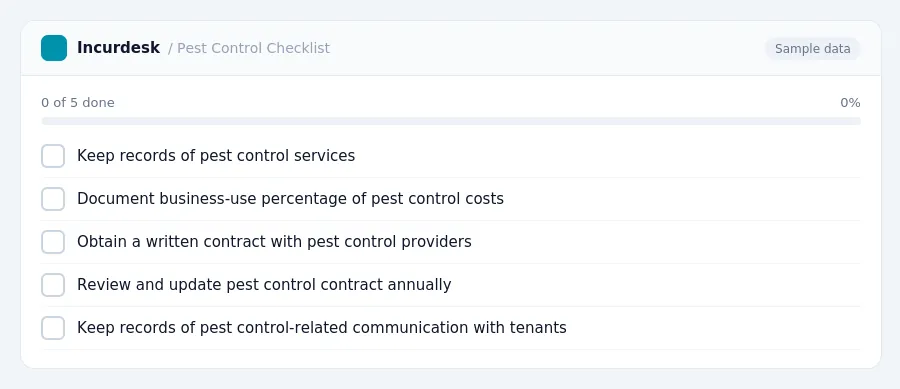
- Keep records of pest control services, including the date, type of service, and cost, to demonstrate the business purpose of the expense.
- Document the business-use percentage of pest control costs, if applicable, to accurately calculate the deductible amount.
- Consider obtaining a written contract with pest control providers that includes details such as scope of work, payment terms, and liability limitations.
- Review and update your pest control contract annually to ensure it remains relevant and compliant with changing regulations.
- Keep records of pest control-related communication with tenants, including notifications and responses to pest control issues, to demonstrate the business's efforts to address pest control concerns.
Travel and Inspection Expenses for Pest Control
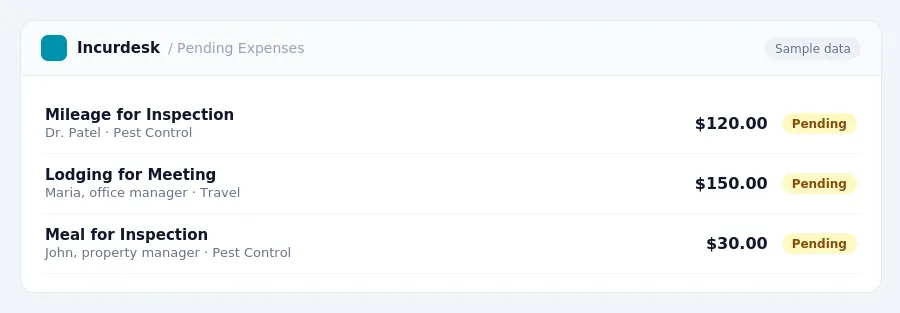
- When traveling to rental properties for pest control inspections or management, you can deduct the cost of travel as a business expense.
- To calculate the deductible cost of travel, multiply the total miles driven by the standard mileage rate (72.5 cents per mile).
- Keep a record of the date, mileage, and purpose of each trip to support your business expense deduction.
- For travel expenses, you can also deduct the cost of meals and lodging, but be sure to keep receipts and records to support these expenses.
Keeping this simple: Incurdesk turns submitted expenses into clean expense reports. It is built for small property management teams. Try it free.
Stop losing 4+ hours a week
30-day free trial · No credit card · Setup in 15 minutes